


Pressure Washing vs. Power Washing vs. Soft Washing: Which Cleaning Method Is Best?
Pressure washing and soft washing sound like the same job, but heat changes how each method works. The right choice depends on the surface, the soil, and the risk of damage. We'll show you when to use cold water, heated water, or soft washing around a Central Florida home or business.
Understanding pressure washing vs soft washing can help homeowners choose the right cleaning method for their property.
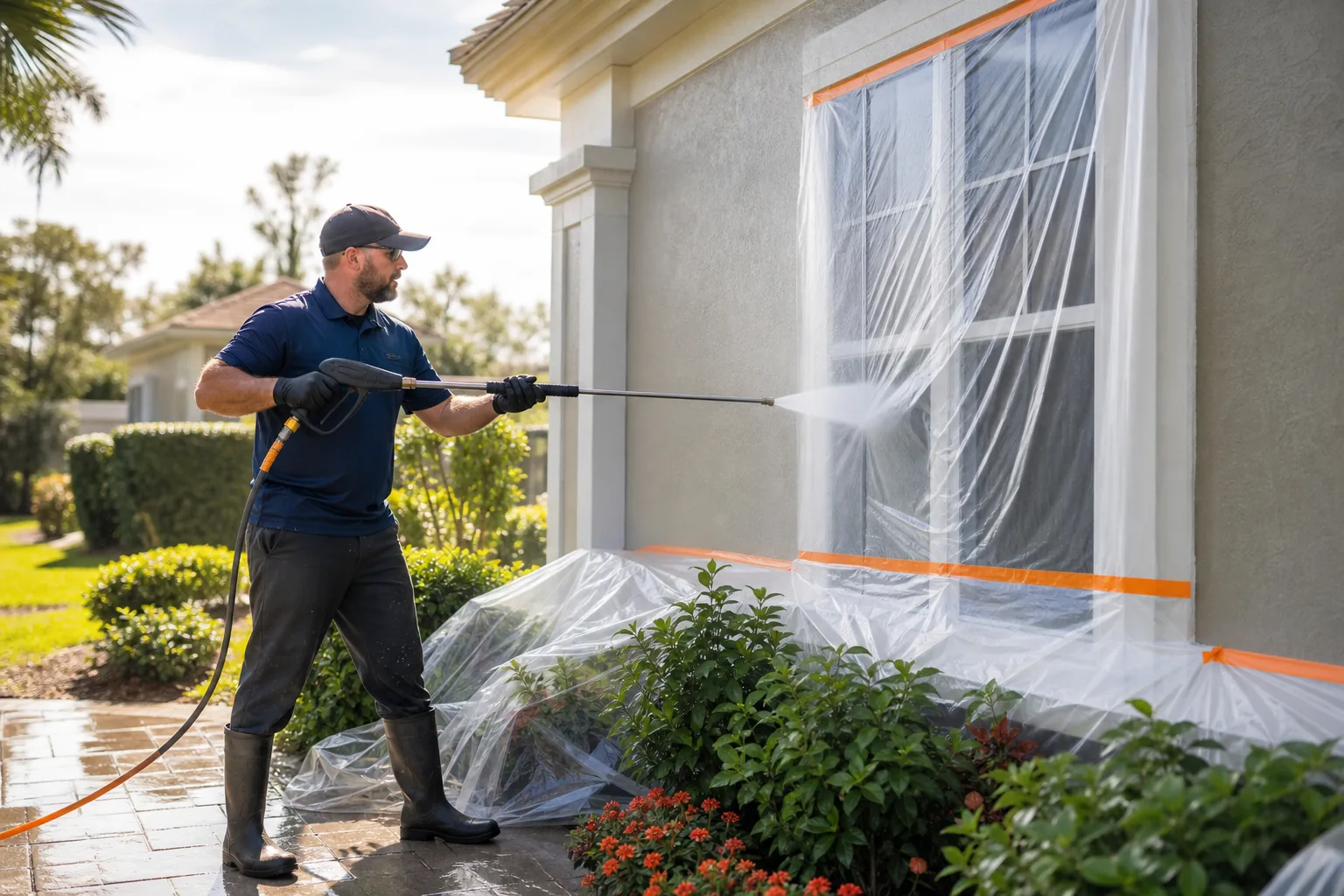
Table of Contents
1. Performance Pressure Wash
When you compare high-pressure cleaning versus pressure washing for several property types, Performance Pressure Wash gives you one coordinated service team. We clean roofs, home exteriors, driveways, sidewalks, pool enclosures, commercial buildings, vehicle fleets, shopping centers, and food trucks.
That range matters when a property has more than one cleaning need. A property manager may need a roof treated with soft washing, then a concrete entry cleaned with higher pressure. A restaurant may need its building rinsed while a food truck receives hot-water degreasing.
We start with a surface check. We look at the material, the age of the finish, nearby plants, drainage paths, and the type of soil present. That keeps us from using high pressure where a low-pressure chemical treatment is the safer choice.
Equipment details matter too. PSI measures water force. GPM measures water flow. A high PSI number alone doesn’t tell you how well a machine will clean. Pump design, engine drive, hose rating, nozzle choice, and the cleaning agent all affect the job.
Method | Main Cleaning Action | Common Applications |
Cold-water pressure washing | Water pressure | Concrete, sidewalks, driveways |
Hot-water pressure washing | Heat + pressure | Grease, oil, food residue |
Soft washing | Cleaning solution + low pressure | Roofs, siding, organic growth |
Commercial equipment can run at demanding pressures, but that doesn’t mean a surface should receive that force. It shows why the hose, gun, fittings, and machine must match the work.
Our Orlando service area page helps local homeowners learn more about the areas we serve before requesting service.
Key Takeaway:The best cleaning method is the one that removes the soil without forcing the surface to absorb more stress than it can handle.
Step 2: Pressure Washing vs Soft Washing: Match the Method to the Surface and Soil
Surface cleaning vs pressure washing becomes easier once you name the surface first. Concrete can handle more force than asphalt shingles. Vinyl siding needs a gentler approach than a stained loading area.
Start by identifying the material. Asphalt shingles, painted siding, stucco, wood, screens, pavers, and concrete each react differently to water force. Age matters too. A new concrete slab may tolerate a strong rinse, while cracked or loose material can shed under the same pressure.
Roof shingles:Use soft washing. High pressure can remove shingle granules and may contribute to leaks.
House siding:Use low pressure with a suitable cleaning solution. The goal is to treat organic growth rather than blast the wall.
Concrete:Use pressure where the slab and finish can handle it. Pre-treating helps loosen organic soil before rinsing.
Pool screens:Use lower force and controlled spray angles. Screen mesh and frames can bend or tear.
Greasy commercial areas:Use heated water with the right degreaser when cold, low-pressure cleaning cannot break down baked grease.
Soft washing usually works at about 100 to 350 PSI. A source that compares roof methods describes it as low risk for delicate roofing when used with biodegradable cleaning agents. By contrast, pressure washing commonly falls around 1,200 to 4,000 PSI and carries a higher risk of shingle granule loss.
That is why we don’t treat PSI as a badge of quality. A low-pressure soft wash can clean a roof better than a high-pressure rinse because the solution treats the algae. Gloeocapsa magma, often called roof algae , is the dark growth that forms streaks on shingles. Mildew and lichen need different handling too.
Our guide to roof soft washing in Central Florida explains this surface choice in more detail. For a home exterior, our soft wash house cleaning service uses the same basic principle: choose the method based on the material.
Paint preparation is one exception. If loose paint must come off before a new coat, a controlled pressure rinse may be needed. The cleaning plan should account for the next trade, not only the look of the surface that day.
Step 3: Choose Between Cold, Heated, and Soft-Wash Cleaning for the Soil
In the heated versus cold water pressure washing debate, temperature changes the job. Pressure washing normally uses cold or ambient water. Heated pressure washing uses water warmed to above 180°F to help break down grease and heavy soil.
Use cold-water pressure when the main issue is loose dirt on a hard surface. Driveways, sidewalks, and some masonry may need force more than heat. Even then, we adjust the nozzle and distance so the spray does not cut into joints or leave marks.
Use heated water when the soil contains oil, grease, or food residue. Low pressure alone does not remove stubborn baked grease. Our high-heat water system, paired with the right degreaser, does the work by softening and breaking down that residue before the rinse.
Soft washing is different. It uses a cleaning solution at low pressure. The solution treats organic growth such as algae, mildew, and lichen. We then rinse with care. The method is often the right choice for roofs because the cleaning action comes from the treatment, not a hard blast.
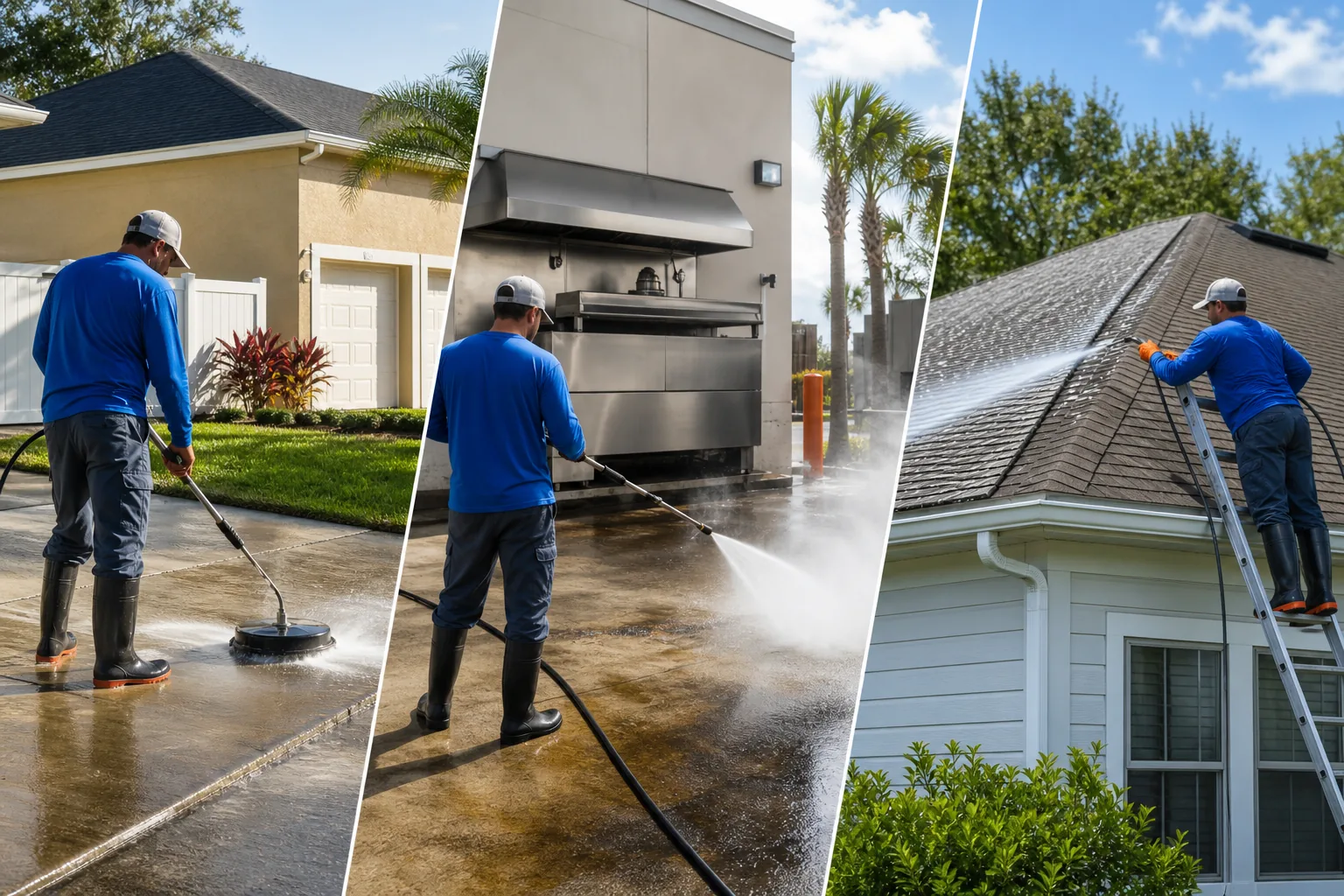
Heat also changes the equipment. Guns, hoses, lances, seals, and fittings must be rated for the water temperature. Hot water expands materials and can speed corrosion when chemicals are present. Stainless fittings often suit harsh, hot, chemical-heavy work better than softer materials.
A foam cannon or another solution-application accessory can help apply a solution across a surface. The accessory does not replace surface testing. We still check the mix, dwell time, runoff path, and rinse needs before covering a full wall.
For roof algae, our page on safe roof soft washing explains why low pressure can protect shingles. If lichen is present, our guide to safe lichen removal covers the need for patience instead of aggressive scraping.
Pro Tip:If the soil is greasy, ask about heated water. If the soil is organic growth on a delicate surface, ask about soft washing.
Step 4: Plan a Safe, Low-Damage Cleaning Job and Maintenance Schedule
A safe cleaning job starts before the machine turns on. We inspect windows, outlets, doors, vents, loose trim, outdoor lights, plants, and drainage areas. Then we set a plan for overspray and runoff.
Protect plants by wetting them before treatment and rinsing them after the work. Cover sensitive items when needed. Keep cleaning solutions away from ponds and storm drains. The exact steps depend on the property, weather, surface, and solution.
Wear eye protection and gloves. Keep people and pets away from the work zone. Never point a spray gun at a person. High-pressure water can cut skin, damage eyes, and inject debris beneath the skin.
Equipment care matters after the job. Flush chemical lines as directed. Inspect hoses for bulges, cuts, and pinhole leaks. Check O-rings and fittings for wear. Store hoses without sharp bends. Pump configurations vary, and a direct-drive pump connects straight to the engine. Regardless of configuration, the machine still needs routine checks.
Corrosion deserves extra attention in Central Florida. Humidity, rain, salt air in some areas, and cleaning chemicals can wear on metal parts. Rinse equipment after chemical use. Use compatible fittings. Replace worn seals before a small leak becomes a larger failure.
We recommend routine maintenance instead of promising a fixed five-year warranty. A periodic plan can keep algae, mildew, pollen, and dirt from building up between major cleanings. Our recommended washing schedule gives property managers a starting point for recurring care.
In Central Florida, the right cleaning method is especially important because our humidity, rainfall, shade, and warm temperatures can accelerate algae, mildew, and organic growth. A roof in Lake Nona may require a very different approach from a concrete driveway in Dr. Phillips or a greasy commercial surface in Orlando.
For a home sale or seasonal rental, timing also matters. Our guide to the best time to wash a house can help you plan around weather and property use. Commercial sites may need a shorter cycle because customers see the exterior every day.
Performance Pressure Wash can review the surface mix with you before work begins. Homeowners can request a free pressure washing estimate that accounts for the actual materials and soil on the property.
If you manage several buildings, combining services may reduce handoffs. Our commercial and residential cleaning coverage includes the kinds of surfaces that often need different methods on the same property.
Frequently Asked Questions
What is the difference between high-pressure cleaning and standard pressure washing?
Heated-water cleaning uses warm water, while pressure washing usually uses cold or ambient water. Both systems can use force to rinse soil, but heat helps break down grease. The right method still depends on the surface. For roofs, soft washing is usually safer because the cleaning solution does the main work at low pressure.
Is pressure washing safe for roof shingles?
Pressure washing can damage roof shingles when the force is too high. Strong spray may remove granules or drive water beneath the shingles. Soft washing uses lower pressure with a cleaning solution designed for organic growth. We inspect the roof first and avoid treating shingles like concrete.
When should I use heated water?
Use heated water when grease, oil, or baked food residue is the main problem. Cold water may rinse loose dirt, but it often cannot break down heavy grease on commercial pads or food-service equipment. We pair heat with the right degreaser and adjust the process to protect nearby finishes.
What PSI is used for soft washing?
Soft washing commonly operates around 100 to 500 PSI, though the exact setup varies by equipment and surface. That is far lower than many pressure-washing applications. The lower force helps protect roofs and siding while the cleaning solution treats algae, mildew, or lichen.
How often should a property be cleaned?
A property should be cleaned on a schedule based on humidity, shade, rain, traffic, and surface type. Central Florida homes may need regular roof and exterior checks because moisture supports algae and mildew growth. We prefer a periodic maintenance plan over waiting until soil has built up.
Conclusion
Choose the method by surface and soil, not by the biggest PSI number. For roofs and delicate siding, ask Performance Pressure Wash about soft washing. For concrete, use controlled pressure. For baked grease, choose heated water with suitable degreasing agents. Your next step is to request a property-specific estimate through our free cleaning quote page .


Comments