


Roof Soft Washing vs Pressure Washing in Central Florida: Which Is Safer?
When it comes to roof cleaning, the right method matters more than how powerful the equipment is. For most residential roofs, soft washing is generally safer than pressure washing because it uses low pressure and a cleaning solution to treat algae, mildew, and other organic growth without relying on high water pressure to do the cleaning.
This is especially important in Central Florida, where heat, humidity, frequent rain, shade, and nearby trees can contribute to algae and mildew growth on asphalt shingles and tile roofs. In this guide, we compare roof soft washing vs pressure washing, explain which surfaces are suited to each method, and show how our team at Performance Pressure Wash approaches roof cleaning for homeowners across Orlando and surrounding Central Florida communities.
Table of Contents
Roof Soft Washing in Orlando and Central Florida
1. Performance Pressure Wash
In the roof soft washing vs pressure washing debate, Performance Pressure Wash starts with the surface, not the machine. Our licensed and insured team uses roof soft washing for shingles and tile, then reserves higher pressure for durable flat work such as concrete.
That distinction matters in Central Florida. Humid air, heavy rain, shade, pollen, mildew, and algae can leave black streaks on a roof. The dark growth often includesGloeocapsa magma, a type of algae that feeds on the limestone filler found in many asphalt shingles.
Pressure washing usually runs at about 1,200 to 4,000 PSI. PSI means pounds per square inch, or the force behind the water. That force works well on concrete, masonry, stone driveways, and sidewalks. It can also remove loose dirt quickly from hard surfaces.
Roofs are different. A high pressure tip can loosen granules, drive water beneath shingles, break weak mortar, or damage flashing. We don’t use a hard blast as a shortcut on delicate roofing.
For a broader look at our local approach, our guide to soft washing vs pressure washing explains how we match cleaning force to each surface.
Roof cleaning should not be priced by square footage alone.The actual cost can depend on the roof size and material, roof pitch and accessibility, number of stories, amount of algae or organic growth, roof condition, nearby landscaping, and the level of protection and rinsing required. A professional evaluation helps determine the appropriate cleaning method and scope of work rather than choosing a method based solely on the lowest price.
We also handle house washing, pool enclosures, sidewalks, commercial sites, fleet washing, and food truck cleaning. For stubborn baked grease, low pressure alone won’t do the job. We use a high heat water system with suitable degreasing agents when that surface calls for it.
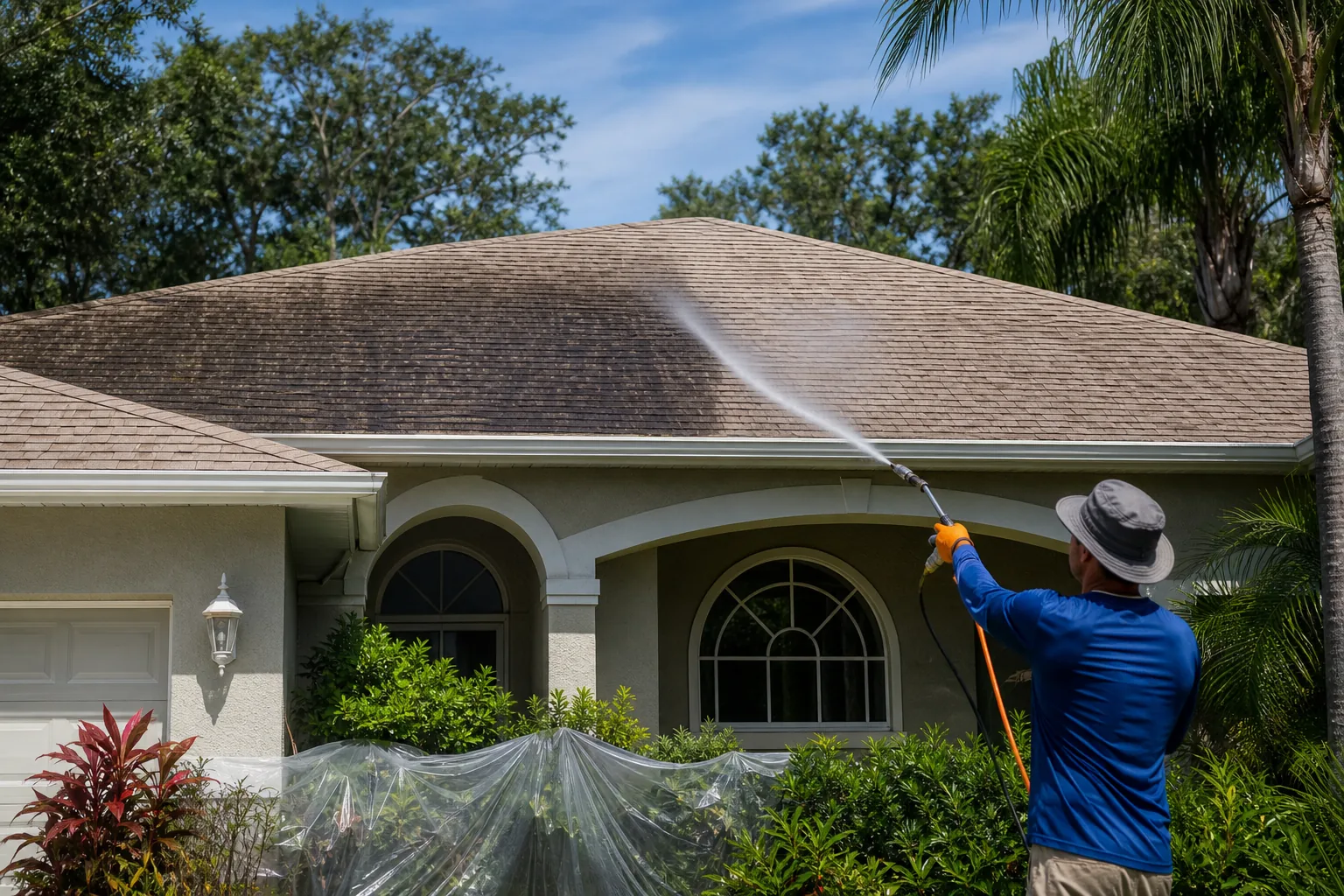
Roof Soft Washing vs Pressure Washing in Orlando and Central Florida
Roof cleaning in Central Florida comes with conditions that are different from many other parts of the country. Orlando and surrounding communities experience long periods of heat, humidity, frequent rainfall, and strong sun. Homes surrounded by trees or located in shaded areas can also hold moisture on the roof longer, creating favorable conditions for algae, mildew, and other organic growth.
That is one reason black streaks and dark staining are common on asphalt shingle roofs throughout the Orlando area. Tile roofs can also develop organic buildup, especially where shade, moisture, and debris are present.
At Performance Pressure Wash, we consider those local conditions when evaluating a roof. The right cleaning approach can depend on the roofing material, roof age and condition, pitch, accessibility, amount of organic growth, nearby trees and landscaping, and how water and cleaning solutions will move around the property.
We provide roof soft washing and exterior cleaning for homeowners throughout Central Florida, includingOrlando, Celebration, Kissimmee, Winter Garden, Clermont, and Davenport. Each property is different, so we evaluate the surface before deciding how much cleaning solution, pressure, rinsing, and protection the job requires.
For Central Florida homeowners, the goal should not simply be to make a roof look clean for a few days. A properly planned cleaning should address the organic growth while taking reasonable care of shingles, tile, landscaping, windows, siding, gutters, and surrounding areas.
Which Surfaces and Projects Suit Each Method?
Roof soft washing vs pressure washing becomes easier when we sort the job by material. A roof, painted wall, brick path, and concrete driveway may sit on the same property, but they need different treatment.
Surface or project | Better first choice | Why | Main caution |
Asphalt shingles | Soft washing | Low pressure treats organic growth without blasting the shingle surface. | Protect plants and control runoff. |
Cedar shakes | Soft washing | Wood can split, scar, or absorb water under hard spray. | Test a small area first. |
Tile roofs | Soft washing | Lower force helps protect tile, mortar, and nearby roof details. | Walk carefully, or avoid walking the roof. |
Vinyl or painted siding | Soft washing | Detergent can treat mildew without forcing water behind panels. | Rinse painted areas well. |
Brick and masonry | Low pressure or soft washing | Brick is porous, so treatment can reach organic growth in joints. | High force may chip brick or harm mortar. |
Concrete driveway | Pressure washing | Concrete can handle more force after pretreatment. | Protect nearby paint and landscaping. |
Decks and screens | Soft washing or low pressure | Gentle cleaning reduces the chance of gouges and surface marks. | Material, age, and paint condition change the plan. |
We may pretreat a driveway or sidewalk with a cleaning solution, then use pressure for the rinse. That two-part process gives the chemistry time to loosen organic buildup before water removes it.
For roof-specific concerns, our page on safe mold and mildew removal from roofs covers black streaks and algae on local roofing materials.
One project needs special care: painting. A soft wash can clean organic growth, but areas due to receive new paint need a thorough rinse. Residue from cleaning agents can affect fresh coatings. We adjust the rinse plan instead of treating every wall the same way.
Effectiveness, Damage Risk, and How Long Results Last
The main difference between roof soft washing and pressure washing is how the cleaning is accomplished. Pressure depends more on mechanical force. Soft washing depends more on a cleaning solution and dwell time, which is the period the solution stays wet on the surface.
Soft washing uses roughly 100 to 500 PSI. That is close to garden-hose force at the low end, not a roof-shaking blast. The solution breaks down organic staining, then a low-pressure rinse removes the residue.
Pressure can make a dirty wall look clean at once. But it may only remove what sits on top. Organic growth can remain in porous brick joints or textured surfaces. That helps explain why staining may return sooner after a force-only wash.
Soft washing has limits too. Sodium hypochlorite, often called SH, targets organic stains such as algae, mold, mildew, and lichen. It won’t remove every rust mark, hard-water stain, or oxidation problem. Those stains need a different treatment plan.
Sodium hypochlorite (SH), the active ingredient in many bleach-based cleaning solutions, is effective against organic growth such as algae, mold, and mildew. Because it is a strong chemical, proper handling, application, plant protection, and runoff management are important.
A useful technical summary from Wikipedia’s explanation of sodium hypochlorite identifies it as a chemical compound used in bleach solutions. Its strength also explains why careless handling can harm plants, finishes, metal, wood, or people.
There is no honest fixed promise for how long a roof will stay clean. Shade, roof pitch, nearby trees, rainfall, and surface age all affect regrowth. Some training demonstrations describe longer results after a properly treated soft wash, but conditions vary too much for us to promise a set number of years.
That is why we recommend a routine periodic maintenance program instead of a five-year warranty claim. A property manager can plan inspections around visible growth and site conditions. A homeowner can address small streaks before they spread across the roof.
Soft-Washing Equipment, Chemical Selection, and Safety
Professional soft washing is not simply pressure washing at a lower setting. The process combines controlled application, the appropriate cleaning solution, dwell time, and a low-pressure rinse to remove organic growth while minimizing stress on the surface.
At Performance Pressure Wash, we select the equipment and cleaning solution based on the material being cleaned and the conditions at the property. Asphalt shingles, tile, siding, painted surfaces, landscaping, windows, and other surrounding materials can all require different considerations.
Chemical strength should never be treated as a one-size-fits-all recipe.The appropriate solution depends on the type and amount of organic growth, surface condition, weather, temperature, surrounding vegetation, and the manufacturer's product directions. For that reason, we don't recommend a universal bleach ratio for every roof or property.
Dwell time is another important part of the process. Allowing the cleaning solution enough time to work can reduce the need for mechanical force. If conditions cause the solution to dry too quickly, the process may need to be adjusted rather than simply increasing water pressure.
Plant and property protection starts before the cleaning solution is applied. Our process may include:
✓ Pre-wetting plants and soil near the work area.
✓ Protecting items and surfaces that could be affected by the cleaning solution.
✓ Applying the solution with controlled spray patterns.
✓ Rinsing plants, windows, walls, and nearby surfaces as needed during the cleaning.
✓ Using an appropriate plant wash or neutralizing process when conditions call for it.
✓ Checking gutters, drainage, and runoff paths before completing the job.
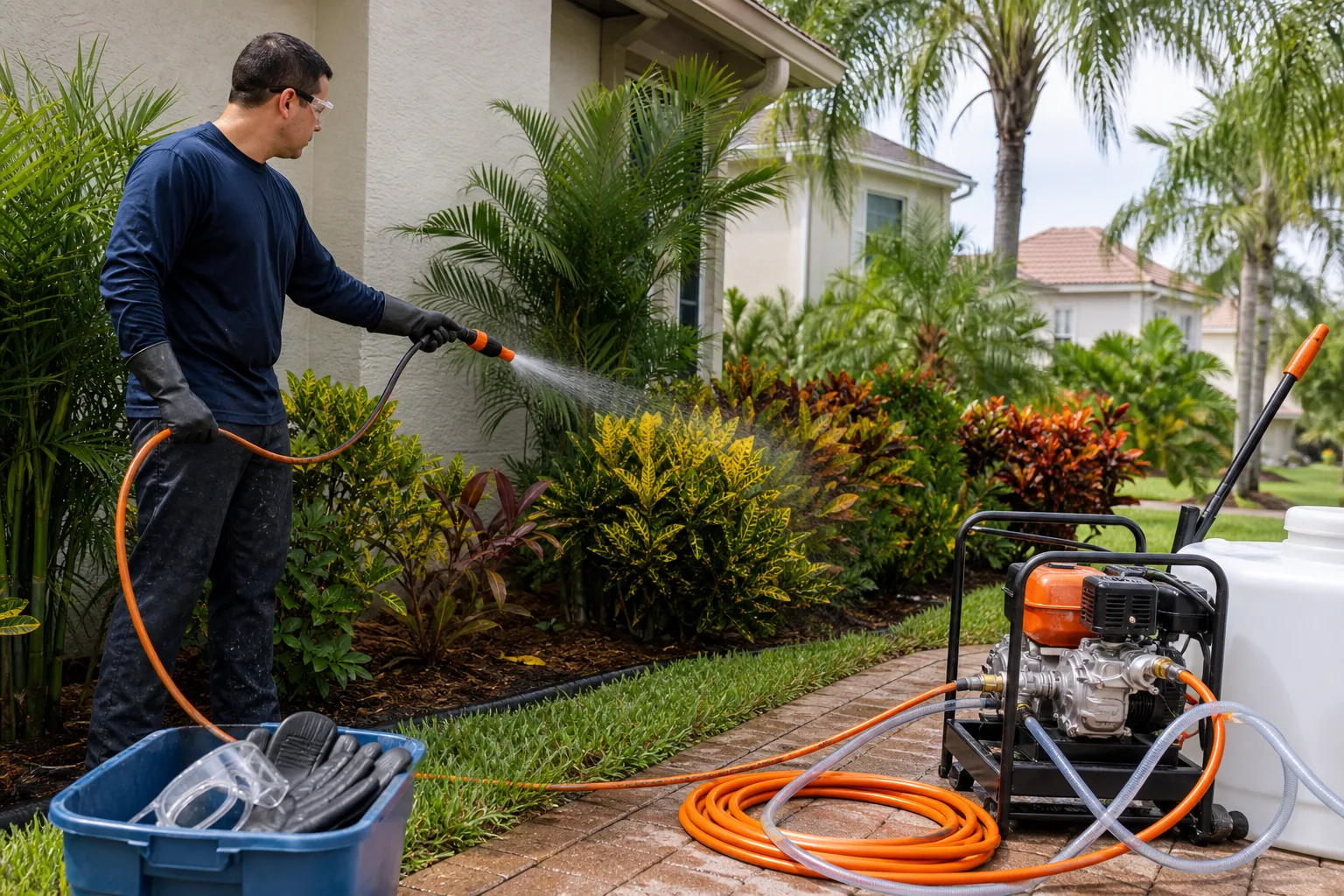
Safety also applies to the crew. Appropriate protective equipment, product labels, and job-specific procedures help reduce exposure to cleaning chemicals. Surface testing may also be appropriate when material condition or finish is uncertain.
Runoff deserves attention as well. We take reasonable steps to control where cleaning water travels and follow product directions and applicable local requirements. The goal is not simply to make a roof look clean; it is to clean the property responsibly while protecting surrounding surfaces, landscaping, and the environment.
Choosing the Right Method for Homes and Businesses
For most roofs, soft washing is the safer choice in the roof soft washing vs pressure washing comparison. The lower force protects shingles and tile, while the cleaning solution reaches organic growth that water alone may leave behind.
For a concrete driveway, sidewalk, loading area, or stone path, pressure may be the better tool. We still inspect first. Cracks, loose joints, old coatings, and nearby doors can change the pressure level and rinse direction.
Homeowners should ask three direct questions before approving work:
✓ What material will you clean?
✓ What pressure will touch that material?
✓ How will you protect plants and handle runoff?
HOA members should also check their community rules before scheduling roof work.
Property managers need a repeatable plan. A shopping center may need pressure cleaning for concrete walkways, soft washing for building walls, and special heat plus degreaser work around food service areas. We can inspect the site as a group of surfaces instead of quoting one method for the whole property.
Cost should be part of the decision, not the only decision. Pressure washing may cost less per square foot, yet roof repairs cost far more than the small upfront difference between methods. Soft washing also tends to use less water, while heated water adds energy use and makes a hot-water system more resource intensive.
For homes, we suggest a roof inspection followed by a maintenance schedule based on growth and shade. Our guidance on how often to clean your roof can help homeowners and property managers plan those inspections. For businesses, we suggest documenting surface types, access points, runoff paths, and the last service date. Performance Pressure Wash can prepare a free estimate after reviewing those conditions.
Frequently Asked Questions
Is soft washing safer than pressure washing for a roof?
Yes, soft washing is usually safer for roofs because it uses about 100 to 500 PSI instead of roughly 1,200 to 4,000 PSI. The cleaning solution treats algae and mildew, then a gentle rinse removes the residue. Pressure can loosen shingle granules or force water beneath roofing materials when the operator uses too much force.
Can you pressure wash asphalt shingles?
Pressure washing asphalt shingles is generally a poor choice because high force can damage the shingle surface. In the roof soft washing vs pressure washing comparison, soft washing fits asphalt shingles better. We use low pressure with a suitable cleaning solution, then protect plants and nearby finishes during the rinse.
Does soft washing remove black streaks from a roof?
Yes, soft washing can remove many black roof streaks caused by organic growth such as Gloeocapsa magma algae. The solution does the main cleaning work instead of a hard spray. Streaks caused by rust, soot, or oxidation may need a separate treatment, so we inspect the stain before choosing chemicals.
Is pressure washing cheaper than soft washing?
Not necessarily.The price of professional roof cleaning depends on the property and the work required, not simply on whether pressure or soft washing is used. Roof material, size, pitch, accessibility, organic growth, roof condition, and the amount of plant and property protection needed can all affect the estimate. More importantly, the lowest upfront price is not always the best value if an unsuitable cleaning method creates a risk of damage to the roof.
How often should a roof be soft washed?
There isn't one schedule that fits every roof.Central Florida's humidity, rainfall, shade, tree cover, roof material, and surrounding conditions can all affect how quickly algae and mildew return. We recommend periodic roof inspections so homeowners can address organic growth before it becomes widespread rather than waiting for a fixed number of years.
Conclusion
For most residential roofs, soft washing is the safer choice than pressure washing. Asphalt shingles, tile, cedar shakes, and other delicate exterior surfaces require a cleaning approach that considers the material rather than relying on high pressure.
In Central Florida, heat, humidity, rainfall, shade, and surrounding trees can contribute to recurring algae and mildew growth. Choosing the right cleaning method can help address that buildup while reducing the risk of unnecessary damage to the roof and surrounding property.
If you're seeing black streaks, algae, or organic buildup on your roof in Orlando, Celebration, Kissimmee, Winter Garden, Clermont, Davenport, or nearby Central Florida communities,Performance Pressure Wash can evaluate the roof and recommend the appropriate cleaning approach. Contact us for a free estimate.

Comments