


Is Soft Washing Safe for Roofs? A Clear Guide
That gentle roof mist can still cause damage if the pressure or chemical mix is wrong. So, is soft washing safe for roofs? Yes, when we keep pressure very low, match the treatment to the roof, and protect the plants and surfaces below.
We’ll explain what makes the method safe, where the risks sit, and what a careful roof cleaning job should look like in Central Florida.
Table of Contents
What Soft Washing Is and Why It Uses Less Pressure
Soft washing cleans a roof with a treatment solution instead of relying on force. The solution breaks down organic growth, such as algae, mildew, mold, and lichen. Water then carries away the loosened material with little impact on the roof surface.
One common cause of dark roof streaks in Central Florida is blue-green algae, often associated with Gloeocapsa magma. This type of algae can create the dark streaks commonly seen on asphalt shingle roofs. A water jet may remove the stain you can see, but it can leave living growth behind. A suitable treatment works on the growth itself.
Sodium hypochlorite, often called SH or chlorine bleach, is one common active ingredient. It can break down organic stains, but it won’t remove rust, hard-water marks, or oxidation. Those stains need a different treatment plan.
Check your roof manufacturer's cleaning instructions and warranty before treating the surface. Use the specified method for that roof material, and ask the manufacturer if the instructions are unclear.
For asphalt shingles, the goal is to use a controlled, very low-pressure application rather than relying on water force to clean the roof. The cleaning solution should do most of the work while minimizing the risk of disturbing the shingles or their protective granules.
Our roof shingle cleaning steps focus on treatment, distance, and surface protection rather than blasting. That matters because granules help shield shingles from sun and weather.
Soft washing also uses less water than a force-based wash in many jobs. That can reduce runoff, but it doesn’t remove the need for runoff control. Less water is still enough to move chemicals into a bed, drain, or pool area.
Key Takeaway:Roof soft washing is safe when the chemical does the cleaning and the water only rinses gently.
Roof Safety: Materials, Chemicals, Plants, and People
The answer to “is soft washing safe for roofs?” depends on four things: the roof material, the treatment, the surrounding property, and the person doing the work.
Soft washing is commonly used on asphalt shingles, metal roofs, and tile roofs. Each material still needs its own plan. Asphalt shingles can lose granules under excess pressure. Metal can react badly to strong chemicals or long dwell times. Tile may handle the treatment well, but cracked or loose tiles can break under foot traffic.
We inspect first. Missing shingles, brittle edges, soft spots, exposed underlayment, and loose flashing can change the job. Cleaning won’t repair those defects. In some cases, the right choice is to delay cleaning until a roofer checks the surface.
Chemicals create a separate risk. Sodium hypochlorite can irritate skin and eyes. It can also harm grass, shrubs, flowers, painted surfaces, wood, and some metals when it lands in the wrong place. We keep people and pets away from the work zone while the treatment is active.
Some roof-cleaning products use oxygen-based cleaners instead of chlorine-based treatments. The appropriate product depends on the roof material, type of staining, surrounding surfaces, and manufacturer recommendations.
Plants need care before, during, and after the application. We pre-wet nearby plants with clean water before applying the treatment and continue monitoring sensitive areas during the wash. Afterward, we rinse those areas again to help remove any cleaning solution that may have reached them.
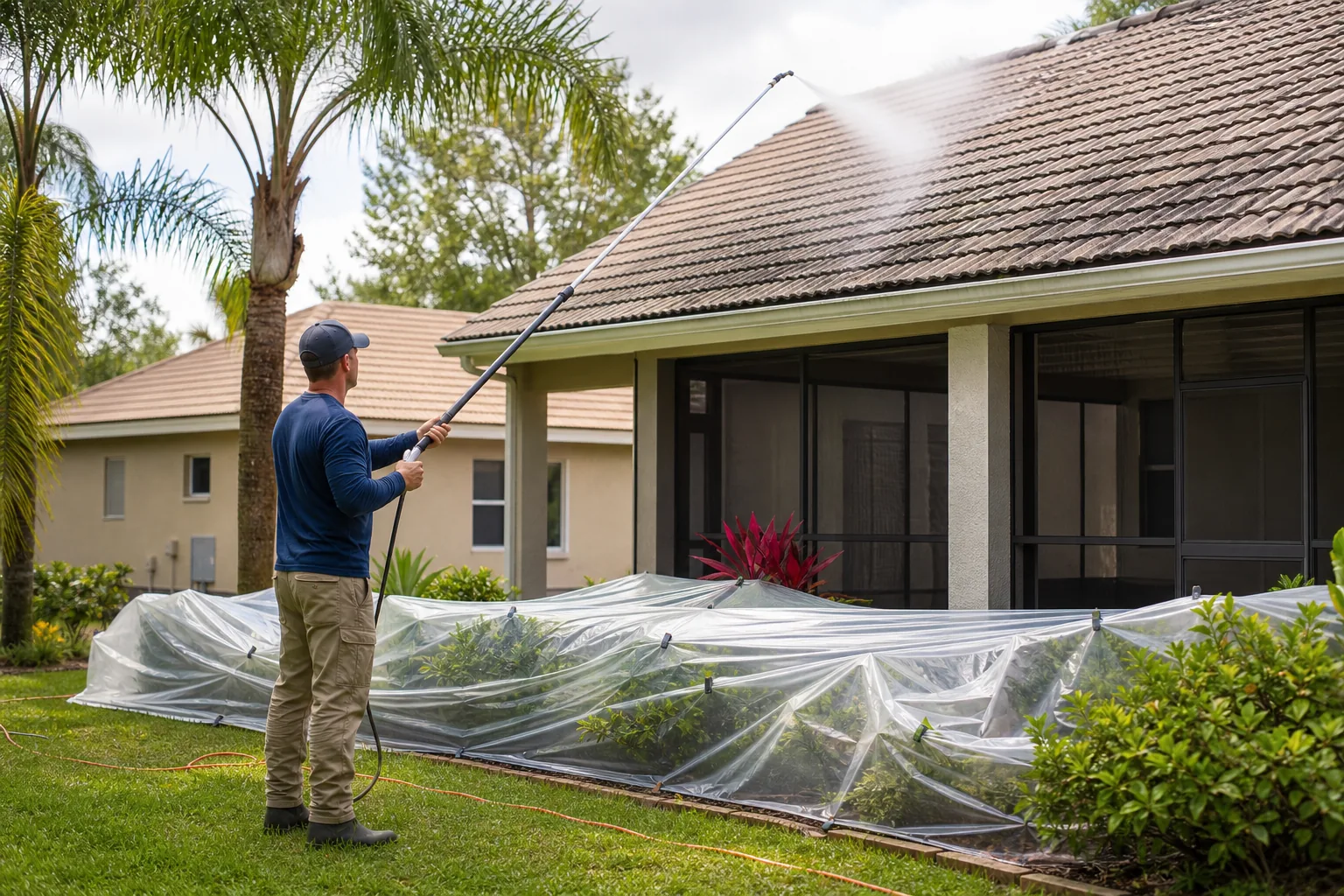
Gutters can help collect runoff, but they don’t solve the whole problem. Bagging or redirecting downspouts can keep concentrated liquid away from a flower bed. Homes without gutters need closer attention along the roof edge.
People need protection, too. We use chemical-resistant gloves, eye protection, protective clothing, and suitable respiratory protection when the product label and work conditions call for it. Wind can carry mist. A job should stop if wind pushes spray toward a neighbor, vehicle, pool, or open window.
Read the roof warranty and manufacturer’s care instructions before work begins. Roof-cleaning requirements can also vary by HOA and local regulations, so homeowners should review any requirements that apply to their property.
How a Roof-Safe Soft-Washing Job Is Carried Out
A roof-safe job starts before the first spray. We first review the roof, the weather, and everything that could receive runoff.
1. Inspect the roof and property
We look for roof age, damaged shingles, cracked tile, exposed metal, skylights, vents, solar equipment, and weak spots. We also note where water can travel. That includes gutters, drains, soil beds, pools, outdoor furniture, and painted walls.
Wind and heat matter in Florida. Wind can move mist off target. Strong sun can speed chemical activity and dry a treatment before it has time to work. Cooler conditions are often easier to control.
2. Protect the ground and nearby surfaces
We move what we can. Then we pre-wet plants and cover sensitive items. If gutters are present, we may use bags or another method to manage runoff. We keep a clean-water hose ready throughout the job.
3. Apply the treatment at low pressure
We apply a roof-appropriate solution with a soft-wash pump or another controlled system. The mix depends on the roof, the stain, the weather, and the product label. We don’t use one strength for every roof.
A surfactant may help the solution cling to the roof instead of running off at once. That gives the treatment more contact time and can reduce waste. It doesn’t make an overly strong mix safe.
4. Allow the solution to work
The treatment needs dwell time. We watch the roof instead of walking away. Dark streaks may lighten quickly, while heavy growth can need a second application. We never scrub shingles hard to force a faster result.
5. Rinse only when the material and treatment require it
The amount of rinsing depends on the roof material, cleaning product, and condition of the roof. Asphalt shingles generally should not be subjected to aggressive rinsing. Other materials, such as metal, may require more thorough rinsing to remove cleaning residue and protect the finish.
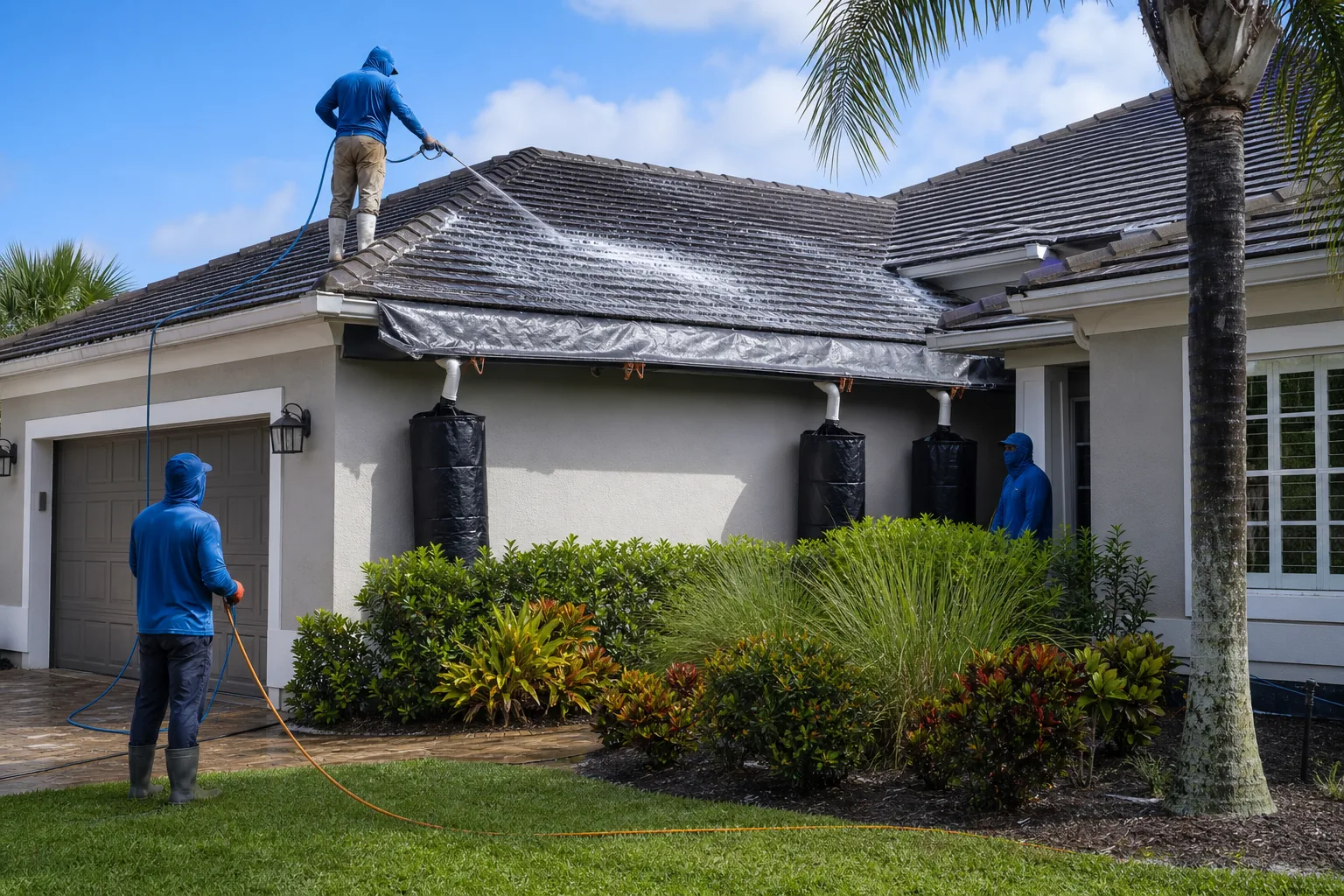
We finish with a ground check. We inspect siding, windows, plants, walkways, and gutters. If runoff reached a sensitive area, we rinse or neutralize it before leaving.
Performance Pressure Wash uses this kind of planned approach for homeowners and property managers. The goal is a clean roof without shifting the risk to your landscaping or exterior walls.
Soft Washing vs. Pressure Washing: Which Is Safer for Roofs?
For most asphalt shingle roofs, soft washing is the safer choice. Pressure washing depends on water force, while soft washing depends mainly on a controlled chemical treatment.
That doesn’t make every soft wash safe. A careless operator can still use too much pressure, too much chemical, or poor runoff control. The method is safer only when the operator follows the limits of the roof and the product.
Decision point | Soft washing | Pressure washing |
Primary cleaning action | Treatment breaks down organic growth | Water force dislodges surface material |
Asphalt shingle risk | Lower when pressure stays very low | Granule loss and surface damage are possible |
Black algae | Can treat the organic growth itself | May remove the visible mark while growth remains |
Metal roof care | May require a full rinse after treatment | Force and nozzle distance need close control |
Best fit | Shingles, tile, metal, and other delicate surfaces | Some durable hard surfaces, not routine shingle cleaning |
Main control point | Mix strength, dwell time, and runoff | Pressure, nozzle angle, distance, and water volume |
We check the roof first, because a damaged roof can’t be made safe by changing the nozzle.
Our explanation of soft washing versus pressure washing also covers why the same cleaning method shouldn’t be used on every surface. A driveway may need a different approach than a shingle roof.
Soft washing is particularly useful when the primary problem is biological growth such as algae, mildew, or organic staining. Rust, oxidation, damaged roofing materials, or structural problems may require a different cleaning method or evaluation by another professional.
Benefits, Maintenance, and When to Hire a Professional
Soft washing can improve curb appeal without putting the roof through harsh mechanical stress. It can also slow the return of organic growth because the treatment reaches more than the top layer of the stain. Because soft washing treats organic growth rather than simply removing the visible surface staining, it can help keep the roof looking cleaner longer.
That helps in Central Florida, where warm weather, humidity, rain, and shade can keep roof surfaces damp. Trees add pollen and debris. Those conditions can bring back algae faster when a wash only removes the visible mark.
We don’t promise a fixed number of extra roof years or a five-year warranty. Roof age, shade, moisture, material, and weather all affect the result. Our better option is a routine periodic maintenance program. We can check the roof at set intervals and treat growth before it becomes heavy.
Maintenance also gives us a chance to spot changes early. A new soft area, loose tile, failed seal, or blocked gutter may need a roofer or another trade. Cleaning should never hide a defect.
When professional help makes sense
✓ The roof is steep, tall, brittle, or hard to reach.
✓ The roof has mixed materials or visible damage.
✓ Landscaping sits close to the drip edge.
✓ You need runoff managed near a pool, drain, or pond.
✓ You’re unsure which treatment matches the roof warranty.
✓ You manage an HOA, rental, or commercial property with several surfaces.
Ask the service provider how they control pressure. Ask what they do with runoff. Ask if they inspect the roof before applying a chemical. A vague answer is a fair reason to keep looking.
For a local example, our Hunters Creek roof soft-wash service is built around algae removal without high-pressure treatment on shingles. Homeowners can request a free estimate for roof soft-wash service.
Pro Tip:Take clear photos of the roof before cleaning. Keep them with your warranty records so you can compare changes during future maintenance visits.
Professional care is especially useful when a property has several risks at once. A roof above delicate landscaping needs a different plan than a clear, single-story roof beside bare ground.
Frequently Asked Questions
Is soft washing safe for asphalt shingle roofs?
Soft washing is generally safe for asphalt shingles when the application uses very low pressure and a suitable treatment. The main roof hazard is granule loss from force, not the idea of gentle spraying itself. We inspect for brittle or damaged shingles first, then follow the roof maker’s care instructions and control runoff.
Can soft washing damage roof shingles?
Yes, soft washing can damage shingles when the pressure is too high or the chemical mix is poorly controlled. Yes. A roof can be damaged if excessive pressure is used or if the cleaning solution is inappropriate for the roofing material. Strong chemicals can also harm nearby paint or plants. A test area, careful application, and a clean-water rinse plan reduce those risks.
What chemicals are used for roof soft washing?
Sodium hypochlorite is a common treatment for organic roof stains such as algae, mold, and mildew. Oxygen bleach, often based on sodium percarbonate, is another option for some jobs. The right choice depends on the roof, stain, weather, and nearby surfaces. We follow product directions rather than use one mix on every property.
Should a soft-washed roof be rinsed?
A soft-washed roof may need a light rinse, no strong rinse, or a full rinse, depending on the material and treatment. Asphalt shingles often need little mechanical action after application. Metal roofs commonly need a more complete rinse to protect their coating. We decide after checking the roof and the chemical used.
How often should a roof be soft washed in Florida?
There is no safe schedule that fits every Florida roof. Shade, trees, humidity, roof material, and the amount of existing growth all change the timing. We recommend routine inspections and periodic maintenance instead of waiting for heavy black streaks. That plan helps catch growth while the treatment can stay mild.
Conclusion
Soft washing is a safe roof-cleaning choice when low pressure, careful chemical use, and runoff protection work together. Before hiring anyone, confirm the roof material, ask how they protect your property, and review the warranty. Performance Pressure Wash can inspect your Central Florida roof and prepare a maintenance-focused estimate.

Comments