


Soft Washing vs Pressure Washing: Which Is Better?

Updated: Sep 3
Soft Washing vs Pressure Washing: Which Is Better?
More pressure doesn't always mean a cleaner property. Soft washing often works better on roofs and siding because the cleaning solution treats algae, mildew, and lichen instead of forcing them off with water alone. We'll compare both methods, show which surfaces fit each one, and explain where hot-water pressure cleaning makes sense.
Table of Contents
1. Performance Pressure Wash
At Performance Pressure Wash , we treat soft washing and pressure washing as different tools. Soft washing uses low pressure, often below 500 PSI, plus cleaning chemistry. Pressure washing uses higher pressure and water flow to remove hard, stuck-on material.
Pressure washing is best when the surface can handle force. Concrete, brick, pavers, asphalt, commercial fleets, and dumpster pads may need mechanical cleaning. Dirt, gum, oil, paint, and baked-on grease won't always respond to a low-pressure chemical treatment.
That last point matters for commercial work. Low pressure doesn't remove stubborn baked grease. Our high-heat water system, paired with the right degreaser, is built for that job. Hot water helps break down grease, while cold water can spread it across the surface.
For soft washing, chemistry does most of the work. A sodium hypochlorite solution, also called bleach, targets organic growth such as algae, mildew, mold, and lichen. A gentle rinse then removes the dead growth and leftover solution. The mix must match the surface and the level of growth.
Decision PointSoft WashingPressure Washing | ||
Typical force | Very low pressure compared with traditional pressure washing; exact pressure depends on the equipment, nozzle, surface, and application method | Higher pressure and water flow, with the exact setting depending on the material and cleaning task |
Main cleaning action | Cleaning solution treats and loosens organic growth | Water force lifts and removes physical buildup |
Best match | Roofs, siding, painted wood, stucco, and screens | Concrete, brick, pavers, fleets, and grease-heavy areas |
Main risk | Chemical damage, runoff, or poor mix control | Stripped paint, damaged mortar, etching, or surface wear |
Water temperature | Usually less important than the cleaning solution | Hot water can help break down grease and oil |
The key is control. A pressure washer can apply chemicals at low pressure through a downstream injector, then switch to a stronger rinse for concrete. Our team selects the method after checking the material, stain type, age, and nearby plants.
A pressure washer is a device that uses a high-pressure water jet for cleaning. The machine matters, but the operator's settings matter more.
Which Surfaces Should Be Soft Washed or Pressure Washed?
Soft washing vs pressure washing comes down to the surface and the stain. We start by asking one simple question: can force damage the material before it removes the dirt?
Choose soft washing for delicate or organic-growth surfaces
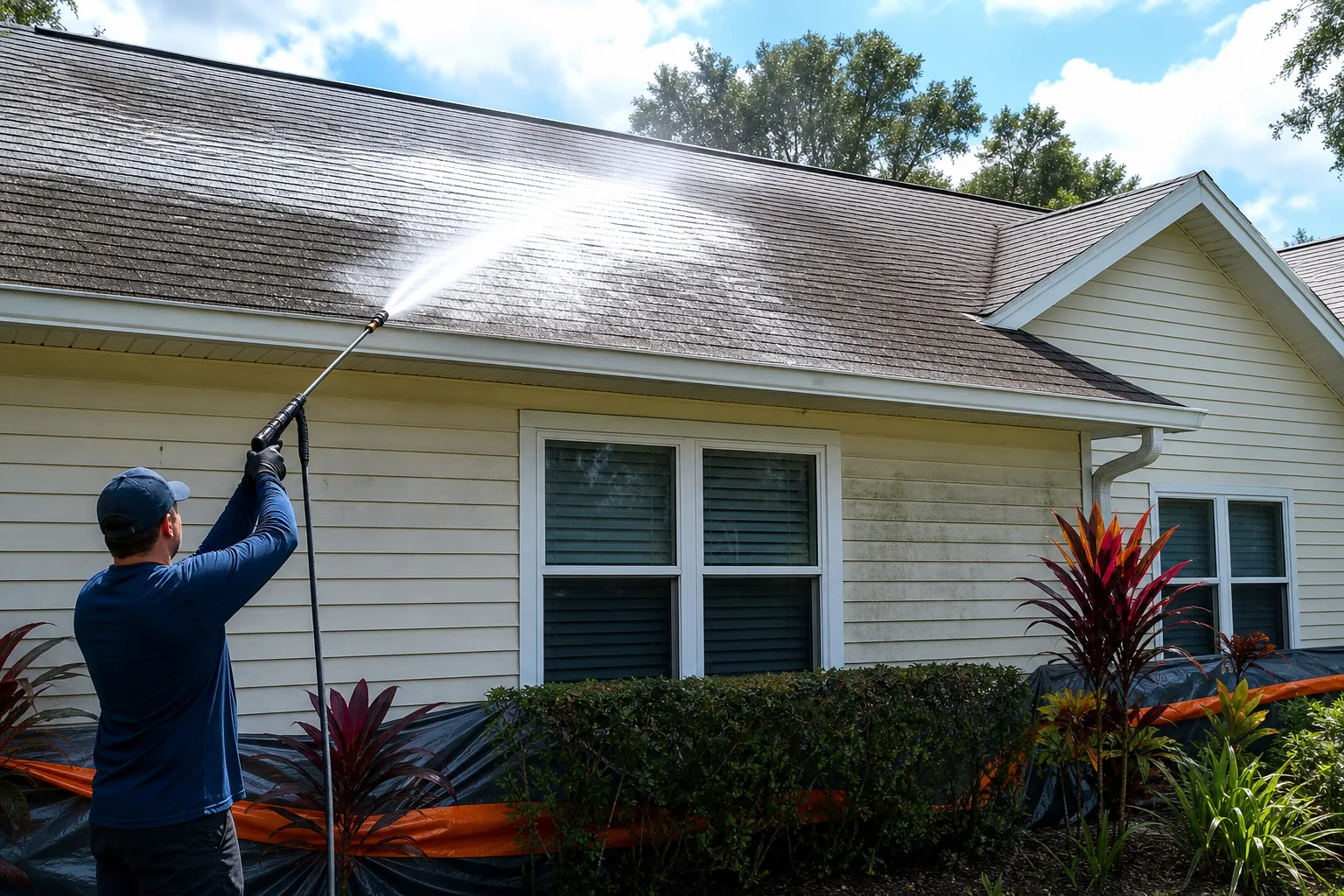
Roofs should generally be soft washed. Asphalt shingles have protective granules that high pressure can loosen. Tile roofs can crack under the wrong spray pattern or force. The cyanobacteria commonly associated with dark roof streaks also needs treatment rather than a quick blast.
If you're concerned about whether roof cleaning can damage asphalt shingles, our detailed guide explains how high pressure can affect shingle granules, why soft washing is preferred, and what homeowners should know before cleaning their roof: Does Roof Cleaning Damage Shingles? Safe Methods for Asphalt Roofs.
Soft washing fits these surfaces well:
✓ Asphalt shingles and many tile roofs
✓ Vinyl siding, painted wood, stucco, and fiber-cement siding
✓ Pool enclosures and screens
✓ Fences, decks, and other painted or weathered materials
✓ Brick walls where mortar could chip or weaken
Central Florida adds pressure of its own. Humid air, frequent rain, shade, and pollen help algae and mildew return. A low-pressure treatment can reach porous areas where a surface-only rinse may leave growth behind. For homes with this type of buildup, professional house washing can help protect siding, stucco, landscaping, and surrounding surfaces while treating the underlying organic growth.
Our Central Florida roof cleaning service uses soft washing because roof care calls for low force and careful runoff control. We inspect the roof first. We also protect plants, windows, vehicles, and outdoor equipment before applying any solution.
Choose pressure washing for hard, durable surfaces
Concrete driveways, sidewalks, loading areas, brick pavers, and some masonry can handle more water force. These surfaces often collect tire marks, mud, rust, gum, and embedded dirt. A pressure rinse can remove material that soft-wash chemistry alone cannot lift.
We still avoid treating every hard surface the same way. New concrete can be vulnerable to etching. Older concrete may have weak spots, cracks, or loose aggregate. Brick needs care because high pressure can damage the face of the brick or push water into mortar joints.
Driveways often benefit from both methods. We may apply a low-pressure treatment first to loosen algae and organic film. Then we use controlled pressure to remove the remaining soil. This approach can clean more evenly than trying to blast every stain away at once.
Keep the stain in mind, too. Sodium hypochlorite works on organic stains. It won't remove every rust mark, hard-water deposit, oxidation stain, oil spot, or paint layer. The right cleaner may be a degreaser, rust treatment, hot water, or a separate restoration process.
For driveway and concrete cleaning , we evaluate the condition of the concrete before choosing the combination of treatment, pressure, water flow, and cleaning agents.
Effectiveness, Damage Risk, Longevity, and Cost
The better method is the one that removes the actual cause of the stain without harming the surface. Soft washing often gives a longer clean on organic growth because it treats the growth. Pressure washing can work faster on hard buildup because it uses physical force.
Soft washing uses very low pressure compared with traditional pressure washing, but there is no single pressure setting that is correct for every job. Surface distance, nozzle choice, water flow, equipment, and material condition all affect the result.
The damage risk runs both ways. High pressure can strip roof granules, remove paint, scar wood, etch concrete, and break mortar. Soft-wash chemicals can harm plants, metal, wood, and painted finishes if the mix or rinse is wrong. A small-area test is appropriate when the material or stain is uncertain.
Soft washing may cost more per visit because it uses specialized chemistry and needs careful setup. It can also reduce repeat cleaning on algae-covered roofs and siding. Pressure washing may cost less for a small concrete area, but heavy grease can require hot water, degreaser, recovery work, or extra passes.
Because every property is different, pricing depends on the surface, size, stories, soil level, access, and condition. A property-specific estimate is more useful than relying on a flat online price.
Exterior growth can return depending on shade, rain, drainage, vegetation, and surrounding conditions. For that reason, Performance Pressure Wash can discuss a routine periodic maintenance program that helps you plan repeat service before buildup becomes severe.
For a quick chemistry reference, sodium hypochlorite is commonly known as bleach. We still rely on product directions and site conditions before selecting a concentration.
Don't judge value by PSI alone. A cheaper method that damages paint or leaves grease behind can cost more after repairs or a second visit.
Choosing the Safest Approach: Workflow, DIY Limits, and Maintenance
A safe job starts before the wand or sprayer turns on. We inspect the surface, identify the stain, check drainage, and look for fragile areas. That short review prevents many cleaning mistakes.
How a careful soft-wash job works
Inspect.We check the roof, siding, screens, paint, fixtures, gutters, and nearby landscaping.
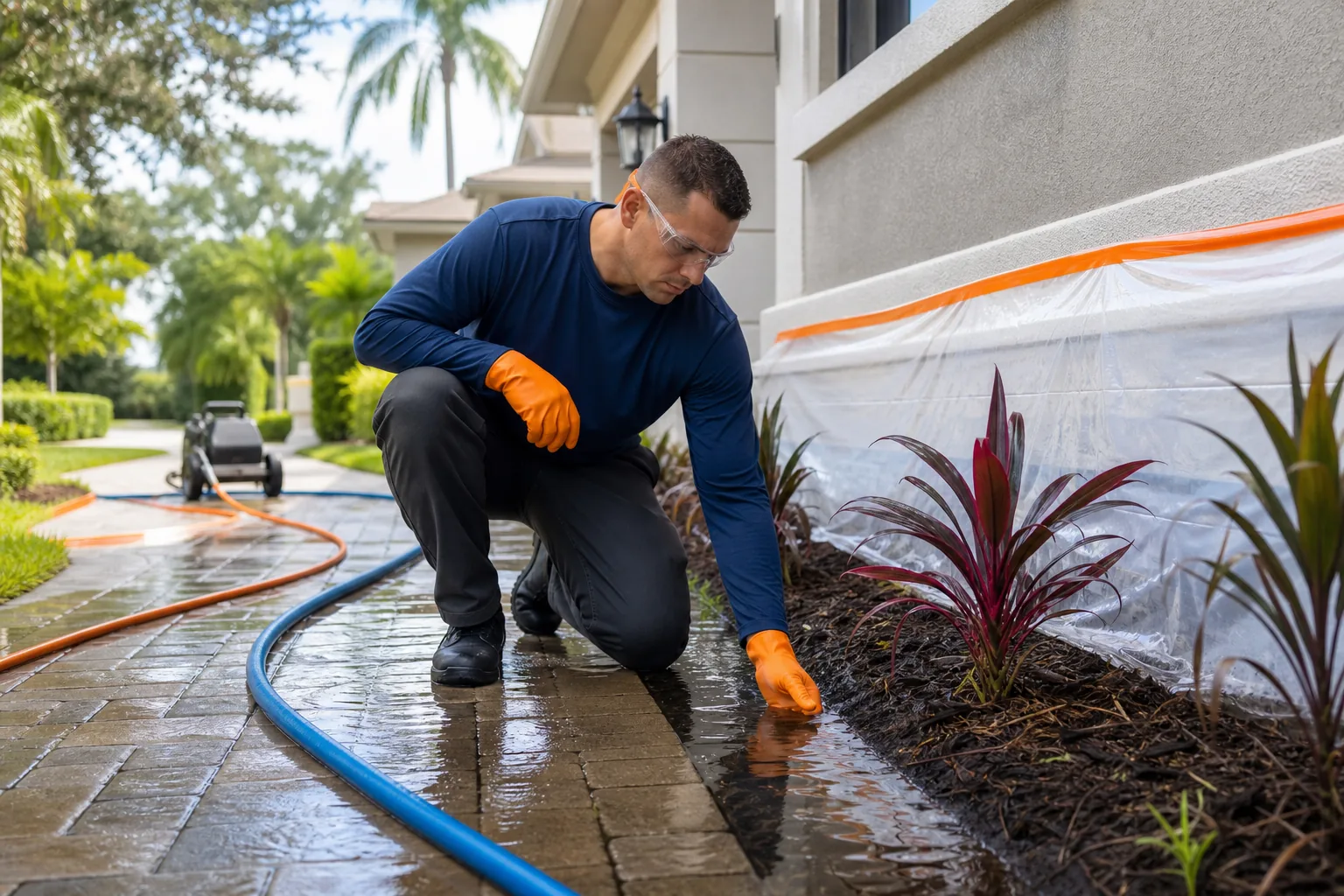
Protect.We pre-wet plants and cover sensitive items. We keep pets and people away from the work zone.
Apply.We use a surface-appropriate solution at low pressure. A proportioner can help control the mix, while a downstream injector has fewer adjustment options.
Allow dwell time.The solution needs time to loosen and treat organic growth. We watch the surface instead of forcing a set time on every job.
Rinse and check.We rinse gently when the product and surface call for it. Then we inspect gutters, walls, plants, and missed areas.
Runoff needs attention. We keep chemical water away from ponds, pools, storm drains, and sensitive planting beds when site conditions require it. We rinse vegetation before, during, and after treatment.
When pressure washing is the safer choice
For a concrete driveway, we first check for cracks, loose sections, coatings, and fresh pours. We may pre-treat organic growth, then use controlled pressure. Restaurant pads and fleet areas may need hot water above 180°F plus a suitable degreaser.
For commercial food-service areas, food truck cleaning and other grease-heavy cleaning may require hot water, degreasers, and controlled pressure rather than soft washing alone.
This is where equipment knowledge helps. PSI describes pressure. GPM describes water flow. A narrow nozzle raises the risk of a concentrated mark, while a wider pattern spreads the load. We choose the nozzle and distance based on the surface, not on the machine's maximum rating
DIY limits and maintenance planning
DIY cleaning may be reasonable for a small patio chair or a simple ground-level surface when you understand the material and machine. Roofs, steep areas, chemical mixing, electrical fixtures, and two-story walls are different. A fall or chemical splash can turn a small cleaning task into an emergency.
Never point a high-pressure stream at asphalt shingles, fragile siding, screens, or painted wood. Wear eye protection and gloves around cleaning chemicals. Follow the product label. Keep children and pets away until the area is rinsed and safe.
Maintenance beats a long gap between cleanings. Keep gutters clear. Trim branches that hold shade and moisture against walls. Watch north-facing siding, roof valleys, pool screens, and shaded concrete after long rainy periods.
Our team can help homeowners, HOAs, and property managers match a service schedule to the property. A periodic plan is more honest than promising a fixed result for every climate and surface.
FAQ
Is soft washing better than pressure washing?
Soft washing is better for roofs, siding, painted surfaces, and organic growth. Pressure washing is better for durable surfaces with grease, oil, gum, mud, or embedded dirt. In soft washing vs pressure washing decisions, the surface always comes first. Using the wrong method can leave stains behind or cause avoidable damage.
Can you soft wash a roof?
Yes, soft washing is the safer choice for most asphalt shingle roofs and many tile roofs. It uses low pressure with a cleaning solution that treats algae and mildew. High pressure can loosen shingle granules or damage tiles. We inspect roof condition first because cleaning cannot repair cracked, loose, or missing roofing materials.
Does soft washing remove grease from concrete?
Soft washing usually won't remove stubborn baked grease from concrete. Grease needs a suitable degreaser plus hot water and controlled pressure. Our high-heat system is designed for grease-heavy areas such as restaurant service zones, dumpster pads, and fleet surfaces. Organic stains may still benefit from a low-pressure pre-treatment.
How much does soft washing cost in Central Florida?
Soft washing prices depend on the surface, size, height, access, and growth level. Pricing varies by project for a house or roof. A written estimate is more useful than a flat online price because two homes can need very different work.
Can I pressure wash my house myself?
You can pressure wash some ground-level hard surfaces yourself, but house walls and roofs carry more risk. High pressure can strip paint, force water behind siding, or damage screens. If you aren't sure about the material, nozzle, distance, or chemical runoff, professional service is the safer choice.
Conclusion
Use soft washing for roofs, siding, paint, screens, and organic growth. Use pressure washing when hard surfaces need force, especially when hot water and degreaser are needed for grease.
The better cleaning method isn't necessarily the one with the most pressure. It's the one that removes the problem while protecting the surface.
If you're unsure which method your property needs, ask Performance Pressure Wash for a surface-based estimate. We can evaluate the material, type of buildup, and condition of the surface and recommend the appropriate cleaning approach. For properties that need ongoing care, we can also discuss a periodic maintenance plan instead of waiting for heavy buildup.

Comments