


How Much to Pressure Wash a House – Costs, Methods & Maintenance
Homeowners often wonder what they’ll actually pay to pressure wash a house. Below we break down the price range, explain how the cleaning works, compare the two main methods, and show how to keep costs down over time.
Table of Contents
How Much to Pressure Wash a House?
Professional house washing companies generally price jobs either by the size of the home, using a per-square-foot calculation, or by providing a flat project price. Some companies also have a minimum service charge. Rates vary based on home size, exterior material, condition, accessibility, and local labor costs.
Many companies have a minimum charge of around $250–$400, although smaller homes may cost less depending on the provider and scope of work. Per-square-foot pricing can also vary considerably, so homeowners should compare the total project price and what's included rather than focusing only on the advertised rate.
Two-story homes may cost more because they require additional equipment, setup time, and safety precautions. Exterior materials also matter: vinyl siding may require a different cleaning approach than stucco, brick, or painted wood.
Pro Tip:Ask exactly what is included in a house washing quote. A lower advertised price isn't necessarily the better value if important preparation, cleaning, or protection steps are excluded.
In Central Florida, Performance Pressure Wash offers a licensed, insured local option with free, customized estimates that factor in these variables.
Which Factors Change the Price of House Washing?
The final bill depends on more than just square footage. Below are the biggest drivers.
Home size and story count.Larger homes need more water, chemicals, and crew time. A single‑story 1,200‑sq‑ft house typically falls within a broad range, while a two‑story 2,000‑sq‑ft home can climb higher.
Exterior material. Hard surfaces such as concrete can generally tolerate higher pressure, while delicate exterior materials such as stucco, vinyl siding, and painted wood often require a lower-pressure cleaning approach to reduce the risk of surface damage or water intrusion.
Organic growth.Florida’s humidity and rain fuel mold, algae, and mildew. Removing them often means a pre‑treatment step that adds labor.
Access and obstacles.Tight corners, landscaping, multiple levels, or difficult-to-reach areas can require additional setup time, extension equipment, or specialized equipment, which can increase the overall project cost.
Seasonality.Off‑peak months, late fall and early spring, often carry lower rates because demand dips.
Key Takeaway:Size, material, and the amount of algae or mold are the three cost pillars you’ll hear most often.
Pressure Washing vs. Soft Washing: Which Method Does Your House Need?
Pressure washing uses pressurized water to remove dirt, grime, and other buildup. It works well on durable surfaces such as concrete, patios, and many brick or stone surfaces when the appropriate pressure is used.
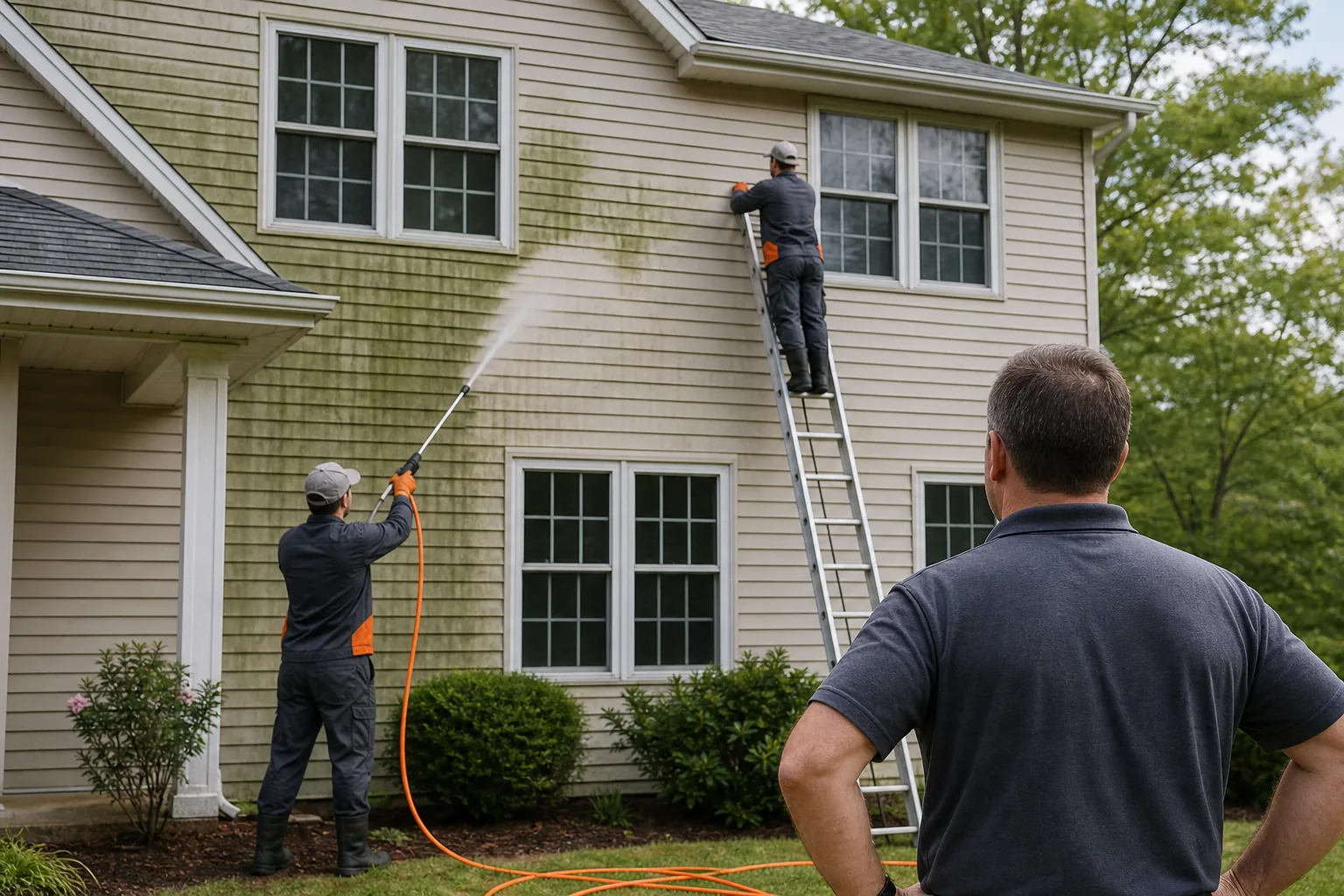
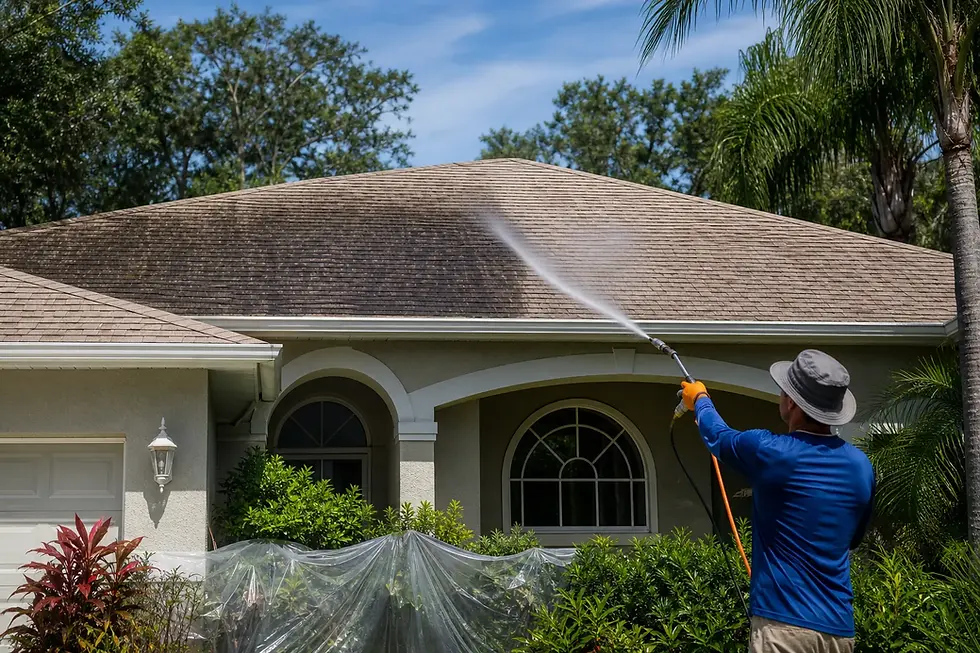
Soft washing combines low-pressure application with appropriate cleaning solutions that help break down organic growth such as algae, mold, and mildew. The method is commonly used on surfaces that can be damaged by excessive pressure, including stucco, painted surfaces, vinyl siding, and many types of roofing materials.
Performance Pressure Wash uses a soft-wash system that applies cleaning solutions and allows adequate dwell time before rinsing with controlled pressure. This approach helps remove organic growth while reducing the risk associated with excessive water pressure on delicate surfaces.
Using high pressure on fragile surfaces can create splash‑back hazards and increase the chance of accidental damage. Soft washing mitigates those risks.
Here’s a quick decision guide:
Concrete, many brick surfaces, and some stone:Pressure washing may be appropriate when the correct pressure and technique are used.
Vinyl siding, stucco, painted wood, and many roof surfaces:Soft washing is generally the safer cleaning approach.
Heavy algae, mold, or mildew:A properly applied soft-wash treatment can help address organic growth at its source rather than simply blasting the surface.
For a deeper look at the method comparison, read our Soft Washing vs Pressure Washing guide .
What Should Be Included in a House Washing Quote?
A clear quote separates labor, materials, and any extra services. Look for these line items:
Square‑footage calculation and base rate (per‑sq ft or flat fee).
Pre‑treatment chemicals for mold, algae, or oil stains.
Protection measures for landscaping, windows, and exterior fixtures.
Travel or water‑access fees if the site is hard to reach.
Optional add‑ons: gutter cleaning, sealant application, or wastewater capture.
Quotes should also note any exclusions, such as repairs needed before washing. This transparency helps avoid surprise charges later.
Performance Pressure Wash includes a detailed, itemized estimate that outlines each of these components and highlights any required pre‑wash repairs.
Read the full service description on our House Washing page for the exact scope.
How Often Should a House Be Washed to Control Long‑Term Costs?
Central Florida’s humid climate means organic growth can appear in just a few months. Regular cleaning can help reduce buildup that may lead to permanent staining.
Homes with heavy shade, nearby vegetation, or higher moisture levels may need cleaning more frequently, while homes with greater sun exposure and less organic growth may go longer between cleanings.
Skipping routine washes leads to deeper grime that can erode paint, corrode metal, and even cause wood rot. Those hidden damages often cost thousands to fix.
For many Central Florida homes, cleaning every 6–12 months may be appropriate, depending on shade, moisture, surrounding vegetation, and the amount of organic growth.
For a personalized schedule, see our How Often to Pressure Wash House guide .
Frequently Asked Questions
How much does a typical house wash cost in Central Florida?
House washing prices vary based on the home's size, height, exterior material, accessibility, and level of organic growth. In Central Florida, smaller house washing projects may start around $150, while larger or more complex homes can cost considerably more.
Is soft washing safe for vinyl siding?
Yes. Soft washing uses low pressure and biodegradable solutions that clean without cracking or forcing water behind the panels.
Do I need to be home while the crew works?
No. As long as you provide water access and clear the driveway, the team can finish the job while you’re out.
What extra fees might appear on a quote?
Extra fees can include travel mileage, wastewater capture, pre‑treatment for stubborn stains, and protection of nearby landscaping.
Can I combine house washing with roof or gutter cleaning?
Absolutely. Bundling services can let crews reuse equipment and chemicals across the tasks.
How do I know if a provider is licensed and insured?
Ask to see a copy of their contractor’s license and general liability insurance certificate before signing a contract.
Conclusion
For homeowners wonderinghow much to pressure wash a house, the final cost depends on several factors, including home size, exterior material, height, accessibility, and the amount of dirt or organic growth present. In Central Florida, professional house washing may start around $150 for smaller homes, with larger or more complex properties costing more.
Choosing the appropriate cleaning method is just as important as comparing prices. Pressure washing can be effective for durable surfaces, while soft washing is often better suited for delicate exterior materials and organic growth.
If you're in Central Florida and would like to know what your specific property requires, contact Performance Pressure Wash for a free, customized estimate.
Comments