


Does Roof Cleaning Damage Shingles? Safe Methods for Asphalt Roofs
Roof cleaning can damage shingles when the wrong method is used. High-pressure washing can strip the protective granules from asphalt shingles, while a properly performed soft wash uses a controlled cleaning solution and low-pressure rinsing to remove algae and organic growth without aggressively scouring the roof surface.
So, does roof cleaning damage shingles? It can if the roof is cleaned with excessive pressure, abrasive brushing, or the wrong cleaning products. The safer approach is to identify the roof material, inspect its condition, follow the shingle manufacturer's care instructions, and use a cleaning method appropriate for asphalt shingles.
In this guide, we'll explain how roof cleaning can damage shingles, why soft washing is commonly used for asphalt roofs, what a careful roof cleaning process should include, and what Central Florida homeowners should know about algae, moss, runoff, and roof maintenance.
Table of Contents
How Roof Cleaning Can Damage Shingles
When homeowners ask, "Does roof cleaning damage shingles?" the answer depends heavily on how the roof is cleaned.
Asphalt shingles are not like concrete driveways, patios, or sidewalks. The surface of an asphalt shingle contains protective granules that contribute to the roof's weather resistance. High-pressure washing or aggressive scrubbing can loosen and remove those granules.
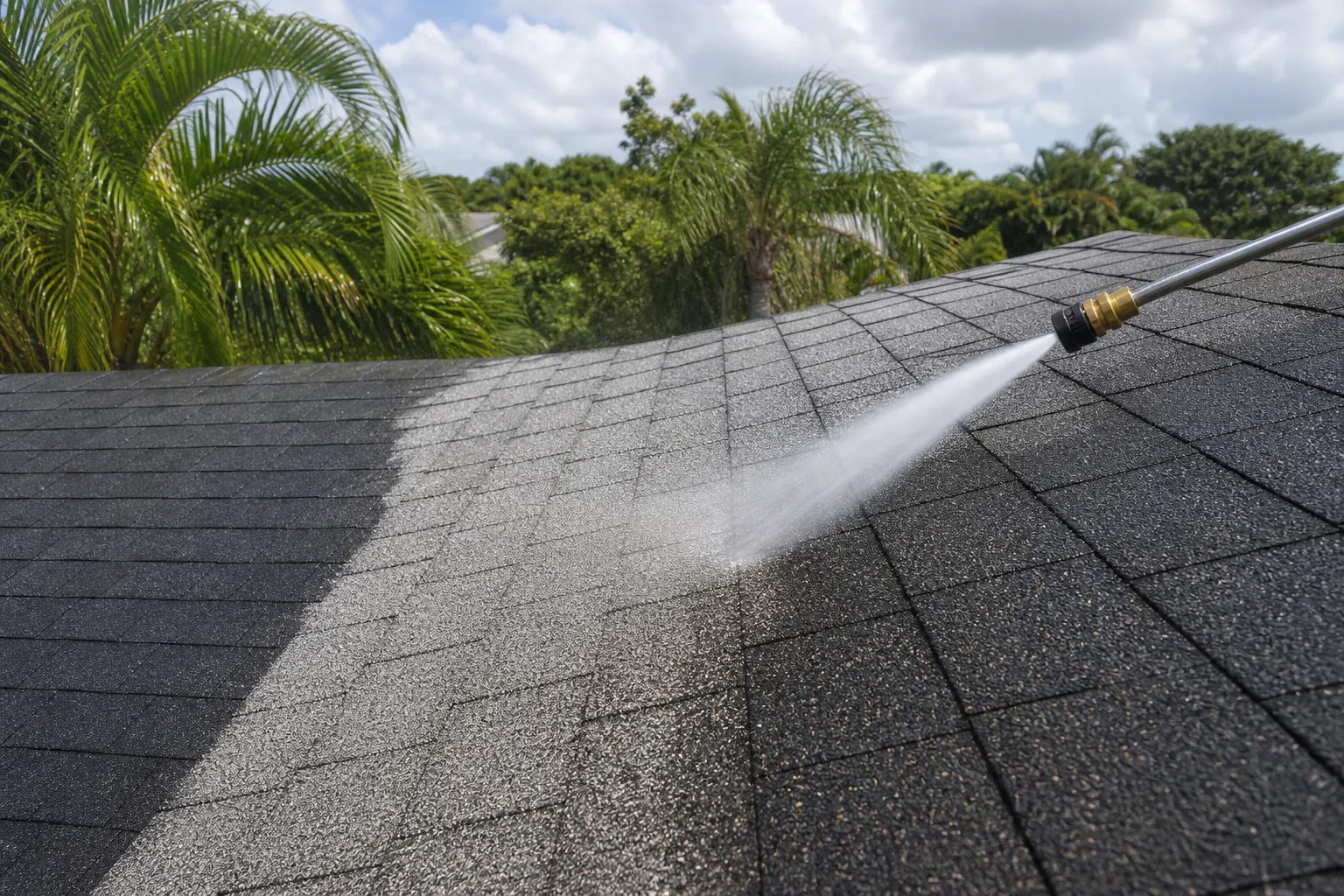
The Asphalt Roofing Manufacturers Association (ARMA) specifically warns against using power washers or brushes to clean algae from asphalt shingles because high-pressure washing can damage the roofing surface and cause granule loss.
What happens when shingle granules are lost?
If granules are removed during cleaning, they may wash into the gutters and downspouts. Homeowners sometimes notice what looks like dark grit or sand in the gutters after an improperly performed roof cleaning.
The roof may still look clean from the ground, but aggressive cleaning can leave the shingle surface with less of its protective granule coverage.
Pressure can also damage the physical edges of shingles. Directing a strong stream beneath shingle laps can force water where it does not belong and may contribute to moisture intrusion.
That's why cleaning asphalt shingles should never be approached like pressure washing a driveway.
Algae, moss, and lichen are not the same thing
The black streaks commonly seen on asphalt roofs are often caused by algae rather than dirt or mold. One of the most common organisms associated with this discoloration is Gloeocapsa magma, a blue-green algae that can create dark streaks and discoloration on roofing surfaces.
Algae is primarily an appearance issue. ARMA notes that algae discoloration itself has not been shown to damage asphalt shingles, although it can significantly affect the appearance of the roof.
Moss is different. Moss can grow between and over shingles, retain moisture, and cause shingle edges to lift or curl. Heavy moss growth can interfere with the way water sheds from the roof and may contribute to roof problems if left unchecked.
Central Florida roofs face ideal conditions for organic growth
Central Florida's warm, humid climate can create favorable conditions for algae and other organic growth. Shaded roof planes, overhanging trees, leaves, pine needles, and moisture can make certain areas more susceptible.
This is one reason homeowners in Orlando, Kissimmee, Winter Garden, Lake Nona, Hunters Creek, Windermere, and surrounding Central Florida communities commonly see black roof streaks and organic growth.
We inspect before cleaning because a stain and a roof defect are different problems.
Missing shingles, exposed fasteners, curled edges, damaged flashing, deteriorated vent boots, or signs of an active leak should be identified before cleaning begins. Roof cleaning cannot repair existing roof damage.
At Performance Pressure Wash, our approach is simple: if the roof is asphalt shingle, we do not blast it with high pressure. We select a cleaning method designed for the roofing material and the condition of the property.
Why Soft Washing Is Safer for Asphalt Shingles
Soft washing is commonly used for asphalt shingle roof cleaning because it relies on a cleaning solution to address organic growth instead of using high pressure to physically strip it from the roof.
The goal is simple: let the cleaning solution do the work rather than using pressure to force the growth off the shingles.
A professional roof-cleaning solution may contain sodium hypochlorite, the active ingredient in liquid chlorine bleach, diluted appropriately for the roof and surrounding property. The correct cleaning solution and dilution can vary depending on the shingle manufacturer, product being used, amount and type of growth, roof condition, weather, and application method.
There is no responsible one-size-fits-all chemical recipe for every roof.
ARMA recommends that homeowners and contractors follow the roofing manufacturer's cleaning instructions. Its current guidance explains that cleaning solutions should be gently applied, that the surface should not be scrubbed, and that the roof should be rinsed gently with water.
Why low pressure matters
The purpose of a soft wash is not to remove algae by force.
Instead, the cleaning solution helps break down and kill organic growth. The roof can then be rinsed using low pressure without aggressively attacking the shingle surface.
A typical professional process may include:
Pre-wetting landscaping and nearby surfaces.
Applying the appropriate cleaning solution in manageable sections.
Allowing the solution adequate time to work.
Preventing the solution from drying on the roof or surrounding surfaces.
Gently rinsing the roof with low-pressure water.
Inspecting the property after cleaning.
Rinsing affected landscaping and nearby surfaces as appropriate.
ARMA's guidance describes allowing a cleaning solution to remain on the roof for a controlled period and then gently rinsing it, while warning that the roof becomes slippery during the process.
Why you should not scrub asphalt shingles
It can be tempting to use a brush to physically remove black streaks, moss, or dirt.
That's not a good approach for asphalt shingles.
ARMA specifically warns against using brushes or brooms to clean algae from asphalt roofing because friction can loosen and remove granules.
The same principle applies to pressure washing: the goal is to clean the roof without unnecessarily disturbing the roofing surface.
What about bleach?
Sodium hypochlorite is commonly used in professional roof cleaning, but that does not mean stronger is always better.
A cleaning solution that is too strong, improperly applied, allowed to dry, or allowed to remain on surrounding surfaces can cause damage to landscaping, painted surfaces, metal, outdoor fabrics, and other property.
The correct approach is to follow the product label and the roofing manufacturer's recommendations rather than copying a fixed chemical recipe from the internet.
ARMA notes that cleaning instructions and appropriate solution mixtures can vary by shingle manufacturer and the degree of discoloration.
For that reason, professional roof cleaning is about more than simply putting bleach in a pump-up sprayer. The operator must understand the roof, the surrounding property, the chemical being used, runoff, weather conditions, and safe application.
What a Safe Roof Cleaning Process Should Include
A safe roof cleaning process begins before any cleaning solution touches the shingles.
The answer to "Does roof cleaning damage shingles?" depends not only on the cleaning method but also on preparation, chemical control, property protection, and the condition of the roof.
1. Inspect the roof and property
Before cleaning, we look for visible conditions that may affect the job, including:
Missing or damaged shingles
Curling or lifted shingle edges
Exposed fasteners
Damaged flashing
Deteriorated vent boots
Skylights
Solar equipment
Gutters and downspouts
Heavy moss or organic growth
Signs of possible leaks
Nearby landscaping and sensitive surfaces
The purpose of the inspection is not to diagnose a roof replacement issue. It is to identify visible conditions that could affect the cleaning process and to let the homeowner know about obvious concerns before work begins.
If a roof appears to have significant damage or is too deteriorated to safely clean, a roofing professional may need to evaluate it before cleaning.
2. Protect plants and nearby surfaces
Roof cleaning involves runoff, so property protection matters.
Landscaping should be pre-wet and monitored during the application. Nearby siding, windows, painted surfaces, outdoor furniture, pools, vehicles, and other sensitive areas may also require protection and rinsing.
Bleach-based cleaning solutions should not be allowed to sit on plants or sensitive surfaces.
Pets should also be kept away from the work area during the cleaning process and until the affected areas have been appropriately rinsed.
3. Apply the cleaning solution in sections
Working in manageable sections allows the operator to control the amount of solution being applied and monitor runoff.
Roof pitch, shade, temperature, wind, and the amount of organic growth can all affect how a cleaning solution behaves.
The solution needs enough time to work, but it should not be allowed to dry into a concentrated residue on the roof or surrounding surfaces.
A professional should monitor the roof rather than simply following a rigid timer.
4. Rinse with low pressure
The rinse should remove the cleaning solution and loosened organic material without aggressively disturbing the shingles.
Water should generally be directed down the slope of the roof rather than forced upward beneath shingle edges.
The operator should also avoid unnecessarily directing water at roof penetrations, flashing, skylight seals, exposed fasteners, and other vulnerable details.
ARMA recommends gently rinsing asphalt roofing after cleaning rather than using a power washer.
5. Inspect the property after cleaning
Roof cleaning does not end when the roof looks clean.
The surrounding property should be checked for runoff, chemical residue, plant exposure, gutters, downspouts, siding, windows, and other surfaces affected by the work.
A professional cleaning company should leave the property in a condition that reflects the same level of care used on the roof itself.
At Performance Pressure Wash, we adjust the plan to the roof material and property layout. Asphalt shingles need a different approach than tile. Even tile can crack when someone uses poor angles, too much force, or careless foot traffic.
At Performance Pressure Wash, we adjust our cleaning approach to the roof material and property layout.
Asphalt shingles require a different approach than tile roofs.
Even tile roofs can crack when they are cleaned carelessly, exposed to excessive force, or walked on improperly. Roof material, age, condition, pitch, and accessibility should all be considered before choosing a cleaning method.
For homeowners who want to understand the difference between these approaches, our soft washing versus pressure washing guide explains why different surfaces require different cleaning methods.
DIY Risks, Cleaning Alternatives, and Ongoing Maintenance
DIY roof cleaning can turn a relatively simple maintenance project into a much bigger problem.
The biggest risks include falls, incorrect chemical use, damaged shingles, poor runoff control, and failing to recognize existing roof damage.
ARMA warns that working on a roof is dangerous and recommends that trained professionals perform this type of work. The cleaning process itself can make shingles slippery and hazardous to walk on.
Common DIY roof-cleaning mistakes
Homeowners should avoid:
Pressure washing asphalt shingles.
Scrubbing shingles with a brush or broom.
Walking unnecessarily on algae-covered or wet shingles.
Using an unknown chemical mixture.
Allowing cleaning chemicals to dry on the roof or surrounding surfaces.
Ignoring landscaping and runoff.
Assuming every roof can be cleaned using the same method.
Treating visible discoloration as proof that the roof itself is damaged.
What homeowners can safely check from the ground
A homeowner can begin with a simple visual inspection from a safe location.
Look for:
Missing shingles
Sagging areas
Heavy moss
Dark algae streaks
Exposed nails or fasteners
Debris buildup
Tree branches touching the roof
Clogged gutters
Areas that remain shaded or damp
If you see significant roof damage, contact a qualified roofing professional before attempting to clean it.
Non-bleach roof cleaning products
Non-bleach roof cleaning products are available, but "non-bleach" does not automatically mean "risk-free."
Every cleaning product has its own instructions, compatibility requirements, and potential effects on roofing materials and surrounding property.
ARMA recommends consulting the shingle manufacturer before using cleaning chemicals or methods that are not specifically approved for the roofing system.
Roof maintenance can reduce organic growth
Regular maintenance can help reduce the conditions that encourage algae and moss.
ARMA recommends several preventative measures, including trimming branches to increase sunlight and reduce debris accumulation, removing debris using non-abrasive methods, directing airflow down the slope of the roof, and keeping gutters clear for proper drainage.
For Central Florida homeowners, that can mean:
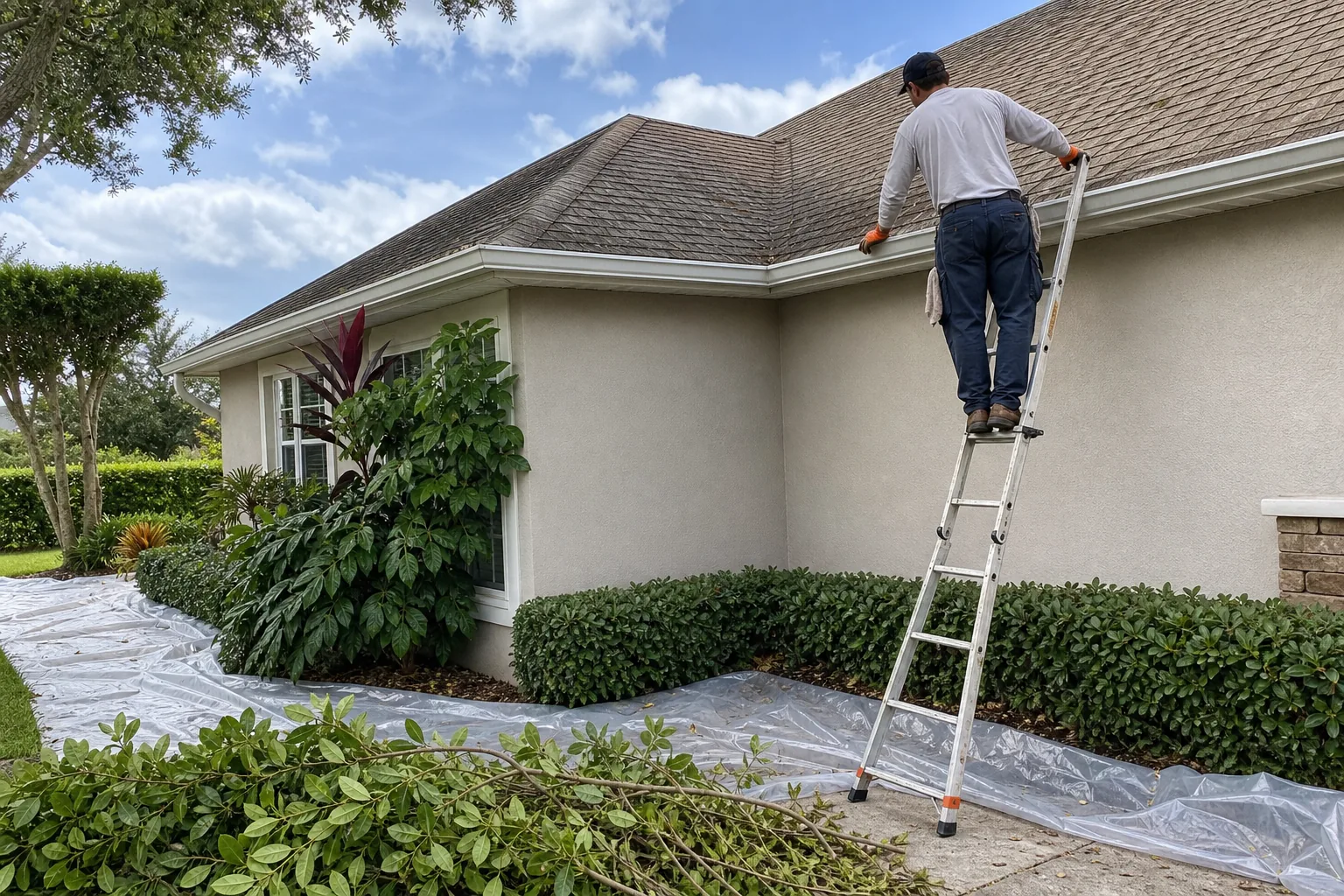
Trimming branches that shade the roof.
Keeping leaves and pine needles from accumulating.
Keeping gutters clean.
Monitoring shaded roof planes.
Checking for algae and moss before growth becomes heavy.
Scheduling periodic roof inspections when appropriate.
There is no honest one-size-fits-all roof cleaning schedule.
A roof surrounded by large trees may develop organic growth faster than a roof with full sun exposure. Roof orientation, shade, moisture, debris, and local weather conditions all influence how quickly algae or moss can return.
Roof age matters
Roof age and condition should also influence the cleaning decision.
A newer roof with light algae discoloration may require a straightforward cleaning treatment. An older roof with brittle shingles, heavy moss, significant granule loss, or visible damage may need a roofing professional's opinion before cleaning.
Cleaning a roof should never be viewed as a substitute for repairing an existing roofing problem.
When should you hire a professional roof cleaner?
Professional roof cleaning can reduce the risks associated with working at height and can provide better control over chemical application, runoff, landscaping protection, and the cleaning process.
Before hiring a roof-cleaning company, ask:
What method do you use on asphalt shingles?
Do you use high pressure on the roof?
How do you protect landscaping?
What cleaning solution do you use?
How do you control runoff?
Do you inspect the roof before cleaning?
What do you do if you find damaged shingles?
Do you follow the shingle manufacturer's cleaning recommendations?
A reputable contractor should be comfortable answering these questions.
Our roof shingle cleaning guide provides additional information about safe roof cleaning, treatment, access, and property protection.
If you would rather have the roof evaluated before deciding what it needs, Performance Pressure Wash provides roof cleaning estimates for properties within our Central Florida service area.
Frequently Asked Questions
Does roof cleaning damage shingles?
Roof cleaning does not have to damage shingles when the correct method is used. However, high-pressure washing and abrasive scrubbing can damage asphalt shingles by loosening protective granules. ARMA specifically advises against power washing or brushing asphalt shingles.
Is soft washing safe for asphalt shingles?
Soft washing is commonly used for asphalt shingle roof cleaning because it relies on a cleaning solution and low-pressure rinsing rather than aggressive pressure. The cleaning solution must be appropriate for the roofing material and used according to the product label and shingle manufacturer's recommendations.
Can bleach damage an asphalt shingle roof?
Bleach and other cleaning chemicals can damage surrounding property if they are improperly mixed, applied, or rinsed. Sodium hypochlorite solutions are used for algae and moss treatment, but the appropriate mixture can vary by manufacturer and application. Always follow the product label and roofing manufacturer's instructions.
Can I pressure wash moss off my roof?
You should not pressure wash moss from asphalt shingles. High-pressure washing can remove protective granules and damage the roofing surface. Moss should be treated carefully, and heavy or established moss may require additional attention after the growth has been killed and loosened.
How often should a roof be cleaned in Florida?
There is no universal schedule for every Florida roof. Shade, trees, humidity, rainfall, roof orientation, and debris can all affect how quickly algae and moss return. Instead of relying on a fixed cleaning interval, homeowners should periodically inspect the roof and address organic growth before it becomes heavy.
What causes black streaks on roof shingles?
Black streaks on asphalt shingles are commonly associated with algae, particularly Gloeocapsa magma. The discoloration is especially noticeable on lighter-colored roofs and is common in warm, humid environments.
Does algae damage asphalt shingles?
According to ARMA, algae discoloration itself has not been shown to damage asphalt shingles, although it can negatively affect the appearance of the roof. Moss is different and can cause problems by lifting or curling shingle edges and interfering with water shedding.
What is the safest way to clean an asphalt shingle roof?
The safest approach is to follow the shingle manufacturer's cleaning instructions and avoid high-pressure washing and abrasive scrubbing. A properly controlled soft-wash process can use an appropriate cleaning solution followed by gentle, low-pressure rinsing. Roof access also presents significant fall hazards, so professional roof cleaning is often the safer choice.
Conclusion
So, does roof cleaning damage shingles?
It can when the wrong cleaning method is used.
High-pressure washing, aggressive brushing, improper chemical use, and careless roof access can create problems that are far more expensive than the original algae or moss.
For asphalt shingles, the goal should be to remove organic growth while protecting the roofing surface. That means identifying the roof material, inspecting its condition, following the manufacturer's care instructions, protecting landscaping and surrounding surfaces, controlling runoff, and using a cleaning method that does not rely on excessive pressure.
For Central Florida homeowners dealing with black roof streaks, algae, moss, or general roof discoloration, professional soft washing can provide a safer alternative to pressure washing.
At Performance Pressure Wash, we believe roof cleaning should be done with the same care we would use on our own home. We treat your home like ours.
If you're in the Orlando or Kissimmee area and want to know whether your roof needs cleaning, contact Performance Pressure Wash for a professional assessment and free estimate.

Comments