


Why Your Roof Shows Black Streaks and How to Fix Them
Those dark lines crawling down your shingles aren’t just dirt. Roof algae is one of the most common causes of black streaks on roofs throughout Central Florida. In Central Florida they often signal a bigger problem under the surface. Below we break down the real causes, show how to spot each one, and explain the safest way to clean and protect your roof.
Table of Contents
The Most Common Cause: Gloeocapsa magma Algae
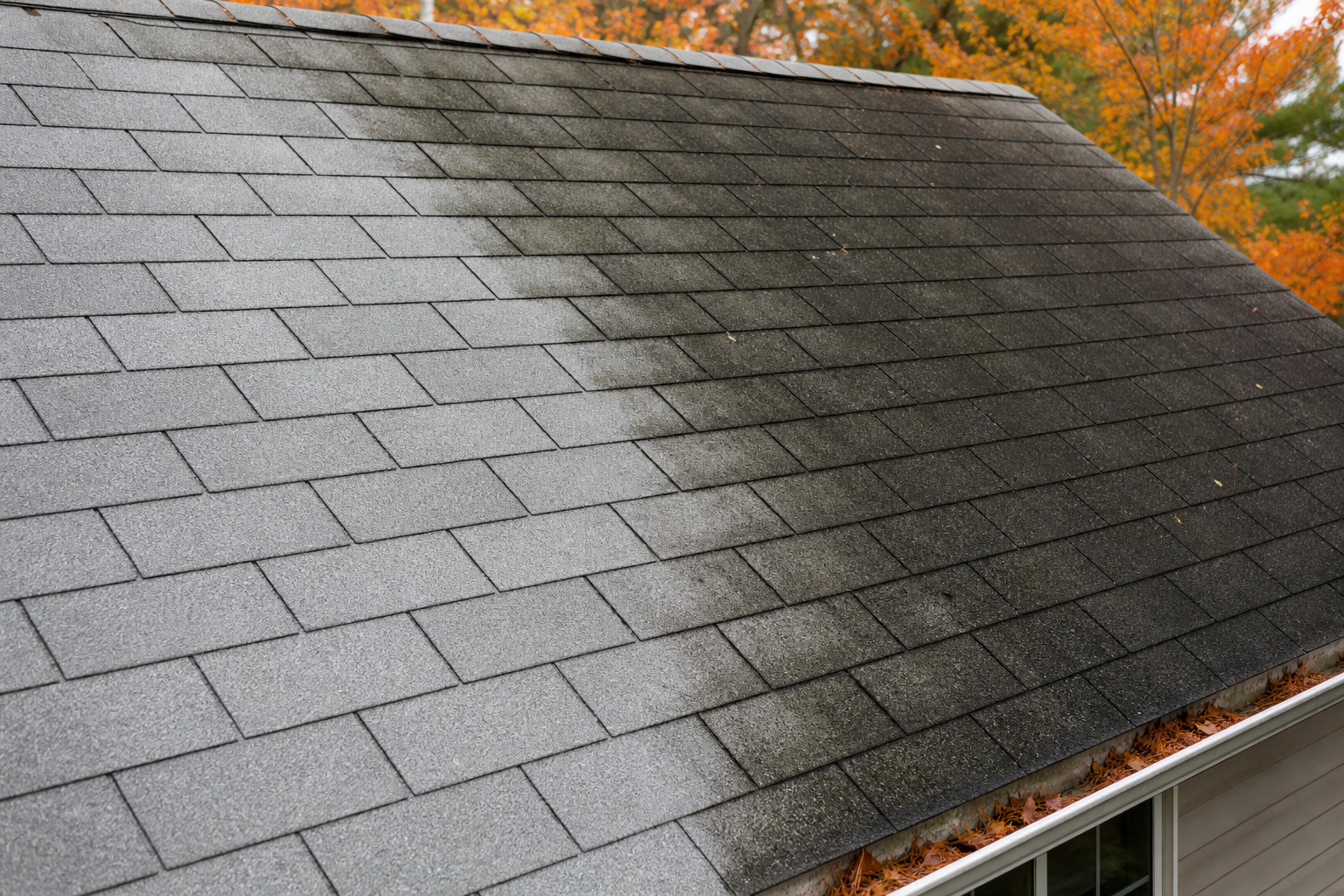
Gloeocapsa magma is a blue‑green cyanobacterium that loves the limestone filler in asphalt shingles. It spreads through the air, lands on a damp shingle, and forms a dark, UV‑protective coating that appears as long, uneven streaks down the roof slope. The algae colonizes the surface of shingles and thrives in areas where limestone filler and moisture are present.
Many homeowners first notice these black stains on the roof after several rainy seasons, especially on shaded sections that stay damp longer. The streaks may start as a few dark specks near the ridge, then gravity pulls the colonies down, creating the classic vertical lines.
Because the algae’s pigment is essentially sunscreen, the stained areas absorb more heat. The dark pigmentation absorbs more heat, which can contribute to higher roof surface temperatures and potentially increase cooling demands during Florida summers. Studies have shown that Gloeocapsa magma is one of the primary causes of black roof streaks on asphalt shingles, especially in warm, humid climates.
Removing the growth with high‑pressure water blasts the protective granules off the shingles, shortening the roof’s life. The industry‑recommended fix is a low‑pressure soft wash that mixes a mild bleach solution with a surfactant, lets it dwell for 15‑20 minutes, then rinses gently.
Performance Pressure Wash uses exactly this method on every roof in Orlando and the surrounding Central Florida area, protecting the remaining granules while erasing the stains.
Key Takeaway: Gloeocapsa magma feeds on shingle filler, so a gentle soft‑wash is the only way to kill it without stripping the roof.
How to Tell Algae Streaks From Soot, Debris, and Rust
Not every black line means algae. Chimney or wood‑stove soot forms fan‑shaped stains that start at the flue and spread outward. Debris such as leaves or pine needles can leave dark patches where they sit. Rust from corroded flashing shows orange‑brown trails that may look black when they age.
Here’s a quick visual checklist:
Algae:Long, uneven streaks that follow the roof’s slope, often on the shaded side.
Soot:Fan‑shaped or chimney‑adjacent dark patches, usually brown‑gray.
Rust:Orange‑brown lines that trace from metal flashings.
Debris:Irregular dark spots that match the shape of leaves or branches.
One simple test is to spray a small area with a garden hose. If the stain fades quickly, it’s likely soot or debris. Algae and rust stay dark because they’re bonded to the shingle surface.
When you’re unsure, a professional inspection can confirm the source and recommend the right cleaning method.
Pro Tip: Before you wash, wet the surrounding landscaping. This prevents bleach runoff from harming plants.
When Moss and Lichen Are Causing Roof Discoloration
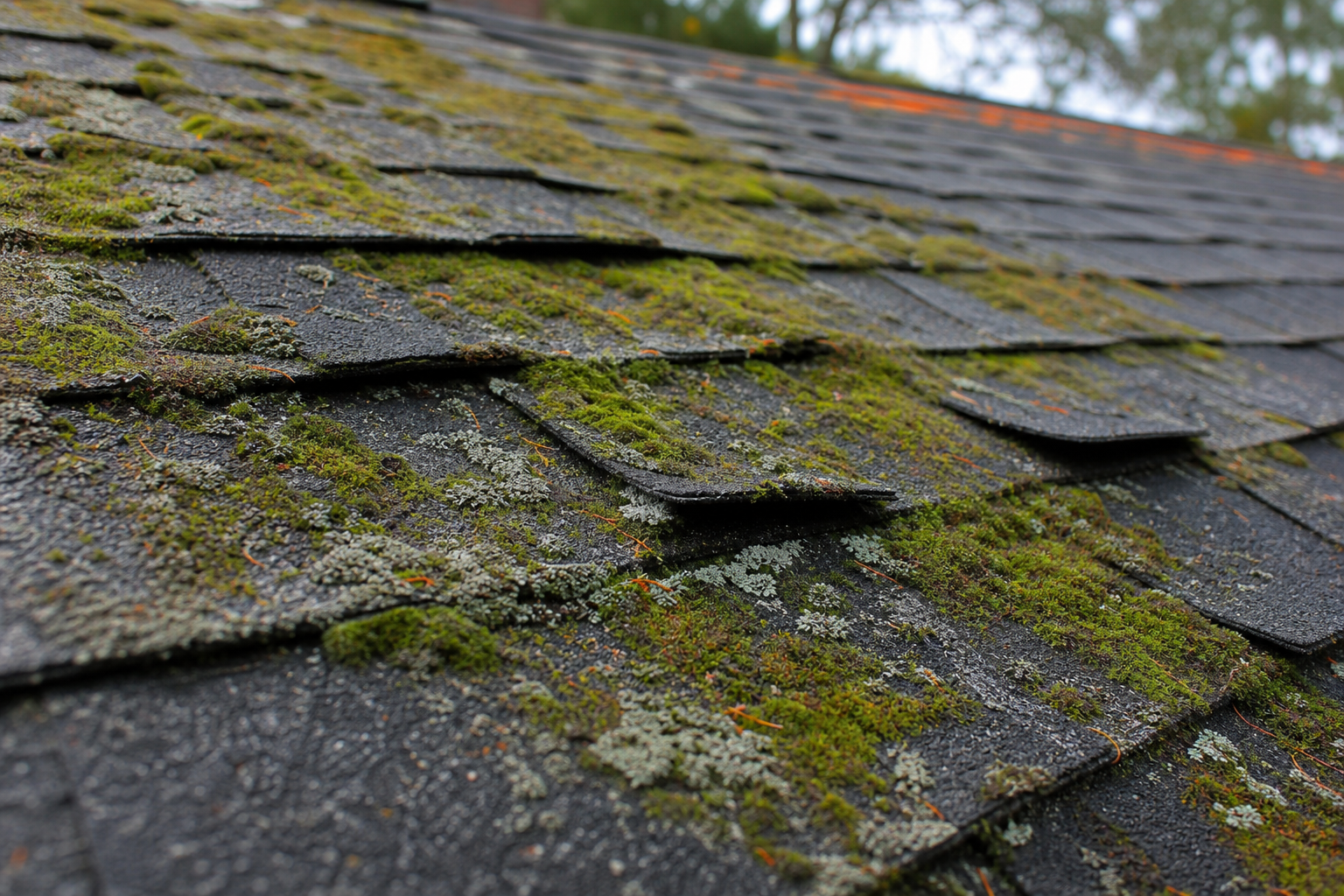
Moss is a non‑vascular plant that thrives in constant moisture. Its rhizoids cling to shingle edges, lifting them and trapping water. Lichen is a partnership of fungus and algae that adheres tightly to the shingle surface, forming a rough, three‑dimensional growth.
Both look different from algae. Moss appears as a green, spongy carpet that can turn black as it ages. Lichen shows as a hard, gray‑brown crust that may peel off when scraped, taking shingle granules with it.
Because they hold moisture against the roof, they accelerate granule loss and create pathways for water to seep underneath. Over time, this can lead to leaks and structural rot.
Gentle sweeping can remove light moss, but for entrenched growth a soft wash with a copper‑based biocide works best. Copper ions released by the treatment inhibit further growth without harming the shingles.
Homeowners who experience recurring moss or algae growth may also consider installing zinc or copper strips near the roof ridge to help slow future growth.
For more on the step‑by‑step soft‑wash process, see our roof‑soft‑wash guide .
Prolonged moisture is a key driver of moss growth, which matches Central Florida’s climate.
Safe Cleaning and Prevention for Central Florida Roofs
Central Florida’s humidity stays above 60 % year‑round, and daily thunderstorms keep roofs wet. That creates a perfect breeding ground for algae, moss and lichen. The safest way to keep your roof clean is professional roof soft washing, combined with preventative maintenance.
Soft washing uses water at 100‑500 psi, much lower than traditional pressure washing. The low force protects the shingle’s mineral granules while a biodegradable bleach solution kills organic growth at its root.
Here’s a typical workflow:
Inspect the roof for damaged shingles, flashing, and growth hotspots.
Apply a sodium‑hypochlorite solution mixed with a surfactant to help it cling to steep slopes.
Allow a 15‑minute dwell time so the chemicals break down algae, moss and lichen.
Rinse with a gentle water spray, starting at the ridge and moving down.
Install copper or zinc strips along the ridge to release growth‑inhibiting ions during rain.
Professional roof soft washing uses cleaning solutions specifically designed to eliminate organic growth while being applied responsibly to protect surrounding landscaping.
Performance Pressure Wash provides professional roof cleaning in Central Florida, following this same soft washing process to safely eliminate algae, mold, and mildew.
For a schedule that matches Florida’s climate, most homeowners benefit from a soft‑wash every 1‑2 years. Our own guide on wash frequency explains how to plan around seasonal rain patterns.
Whether you're dealing with black roof streaks, moss, or lichen, identifying the source early can help prevent unnecessary damage and costly repairs.
What are the main reasons for black streaks on a roof?
Roof algae, especially Gloeocapsa magma, is the most common cause of black streaks, but soot, rust, debris, moss, and lichen can also create similar discoloration.
How can I tell if the streaks are algae or soot?
Algae creates long, uneven lines that follow the roof’s slope, while soot forms fan‑shaped stains around a chimney. A quick water spray test, soot washes away, algae stays dark, can confirm the source.
Is high‑pressure washing safe for shingle roofs?
No. High-pressure washing can strip protective granules, shorten the roof’s lifespan, and can void warranties. Soft washing uses low pressure and chemicals, preserving the shingle surface.
How often should I have my roof soft‑washed in Central Florida?
Because humidity is high year‑round, most experts recommend a soft‑wash every 1‑2 years. This interval stops algae and moss from establishing while keeping the roof’s appearance and performance optimal.
Can moss or lichen damage my roof permanently?
Yes. Moss lifts shingle edges, allowing water to get underneath, which can lead to rot. Lichen adheres tightly and can pull granules off when removed. Prompt cleaning and preventive copper strips can halt the damage.
Understanding the cause of those dark lines lets you choose the right fix and keep your roof healthy for years to come.
Can Roof Algae Be Prevented?
While roof algae can't always be prevented completely, homeowners can slow its return by trimming overhanging branches, keeping gutters clean, reducing shade where possible, and scheduling periodic roof soft washing. Regular maintenance helps keep black roof streaks from returning as quickly, especially in Central Florida's warm, humid climate.
Conclusion
If you see black streaks, schedule a free roof cleaning estimate with Performance Pressure Wash to safely remove algae, moss, or soot and protect your shingles. Then set up a regular inspection schedule so you can catch any new growth before it harms your roof.

Comments