


How to Remove Roof Algae Safely: A Homeowner's Guide for Central Florida
- Perfomance Pressure
- 7 hours ago
- 5 min read

Black streaks on your roof are often caused by Gloeocapsa magma, an airborne algae that thrives in Central Florida's warm, humid climate. Left untreated, roof algae can spread quickly, reducing curb appeal and contributing to premature roof deterioration. While some homeowners choose to tackle minor algae growth themselves, using the wrong cleaning method can damage shingles and even void certain roofing warranties.
This step-by-step guide explains how roof algae removal works, when a low-pressure soft wash is appropriate, and when it's safer to call a professional.
Step 1: Inspect the Roof and Identify the Algae Safely
Start on a dry, overcast day. Walk the perimeter and look for the tell‑tale black streaks that signal Gloeocapsa magma algae. Check shingles for cracks, lifted edges, or missing pieces. Soft washing won't fix structural damage, but it can help stop algae from accelerating roof deterioration. Examine gutters and downspouts; clogged drains create standing water that fuels growth. Take photos of any problem spots, they help you track progress and give a clear brief if you later hire a pro.
Use appropriate equipment for a safe inspection and wear non‑slip shoes. A flashlight helps spot algae in shaded valleys or under roof overhangs. If you feel uneasy about height, inspect the roof from the ground or contact a professional. Document the roof’s pitch; steeper slopes need extra care to keep the soft-washing solution from sliding off too quickly.
If your roof has missing shingles, cracked tiles, leaks, or other visible damage, postpone cleaning until the roof has been inspected or repaired. Cleaning will not fix structural issues and may make them more noticeable.
Step 2: Choose a Soft‑Wash Treatment and Protect the Property
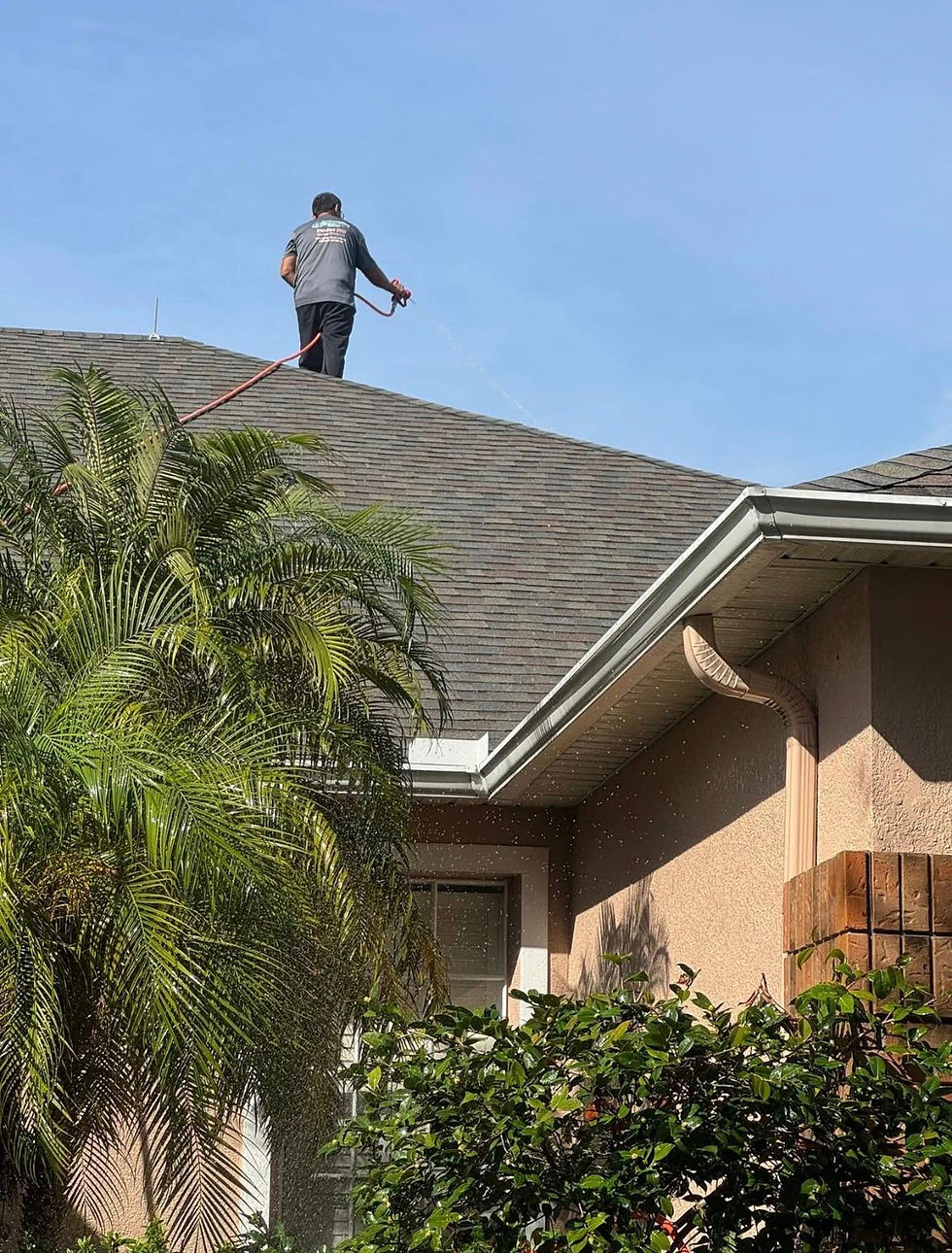
Soft‑wash is the only method approved by the Asphalt Roofing Manufacturers Association (ARMA) for asphalt shingles because it uses low pressure and a biodegradable solution that kills algae at the cellular level without stripping protective granules. Look for a roof-appropriate soft-wash treatment and follow the supplier’s directions for application. If you're unsure about selecting the proper cleaning solution, consult a roof cleaning professional who specializes in low-pressure soft washing and follows the manufacturer's recommendations.
Before you apply any treatment, protect surrounding plants, outdoor furniture, and HVAC units. Use protective coverings, and pre‑wet garden beds with water to create a water barrier. This helps reduce accidental chemical exposure, which can harm foliage. Also, cover windows and seal any open vents to keep the solution from entering the home.
Ask the supplier for a Material Safety Data Sheet (MSDS). It tells you the exact dilution ratio, required personal protective equipment, and any local disposal rules. In Central Florida, using biodegradable agents whenever possible can help protect storm‑water runoff.
Step 3: Apply the Roof Algae Treatment at Low Pressure
Apply the cleaning solution using equipment specifically designed for low-pressure roof soft washing. Carefully follow the manufacturer's instructions for mixing, application, and dwell time. Allow the solution to remain on the roof long enough to break down algae, mold, mildew, and other organic growth before rinsing. Avoid using high pressure, as it can damage roofing materials and reduce the lifespan of your roof.
After the dwell period, inspect the roof. Any stubborn patches may need a second light spray. Avoid scrubbing; the chemistry does the work. When you’re satisfied, move on to rinsing.
Key Takeaway: Low-pressure application lets the chemistry work without harming shingles.
Step 4: Rinse Carefully and Manage Runoff
Rinse the roof gently according to the cleaning product manufacturer's recommendations, allowing gravity to carry runoff toward the gutters without using excessive pressure. If your gutters are clogged with leaves or debris, clean them before or after the roof washing process to help maintain proper drainage. You can also learn more about our professional gutter cleaning service if your gutters need a thorough cleaning.
Manage runoff carefully, keeping it away from fish ponds and community pools and directing it according to the property’s drainage conditions. Avoid allowing runoff to reach shared waterways.
After rinsing, do a visual walk‑around. Look for missed spots, especially around vent stacks, skylights, and roof valleys. Never use a hard bristle brush on shingles, it can damage the granules.
Step 5: Prevent Algae Regrowth and Know When to Hire a Professional
Algae loves shade and moisture. Trim overhanging branches to improve sunlight exposure and reduce leaf litter. Keep gutters clear so water drains quickly; standing water is a perfect breeding ground. Keeping gutters clean, trimming overhanging tree branches, and scheduling periodic roof inspections can help reduce the conditions that allow algae to return.
If you notice new streaks within six months, it may indicate an underlying issue such as poor drainage or a chemical that wasn’t fully rinsed. In that case, bring in a licensed crew. If you're unsure about selecting the proper cleaning solution, consult a roof cleaning professional who specializes in low-pressure soft washing.
For multi‑story or steep‑slope roofs, professional roof cleaning is generally the safer choice because these areas present increased fall risks. A professional team will have the proper safety gear and the training to handle high‑rise work without risking injury.
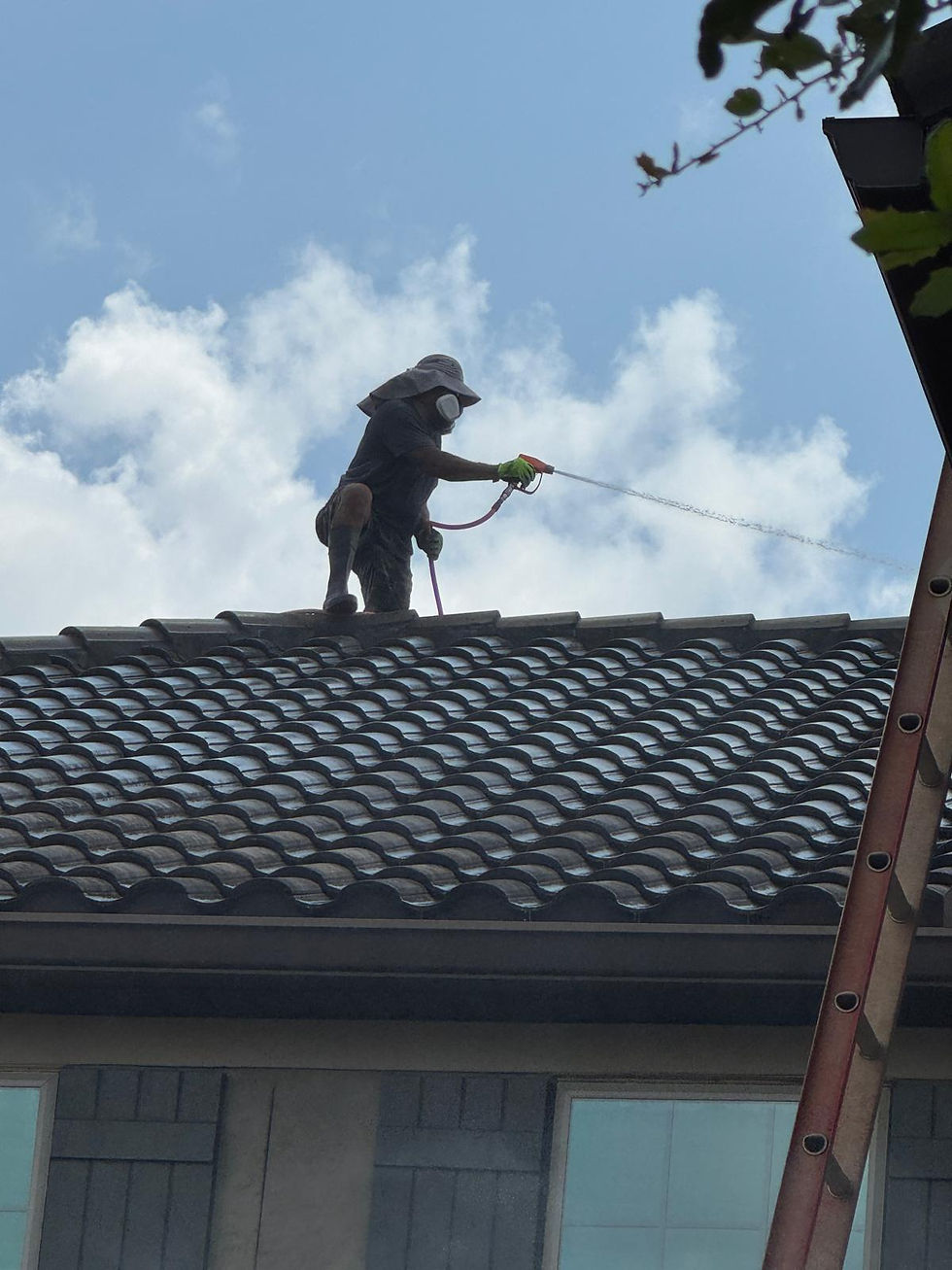
Key Takeaway: Low-pressure application allows the cleaning solution to work effectively without damaging roofing materials.
When You Should NOT Clean Your Roof Yourself
Avoid DIY roof cleaning if:
Your roof is more than one story high.
The roof is steep or slippery.
You have clay or concrete roof tiles.
Electrical lines are nearby.
You don't have proper fall protection.
You're uncomfortable working at heights.
Professional roof cleaning is often the safest option for these situations.
FAQ
Can I use household bleach for roof algae removal?
Professional roof-cleaning solutions may be selected based on the roof and application.
How often should I soft‑wash my roof in Central Florida?
Most experts recommend every 12‑18 months, especially after heavy rain seasons, to keep algae from re‑establishing.
Will soft‑washing void my roof warranty?
No, as long as you follow ARMA’s low‑pressure guidelines and use a pH‑balanced solution, the warranty remains intact.
What safety gear do I need?
Use appropriate safety precautions when working on a roof.
Is a professional needed for steep roofs?
Yes, steep or multi‑story roofs pose fall‑hazard risks, so professional help is often appropriate.
Need Professional Roof Algae Removal?
If your roof has heavy algae growth, is steep, or you're simply not comfortable working at heights, Performance Pressure Wash can help.
Our low-pressure roof soft washing process safely removes algae, mold, mildew, and organic buildup while helping protect your roof and landscaping. We also remove debris from your gutters during every roof cleaning service to help maintain proper drainage.
Request your free estimate today and see why homeowners throughout Orlando, Kissimmee, Winter Garden, Windermere, Celebration, Lake Nona, Hunters Creek, St. Cloud, and surrounding Central Florida trust Performance Pressure Wash.


Comments