


How to Remove Lichen from Roof Safely
Lichen on a roof can look like pale gray fuzz, green-gray patches, or hard crust growing across shingles and tiles. It commonly develops where shade, moisture, leaves, and organic debris keep the roof surface damp.
If you're wondering how to remove lichen from a roof safely, the answer isnot to blast it away with a pressure washer. Proper roof lichen removal is a slower process that combines inspection, a roof-compatible treatment, controlled application, and gentle cleanup.
In this guide, we'll explain how to identify lichen, how roof lichen treatment works, why high-pressure washing can damage roofing materials, and when professional roof soft washing is the safer option.
Table of Contents
Step 1: Inspect the Lichen and Prepare the Roof Safely
Before you remove lichen from a roof, identify where the growth is located and determine whether the roof can be safely accessed.
Lichen may appear as white-gray, green-gray, or brown patches. It tends to develop in areas where shade, rain, leaves, and organic debris keep roofing materials damp for extended periods.
Start your inspection from the ground. Look closely at:
Shaded sections of the roof
Roof slopes beneath trees
Northern or less-sun-exposed sections
Valleys where debris collects
Areas near overflowing gutters
Places where moss, algae, or other organic growth is visible
Also look for cracked or broken tiles, lifted shingles, missing roofing materials, exposed underlayment, damaged flashing, or sagging areas.
Cleaning does not repair roof damage. If the roofing system is already compromised, climbing onto it or attempting DIY roof lichen removal can make the problem worse.
Safety comes first
Choose a dry day with suitable weather conditions. The roof should be dry before brushing or applying a treatment, and you should always follow the product manufacturer's instructions regarding weather, application, and dwell time.
If you're working around the home, protect the property as well as yourself:
Protect yourself:Wear appropriate eye protection, gloves, and footwear with good traction.
Protect landscaping:Wet plants before treatment and protect sensitive vegetation when appropriate.
Protect the roof:Avoid metal scrapers, aggressive brushing, and anything that can remove shingle granules or damage tile.
Protect the property:Keep cleaning solutions away from windows, painted surfaces, outdoor furniture, pool equipment, and other sensitive materials.
Document the condition:Take ground-level photos before cleaning so you can compare the roof after treatment.
Roof work also involves fall hazards. A steep, wet, fragile, or difficult-to-access roof is a good reason to stop at the inspection stage and call a professional.
If roof access requires fall-protection equipment, use equipment designed and secured for that purpose. Never attach a rope or safety line to a gutter, vent, decorative trim, or another component that is not designed to support a person.
At Performance Pressure Wash, we begin roof cleaning with an inspection because different roofing materials require different approaches. Asphalt shingles, concrete tile, clay tile, and metal roofing should not automatically be treated the same way.
Our Central Florida clay tile roof cleaning guidance explains why cleaning methods need to be adjusted for tile roofs. You can also learn more about the principles behind soft washing .
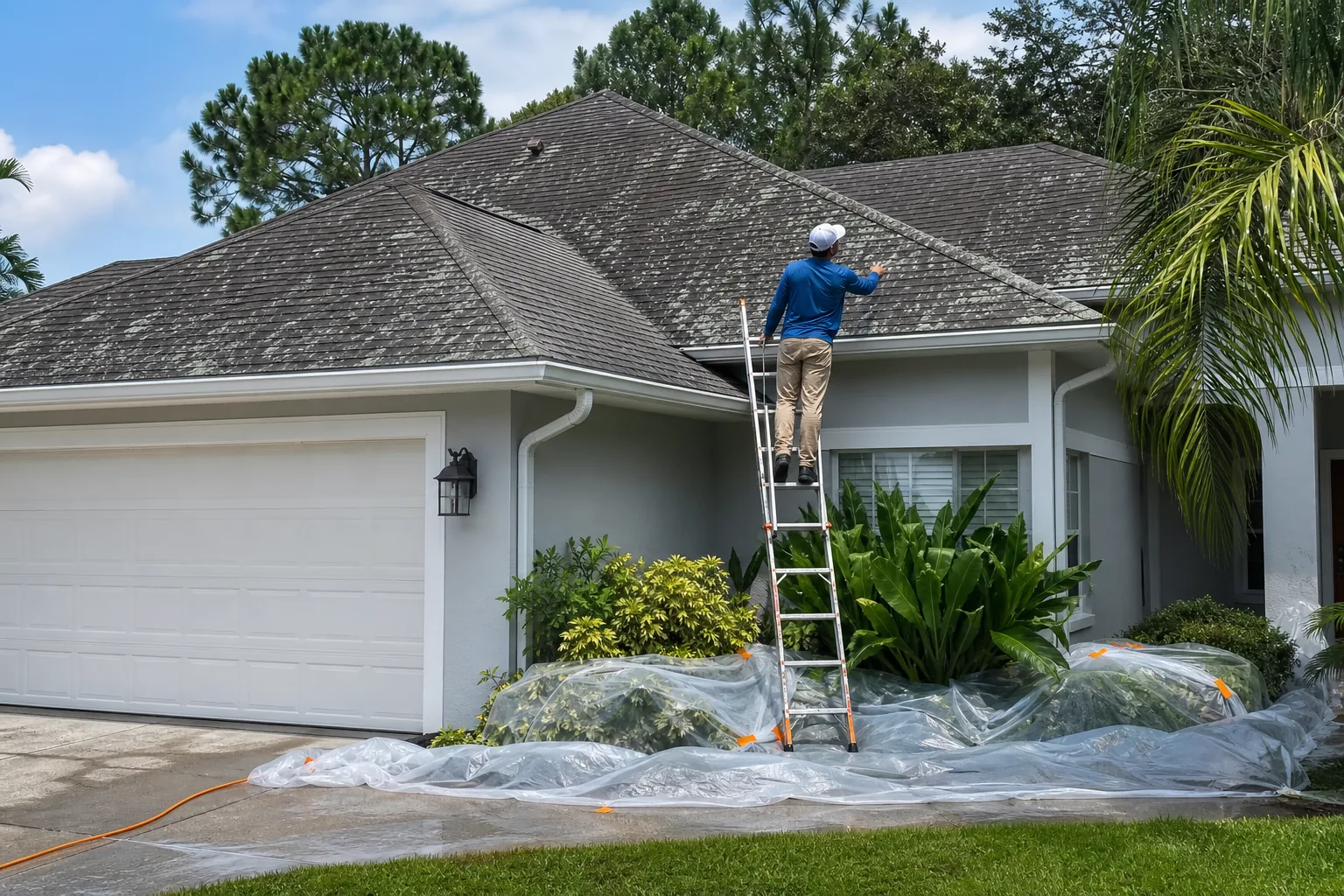
Key Takeaway: If the roof is steep, damaged, wet, fragile, or difficult to access safely, don't turn roof lichen removal into a DIY climbing project. Stop at the inspection and bring in a trained professional.
Step 2: Choose a Roof-Safe Lichen Treatment
The treatment—not high water pressure—is what should do most of the biological cleaning work.
When homeowners search for the safest way to remove lichen from shingles or tile, one of the most important factors is choosing a treatment that is compatible with the specific roofing material.
Always read the product label before application. The label should provide important information about appropriate surfaces, dilution, application, safety equipment, dwell time, and precautions for surrounding vegetation.
Common roof lichen treatment considerations
Treatment approachWhere it may fitMain concernGeneral rule | |||
Roof-compatible treatment | Organic growth on compatible roofing materials | Runoff can affect plants or sensitive surfaces | Follow the product label and protect the property |
Gentle treatment | Smaller areas when permitted by the roof manufacturer or product label | May work more slowly on thick growth | Test compatibility before wider application |
Higher-strength treatment | Heavy organic growth when specifically permitted | Can affect plants, metals, coatings, and finishes | Use only at the labeled dilution |
Lower-impact treatment | Homeowners looking for a lower-impact option | Results may take longer | Confirm roof compatibility and allow adequate dwell time |
Zinc or copper strip | Helping slow future growth | Installation may require roof penetrations | Have a qualified roofer handle installations requiring fasteners |
Never mix bleach with vinegar, ammonia, or other incompatible cleaning products. Read the safety information for the product you're using and follow its instructions.
Protect children, pets, landscaping, and other people from the treated area until the product label indicates that it is safe.
Some cleaning discussions describe alkaline treatments as useful because certain organic growths favor acidic conditions. However, that doesnotmean that every high-pH cleaner is safe for every roof. Tile glaze, metal coatings, sealants, painted surfaces, and landscaping can respond differently to chemicals.
For that reason, professional roof cleaning is not simply a matter of putting a stronger chemical into a sprayer.
At Performance Pressure Wash, we select our roof cleaning solutions based on the roofing material and site conditions. We use commercial-grade equipment and a low-pressure soft washing approach rather than trying to blast lichen, algae, moss, or stains from the roof.
We also don't promise homeowners a blanket five-year result. Roof growth depends on factors such as shade, tree coverage, humidity, rainfall, and the condition of the roof. A maintenance plan based on the property is more realistic than making a guarantee that every roof will stay clean for a specific number of years.
For more information about the overall process, see our Roof Soft Wash: Step-by-Step Guide for Homeowners .
Step 3: Apply the Treatment Without High Pressure
If your goal is to safely remove lichen from a roof, resist the temptation to use high pressure to make the roof look clean immediately.
High-pressure washing can damage roofing materials. On asphalt shingles, aggressive pressure can remove protective granules. On tile roofs, excessive pressure can crack or break tiles. Forceful water can also push water into areas of the roofing system where it does not belong.
That's why professional roof soft washing relies oncontrolled application and cleaning chemistry rather than high-pressure blasting.
Start with loose debris
Before applying a treatment, remove loose leaves, branches, and other large debris when it can be done safely.
Do not aggressively scrape attached lichen from shingles or tiles. If a piece of growth requires significant force to remove, let the treatment do the work instead of grinding or pulling at the roofing material.
Apply the treatment carefully
Use an application method appropriate for the product and roofing material.
Wet nearby plants before treatment when required. Protect sensitive landscaping and keep the solution away from windows, painted walls, metal fixtures, outdoor kitchens, pool equipment, electrical components, and other surfaces that may be affected.
Pay attention to runoff.
Cleaning chemicals should not simply be allowed to flow uncontrolled across landscaping or into areas where they can cause damage. Follow the product label for runoff precautions and cleanup.
Apply the treatment evenly without flooding the roof. The required dwell time depends on the product and the condition of the growth. Some treatments work relatively quickly, while others are designed to continue working over a much longer period.
Do not shorten the manufacturer's recommended dwell time simply because you want the roof to look clean faster.
This is one of the biggest differences between professional roof soft washing and simply pressure washing a roof.
The goal is not to physically tear the lichen away.
The goal is to treat the organic growth and allow it to loosen and break down without unnecessarily stressing the roofing material.
Dead lichen may turn white, pale, or dry before it disappears. That change does not necessarily mean the cleaning failed.
Some soft-wash methods describe allowing thick lichen several weeks and multiple rainfall events to dry and break down. Other products have different timelines, so always follow the instructions for the specific treatment being used.
Avoid repeatedly climbing onto the roof to check the progress. Whenever possible, monitor the result from the ground.
If the growth remains active after the product's stated treatment period, reassess the situation. A second application may be appropriate in some circumstances, but only if the product instructions permit it.
Never combine cleaning products simply to make the treatment "stronger."
Step 4: Remove Dead Lichen, Clean Gutters, and Prevent Regrowth
After treatment, roof lichen removal becomes a matter of allowing dead growth to loosen, keeping drainage systems clear, and reducing conditions that encourage future growth.
Wait until treated growth is dry and loose before attempting gentle cleanup.
Use a soft brush only when necessary and only from a safe position. Remove material that releases easily. Do not scrape aggressively down to the shingle surface, and don't pull hard on lichen that remains attached.
Rain and wind may naturally complete much of the cleanup.
Don't forget the gutters
As dead organic material falls from the roof, some of it can collect in gutters and downspouts.
Clean gutters after the main debris has fallen. Wear appropriate gloves when handling organic debris, remove larger clumps, and check that downspouts are flowing properly.
A blocked downspout can send dirty water back toward the roof edge and contribute to staining or drainage problems around the home.
After the cleaning process, inspect the surrounding property. Check:
Windows
Exterior walls
Walkways
Driveways
Pool decks
Landscaping
Gutters and downspouts
Follow the cleaning product's instructions for rinsing plants and surrounding surfaces.
How to help prevent roof lichen from returning
No roof cleaning method can permanently prevent organic growth under every set of environmental conditions. However, you can reduce the conditions that encourage it.
Trim nearby branches:Reduce excessive shade where appropriate and permitted.
Clear roof debris:Leaves and needles can hold moisture against the roof.
Improve drainage:Keep gutters and downspouts clear.
Reduce persistent moisture:Address drainage or overflow problems that repeatedly wet the roof.
Consider metal strips:Zinc or copper strips may help inhibit some organic growth when properly installed. Some products are designed to release material during rainfall to help slow moss and mildew growth. Installation that requires roof penetrations should be handled by a qualified roofing professional.
Inspect regularly:Watch shaded areas for new patches before growth becomes extensive.
Central Florida homeowners have another factor to consider: our warm, humid climate and frequent rainfall can create favorable conditions for algae, mold, moss, and lichen, particularly on roofs surrounded by trees or shaded for much of the day.
That's one reason routine roof inspections and maintenance can make more sense than waiting until organic growth becomes widespread.
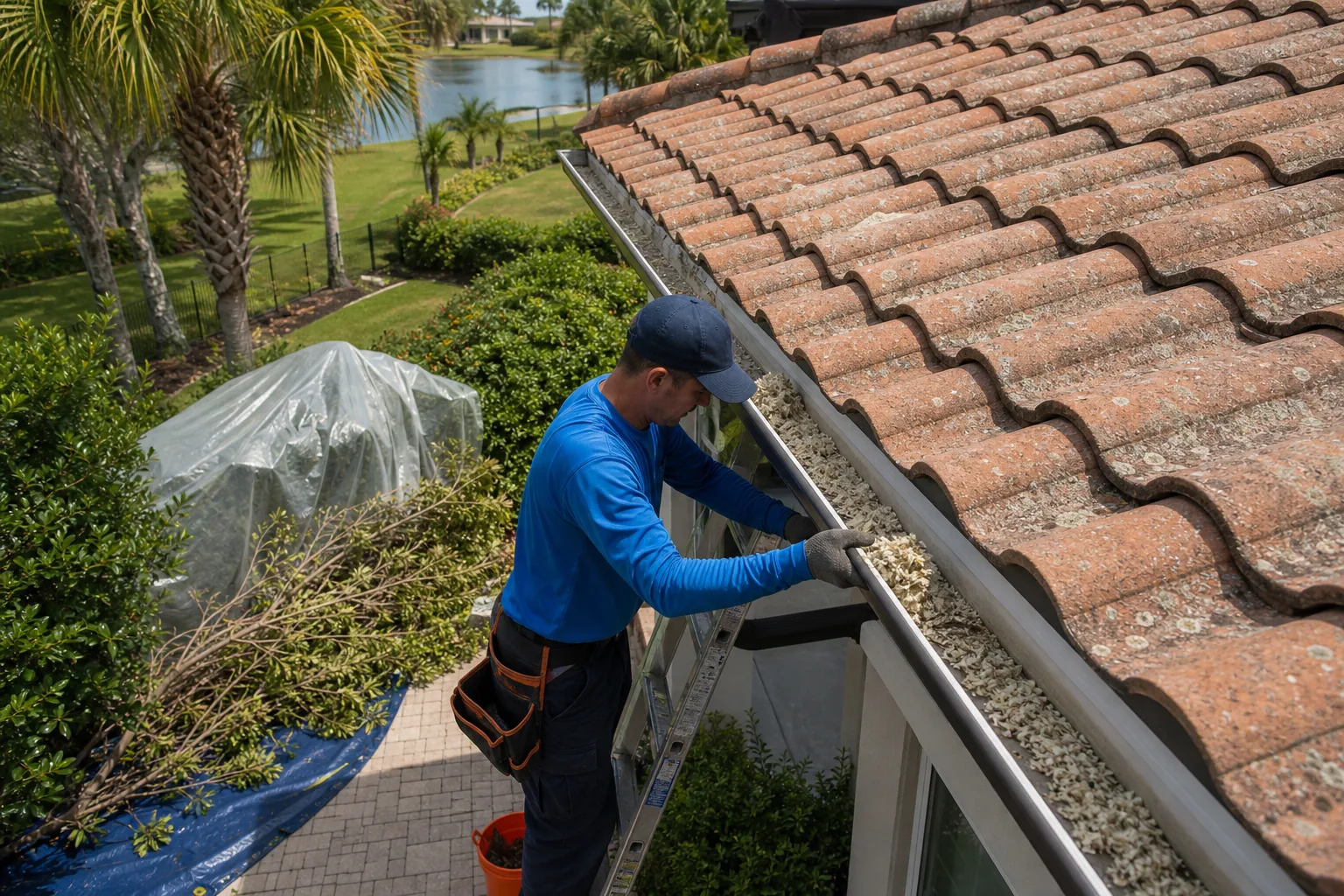
Pro Tip:Take the same ground-level roof photo after each inspection. Matching photos make small areas of new growth much easier to identify.
When to Call a Professional for Roof Lichen Removal
DIY roof lichen removal may sound simple until you consider the combination of height, roofing materials, chemicals, runoff, and fall risk.
Call a professional when the roof is:
Steep
More than one story high
Fragile or heavily weathered
Damaged
Difficult to access
Close to power lines
Covered with extensive lichen, moss, or algae
Professional roof soft washing can also make sense when you don't have the proper fall protection, application equipment, property-protection materials, or experience working with roof-cleaning solutions.
A professional should be able to explain:
What type of roof you have
What cleaning method they recommend
Why that method is appropriate
How they protect landscaping
How they manage runoff
What pressure is used during the process
What you should expect after treatment
Whether additional maintenance may eventually be needed
Be cautious of anyone who tells you that every roof should be cleaned with the exact same pressure, chemical, or process.
Roof cleaning is not one-size-fits-all.
Professional Roof Cleaning in Orlando and Central Florida
Performance Pressure Wash provides professional roof cleaning and roof soft washing for homeowners, property managers, HOAs, and businesses throughout Orlando, Kissimmee, and surrounding Central Florida communities.
We clean both shingle and tile roofs using a low-pressure soft washing approach designed to remove algae, black streaks, moss, lichen, and other organic buildup without relying on damaging high pressure.
Our roof cleaning service includes an assessment of the roof and surrounding property so we can choose an appropriate cleaning method for the surface.
You can learn more about our professional roof cleaning service in Orlando and Central Florida .
FAQ
Can I remove lichen from my roof with a pressure washer?
High-pressure washing is generally a poor choice for roof lichen removal. Aggressive pressure can damage asphalt shingles, remove protective granules, crack tile, lift roofing materials, or force water into areas where it does not belong.
A roof-safe treatment allows the cleaning solution to do the biological work while controlled, low-pressure application and rinsing minimize unnecessary stress on the roofing material.
How long does it take for roof lichen to die?
Roof lichen can take several weeks to die, loosen, and disappear after treatment. Thick growth may turn white or pale before it gradually dries and breaks down.
The exact timeline depends on the treatment used, the amount of growth, weather conditions, and the roofing material. Always follow the product label rather than expecting every roof to respond on the same schedule.
What is the safest chemical for roof lichen?
There is no single chemical that is automatically the safest choice for every roof.
The appropriate roof lichen treatment depends on the roofing material, the type and amount of organic growth, surrounding landscaping, and the product's approved uses.
Choose a product labeled for the intended surface, follow its dilution and safety instructions, and never mix incompatible cleaning products.
Can I brush lichen off asphalt shingles?
You can gently remove loose material when it can be done safely, but aggressive brushing or scraping can damage asphalt shingles and remove protective granules.
Treating the growth and allowing it to loosen is generally preferable to trying to physically grind it off the roof.
If the lichen is thick, the roof is steep, or you cannot safely access the area, contact a professional roof cleaning company instead.
Will zinc or copper strips stop lichen from returning?
Zinc or copper strips may help slow certain types of organic growth when rain carries material down the roof.
They do not remove established lichen by themselves, and they don't repair damaged roofing.
Installation may also require fasteners or other roof penetrations, so homeowners should consult a qualified roofing professional before installing a strip.
How often should a roof be checked after lichen removal?
Inspect your roof several times a year, particularly after periods of heavy rain or when environmental conditions have been favorable for organic growth.
Shaded roofs and roofs surrounded by mature trees may need attention sooner than roofs that receive more direct sunlight.
Keep a simple photo record so you can identify new growth before it becomes extensive.
Can roof lichen damage shingles?
Lichen, moss, algae, and other organic growth should not simply be ignored when they become established on roofing materials. Growth can hold moisture and may contribute to deterioration depending on the roofing material and conditions.
The safest approach is to identify the growth early and use a cleaning method appropriate for the roof rather than aggressively scraping or pressure washing it.
Is roof soft washing better than pressure washing for lichen?
For many residential roofing materials, soft washing is preferable to high-pressure cleaning because the process relies on appropriate cleaning solutions and controlled application rather than force.
The objective is to remove organic growth while minimizing the risk of damaging shingles, tiles, coatings, flashing, and other roofing components.
Conclusion
The safest way to remove lichen from a roof is totreat the growth rather than blast it away.
A proper roof lichen removal process starts with identifying the roofing material and inspecting the condition of the roof. From there, use a compatible treatment, protect the surrounding property, allow the treatment enough time to work, and avoid aggressive pressure or scraping.
For homeowners in Central Florida, regular inspection is especially important when roofs are surrounded by trees, shade, humidity, and frequent rainfall. Catching lichen, moss, algae, and other organic growth early can make roof cleaning easier and reduce the temptation to use aggressive methods.
If you're seeing lichen, moss, algae, or black streaks on your roof and you're not comfortable getting on the roof yourself,Performance Pressure Wash can inspect the roof and recommend an appropriate roof soft washing approach.
We serve homeowners and businesses throughoutOrlando, Kissimmee, and Central Florida, including communities such as Hunters Creek, Dr. Phillips, Lake Nona, Windermere, Winter Park, and surrounding areas.
After your roof is cleaned, you may also notice that dirt and organic buildup on other exterior surfaces becomes more noticeable. Performance Pressure Wash also provides professional house soft washing and driveway cleaning in Orlando to help restore the appearance of the rest of your property.
Looking for professional roof cleaning in Orlando or Kissimmee? Contact Performance Pressure Wash for a free estimate and let us help you determine the safest approach for your roof.


Comments