


How to Do Black Algae on Roof Removal Safely
Black algae streaks can make an otherwise well-maintained home look older and neglected. Those dark stains running down asphalt shingles are especially common in Central Florida, where heat, humidity, rain, and shaded areas create ideal conditions for roof algae growth.
The good news is that black streaks can usually be treated without replacing the roof. The key is using the right cleaning method.
For asphalt shingles, professional roof cleaning typically relies on alow-pressure soft-washing approachrather than high-pressure washing. The goal is to treat the algae and organic growth while protecting the shingles, landscaping, gutters, and surrounding property.
Here is what homeowners should know about safely removing black algae from a roof.
Table of Contents
What Are the Black Streaks on My Roof?
The dark streaks commonly seen on asphalt shingles are generally associated withblue-green algae, particularlyGloeocapsa magma.
The growth can spread across the shingle surface and create long black or dark-brown streaks that become more noticeable after periods of rain and humidity.
Central Florida provides many of the conditions that encourage roof algae growth:
High humidity
Frequent rainfall
Warm temperatures
Tree cover and shade
Moisture that remains on roof surfaces
Organic debris accumulating on the roof
These streaks are primarily a cosmetic problem at first, but allowing organic growth and debris to remain on a roof for extended periods is not ideal for the roof's overall appearance or maintenance.
The important thing is to clean the roof without unnecessarily damaging the shingles.
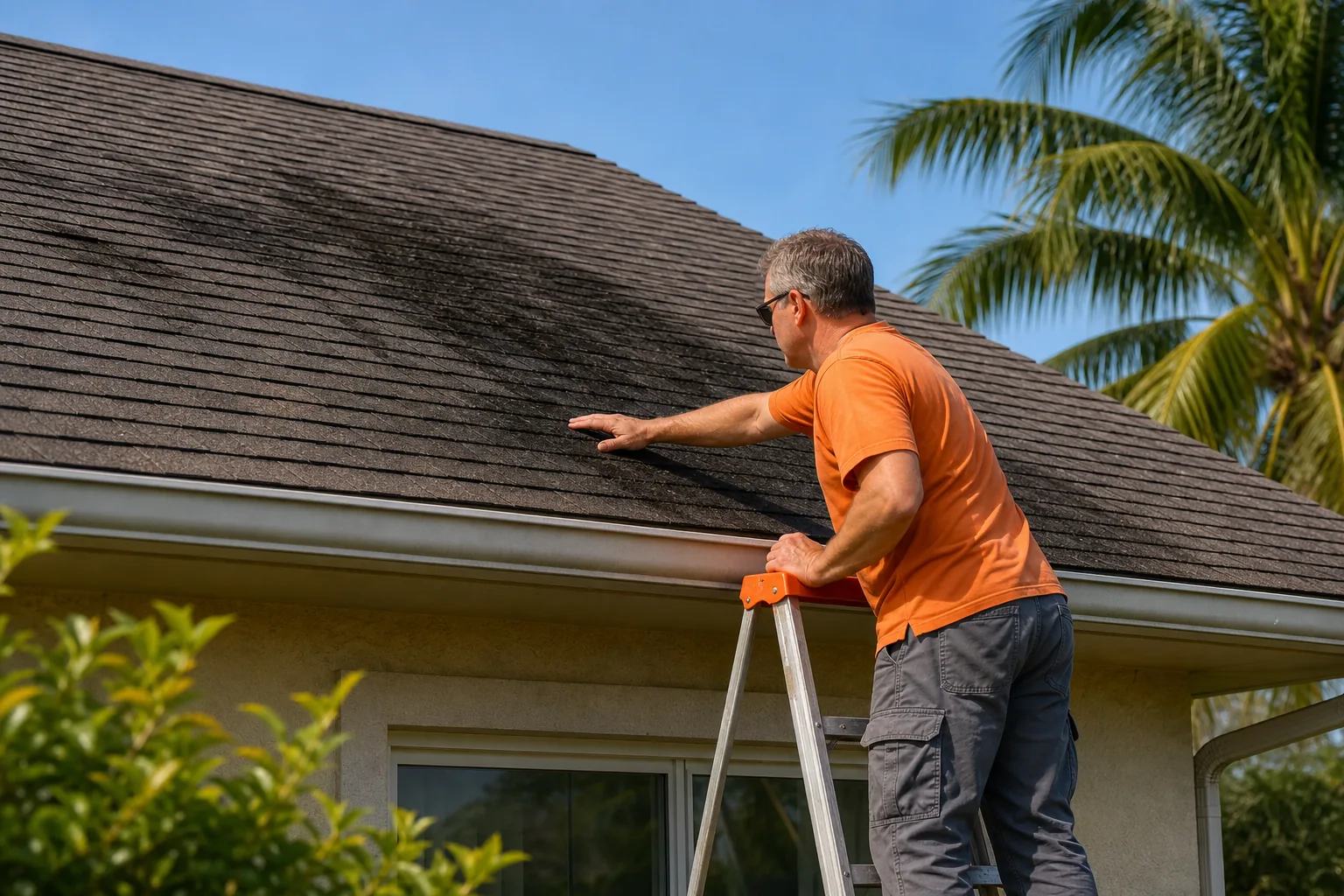
Step 1: Inspect the Roof and Identify the Growth
Before cleaning a roof, the first step should always be an inspection.
A professional roof cleaner should look for more than just black streaks. The inspection should also identify:
Cracked or damaged shingles
Lifted or loose shingles
Missing shingles
Areas with excessive granule loss
Moss or other organic growth
Damaged flashing
Debris around roof penetrations
Areas where water may be draining improperly
It is also important to determine what type of roof material is being cleaned. Asphalt shingles, tile, metal, and other roofing materials can require different cleaning approaches.
If the roof has visible damage, a homeowner should address that condition before proceeding with cleaning.
Step 2: Protect Landscaping and Surrounding Areas
Roof cleaning involves more than simply spraying the roof.
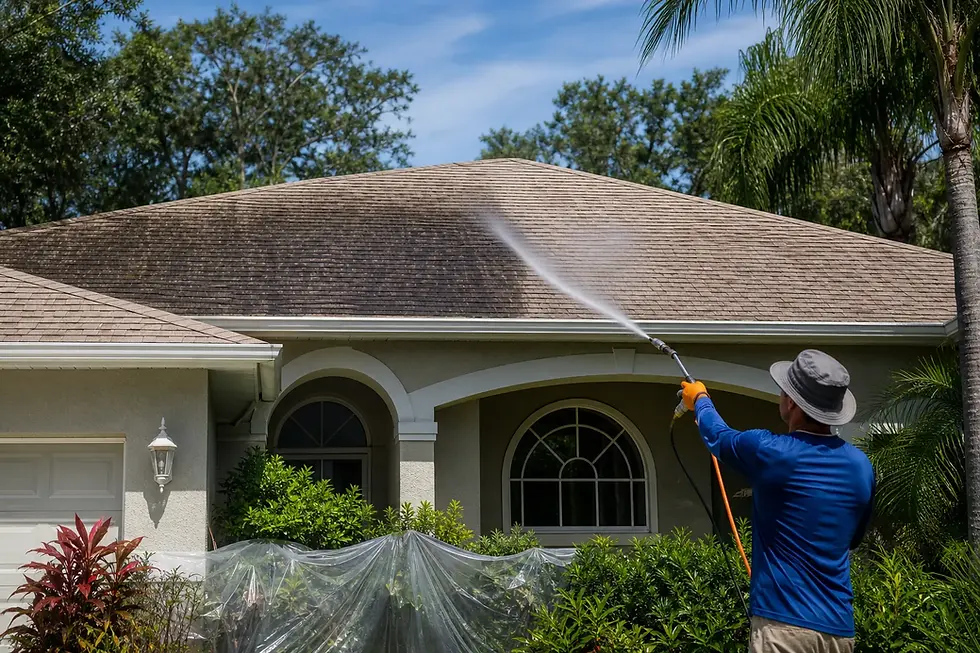
A proper cleaning process should include precautions to protect plants, landscaping, outdoor furniture, siding, windows, vehicles, and other surfaces around the home.
Before applying a cleaning solution, professional roof cleaners may:
Wet surrounding vegetation with fresh water
Protect particularly sensitive areas when appropriate
Control runoff
Keep cleaning solutions away from unnecessary areas
Rinse affected surfaces during and after the cleaning process
Monitor weather and wind conditions
Landscaping protection is particularly important in Central Florida because many homes have plants, shrubs, flowers, and tropical landscaping directly around the roofline.
A good roof cleaning job should leave the roof looking betterwithout creating unnecessary damage to everything around it.
Step 3: Use a Low-Pressure Roof Cleaning Method
One of the biggest mistakes homeowners can make is treating a shingle roof like a concrete driveway.
High-pressure washing can damage asphalt shingles by disturbing the protective surface and forcing water underneath areas where it does not belong.
Professional soft washing takes a different approach.
Instead of relying on high pressure to physically blast algae away, a soft-washing system useslow-pressure application combined with an appropriate cleaning solutionto treat organic growth on the roof.
The pressure used for application should be appropriate for the roofing material and cleaning system. There is no universal PSI number that makes every roof-cleaning situation safe.
The objective is simple:
Use the minimum pressure necessary to apply and rinse the cleaning solution without damaging the roofing material.
For asphalt shingles, that means avoiding aggressive pressure directly against the shingles.
Step 4: Apply the Cleaning Solution Properly
The cleaning solution is an important part of professional roof washing.
Rather than trying to physically blast algae from the shingles, the cleaning treatment is applied across the affected areas and allowed to work.
The exact solution and concentration should depend on factors such as:
Roofing material
Severity of the algae growth
Weather conditions
Surrounding landscaping
Manufacturer recommendations
The cleaning equipment being used
There isno one-size-fits-all bleach-to-water recipethat should be recommended for every roof.
Professional roof cleaners should use appropriate equipment, understand chemical handling, and adjust the cleaning process to the specific property.
During treatment, the algae may begin changing color as the growth is neutralized. Some staining may disappear during the initial treatment, while heavier or older discoloration can require additional treatment or time to fully fade.
Step 5: Rinse and Check the Roof
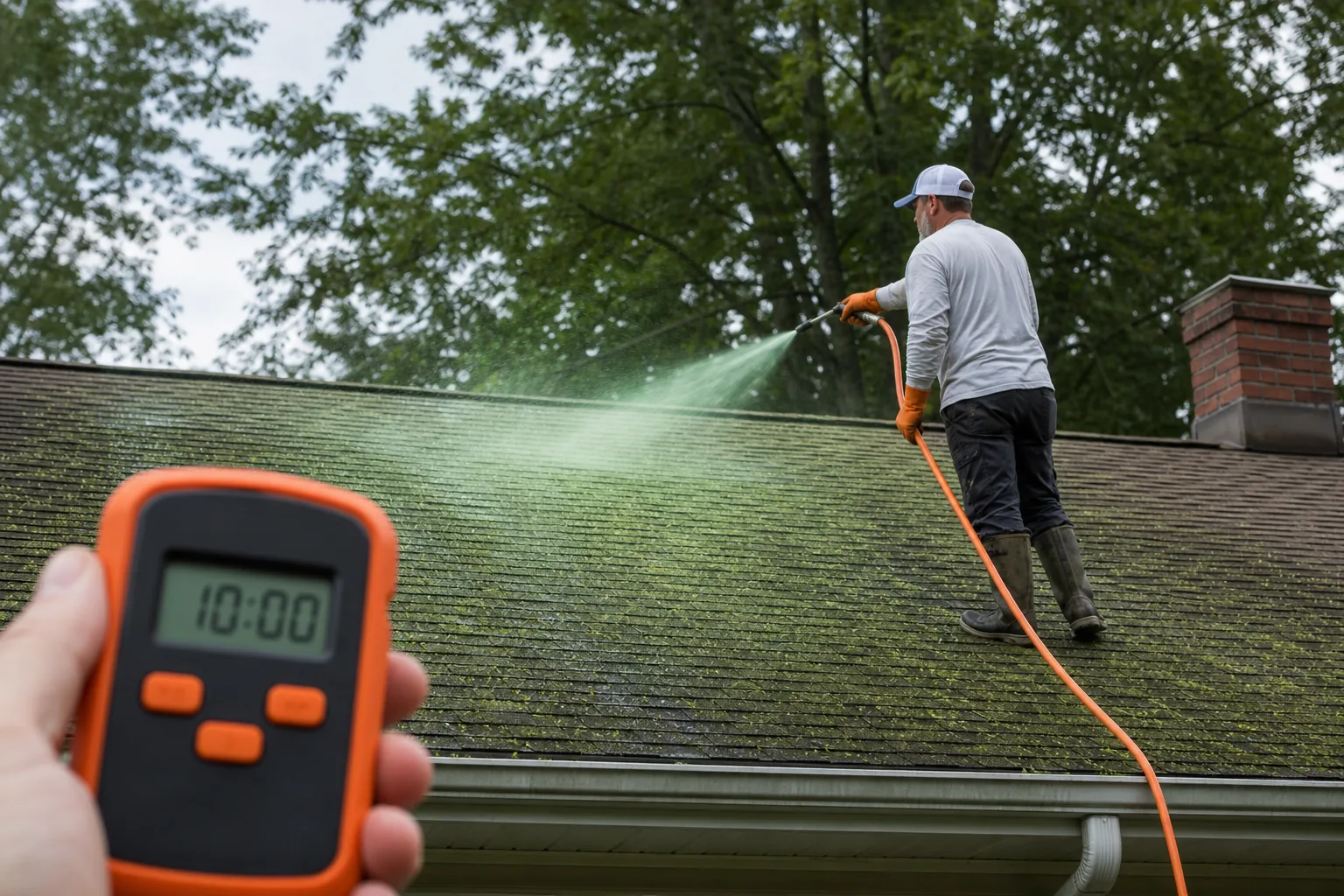
After the cleaning solution has had sufficient time to work, the roof can be carefully rinsed using an appropriate low-pressure method.
The goal is not to blast the shingles clean.
Instead, the roof should be rinsed carefully while controlling runoff and protecting the surrounding property.
The cleaner should then inspect the roof to make sure:
Visible algae growth has been treated
No obvious areas were missed
Gutters and drainage areas are clear
Surrounding surfaces are clean
Landscaping has been properly rinsed
No new roof damage is visible
One important point for homeowners:black streaks do not always disappear instantly.
Depending on the age and severity of the staining, the appearance of the roof can continue improving after the cleaning treatment as remaining discoloration naturally fades.
Why You Should Avoid High-Pressure Roof Cleaning
Pressure washing is excellent for many exterior surfaces, but asphalt shingles are not one of them.
A pressure washer can be strong enough to:
Remove or loosen shingle granules
Damage the surface of shingles
Force water into unwanted areas
Damage flashing or other roof components
Create unnecessary wear on an already aging roof
This is why a driveway-cleaning method should never simply be transferred to a shingle roof.
A professional roof cleaning system is designed aroundtreating the organic growth rather than aggressively blasting the roof surface.
If you're unsure whether your particular roof can be safely cleaned, have the roofing material and condition evaluated before beginning.
Step 6: Know When to Hire a Professional Roof Cleaner
Roof cleaning may look simple from the ground, but working around a roof introduces several safety and property-protection concerns.
A professional roof cleaner can evaluate the roof before cleaning and determine the safest approach for the particular roofing material.
Professional cleaning is especially worth considering when:
The roof is steep
The roof is difficult to access
There are multiple stories
The roof has visible damage
Heavy algae or moss is present
Landscaping is directly beneath the roof
You don't have the proper equipment
You're uncomfortable working from a ladder or on a roof
You also don't necessarily need to climb onto the roof yourself just to determine whether it needs cleaning. A professional can often evaluate the condition from the ground and use appropriate inspection methods.
Professional Roof Cleaning in Central Florida
Performance Pressure Wash LLC provides professional roof cleaning and soft-washing services for homeowners throughout Central Florida.
Our approach focuses on treating roof algae and organic growth while using a low-pressure cleaning method appropriate for the roofing material.
Before starting, we inspect the roof and look for visible pre-existing conditions so homeowners know what is already present before cleaning begins.
We also take precautions to protect landscaping and surrounding property during the cleaning process.
If your roof is covered with black streaks, you can request an estimate and have the roof evaluated before deciding whether professional cleaning is appropriate.
Step 7: Help Prevent Black Algae From Returning
Unfortunately, cleaning a roof does not make it permanently immune to algae.
Central Florida's climate makes recurring algae growth common, especially on roofs that receive limited sunlight.
There are several ways homeowners can help reduce the conditions that encourage algae and organic growth.
Keep Gutters Clear
Clean gutters help move rainwater away from the roof and home.
While clogged gutters are not the direct cause of every roof-algae problem, keeping the drainage system maintained is an important part of overall exterior maintenance.
Keep Tree Growth Under Control
Overhanging branches can shade portions of the roof and contribute leaves and organic debris.
Properly maintained trees can improve sunlight and airflow around the roof while reducing the amount of debris accumulating on the shingles.
Always use an appropriately qualified professional when tree trimming requires work near electrical lines or at dangerous heights.
Keep the Roof Free of Excessive Debris
Leaves, branches, and other organic debris can hold moisture against the roof surface.
Removing debris as part of regular exterior maintenance can help keep the roof cleaner.
Consider Professional Roof Maintenance
If algae repeatedly returns, periodic professional cleaning may be more practical than waiting until the roof becomes heavily stained.
The appropriate cleaning frequency depends on the home's location, roof material, surrounding trees, shade, weather exposure, and how quickly algae returns.
There is no universal requirement that every Central Florida roof be cleaned once every year.
FAQ
What causes black streaks on roof shingles?
Black streaks on asphalt shingles are commonly associated with blue-green algae, includingGloeocapsa magma. Warm temperatures, humidity, rain, shade, and moisture can encourage algae growth.
Can I pressure wash black algae off my roof?
Pressure washing is generally not recommended for asphalt shingles. High pressure can damage shingles and remove protective granules. A properly performed low-pressure soft-washing approach is generally better suited to treating roof algae.
Is roof soft washing safe for asphalt shingles?
When the appropriate cleaning method, equipment, and cleaning solution are used correctly, soft washing is designed to clean asphalt shingles without the aggressive pressure associated with conventional high-pressure washing.
The roof's condition and manufacturer's recommendations should always be considered.
Can I use household bleach to clean my roof?
Roof-cleaning solutions should not be treated as a simple household bleach recipe. The appropriate solution depends on the roofing material, severity of the growth, surrounding landscaping, weather conditions, and application method.
Using an overly concentrated solution or applying chemicals without proper precautions can damage vegetation and surrounding surfaces.
How long does it take for black roof streaks to disappear?
Some algae discoloration can improve during the cleaning process, while remaining staining may continue to fade afterward. The amount of improvement depends on how severe and established the growth is.
Will roof cleaning damage my shingles?
A properly performed roof cleaning should be designed to protect the roofing material. The biggest concern is improper cleaning, particularly aggressive pressure washing or inappropriate chemical application.
How often should I clean my roof in Central Florida?
There is no single schedule that works for every home. Some roofs may remain clean for several years, while heavily shaded or tree-covered properties may develop algae much sooner.
The best approach is to inspect the roof periodically and clean it when significant algae or organic growth develops.
Do I need to protect my plants during roof cleaning?
Yes. Landscaping should be considered before and during a roof cleaning project. Professional cleaners should take reasonable precautions to protect vegetation and surrounding property from cleaning solutions and runoff.
Should I clean my roof or replace it?
Black algae streaks alone do not necessarily mean a roof needs replacement.
If the roof is otherwise in good condition, professional cleaning may significantly improve its appearance. However, cracked, missing, severely deteriorated, or extensively damaged shingles should be evaluated by a qualified roofing professional.
Can roof cleaning help improve curb appeal?
Absolutely. Black streaks can make a roof look dirty and aged even when the shingles are otherwise in reasonable condition. Professional roof cleaning can dramatically improve the appearance of a home and restore a cleaner, better-maintained look.
Ready to Get Rid of Those Black Roof Streaks?
If black algae has taken over your roof, don't reach for a pressure washer and hope for the best.
The right cleaning method can remove unsightly algae while helping protect your shingles and surrounding property.
Contact Performance Pressure Wash for a roof cleaning estimate and let our team evaluate your roof and recommend the appropriate cleaning approach.
Serving homeowners throughout Central Florida with professional exterior cleaning and low-pressure soft-washing services.

Comments