


How to Clean Concrete Driveway: Step‑by‑Step Guide
A concrete driveway can quickly become dull, stained, or covered with algae, mildew, dirt, and other buildup. Regular driveway cleaning can improve curb appeal, help maintain the surface, and make outdoor areas look cleaner and safer.
If you're wondering how to clean a concrete driveway properly, the right process depends on the type of buildup, the condition of the concrete, and the equipment being used. Follow these five steps to understand the basics of professional-quality driveway cleaning—and learn when it makes sense to call a professional.
Table of Contents
Step 1: Clear the Driveway and Protect Surrounding Areas
Before cleaning a concrete driveway, remove vehicles, planters, toys, outdoor furniture, and other items from the area.
Sweep away loose leaves, dirt, twigs, and other debris with a stiff push broom. Removing loose material first makes the cleaning process more effective and helps prevent debris from being pushed across the concrete during washing.
Next, protect surrounding landscaping. Lightly wet grass, shrubs, and flower beds with clean water before applying cleaning solutions. This can help reduce the amount of cleaning solution absorbed by vegetation.
Pay particular attention to doors, windows, exterior outlets, garage doors, and other sensitive areas. Keep them protected from direct spray and cleaning solutions.
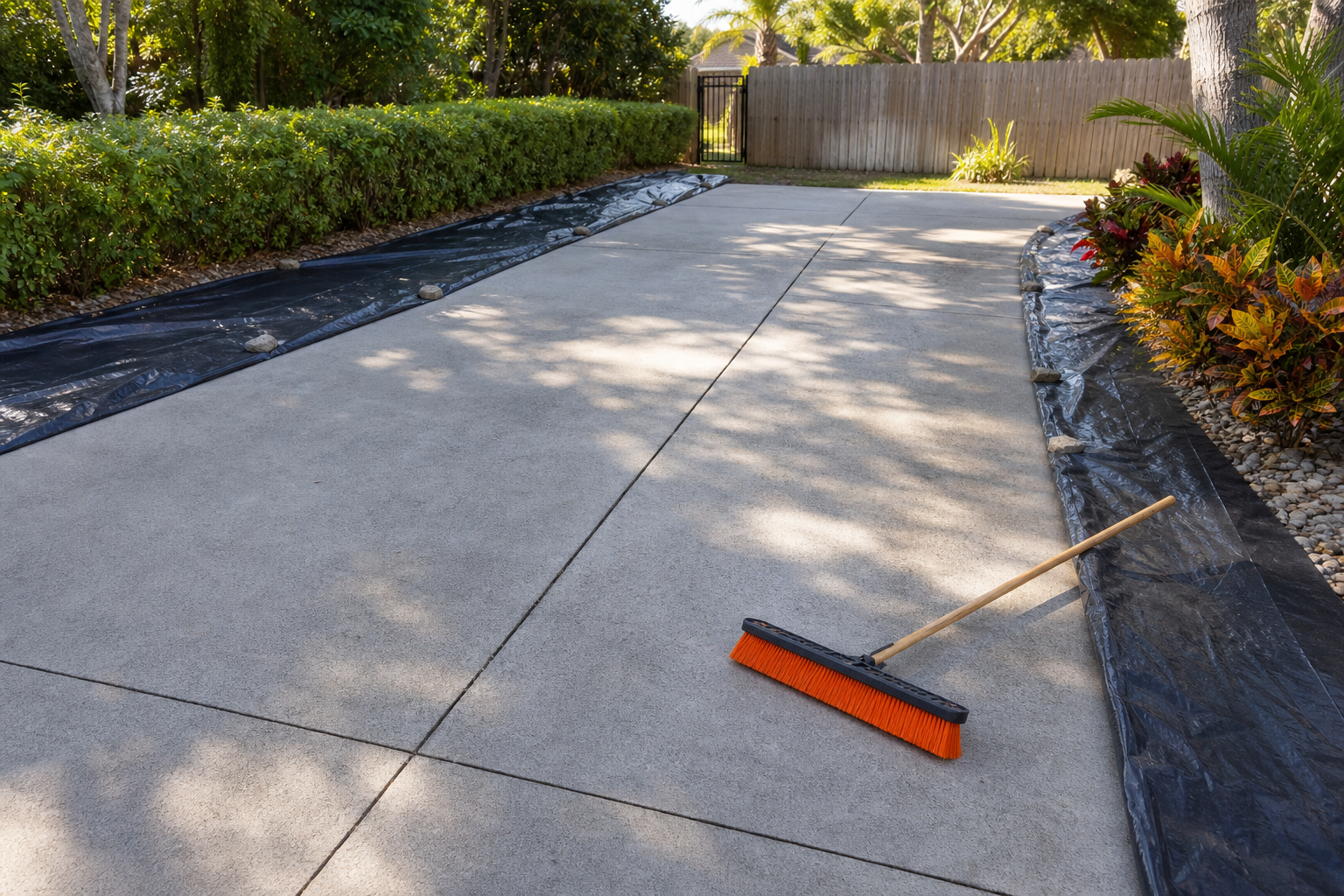
For larger or heavily soiled driveways, proper preparation is especially important because cleaning chemicals, high-pressure water, and runoff need to be
managed carefully.
Step 2: Choose the Right Cleaner for Dirt, Algae, Mildew, and Stains
Different types of stains require different cleaning approaches.
Concrete driveways commonly collect:
Dirt and soil
Algae and mildew
Oil and grease
Rust
Tire marks
Organic debris
Mineral deposits
For general dirt and organic buildup, an appropriate concrete cleaner can help loosen surface contamination before pressure washing.
Algae and mildew may require a cleaning solution specifically suited for organic growth. Sodium-hypochlorite-based solutions can be effective when properly selected, diluted, applied, and rinsed according to the product manufacturer's instructions.
Oil and grease require a different approach. A quality concrete degreaser can help break down oily residue before pressure washing.
Pro Tip:Always test a cleaning product on a small, inconspicuous area first. Concrete surfaces can vary significantly in age, condition, porosity, and previous treatments.
Never mix cleaning chemicals unless the product manufacturer specifically instructs you to do so.
Step 3: Pre-Treat Oil and Grease Stains
Oil is one of the most difficult substances to remove from concrete because it can penetrate into the pores of the surface.
For fresh oil spills, begin by absorbing as much of the oil as possible using an appropriate absorbent material. Remove the absorbent material before applying a degreaser.
For older or heavier stains, apply a concrete-safe degreaser according to the manufacturer's instructions. Allow the product to dwell for the recommended amount of time so the cleaning solution can break down the oil and grease.
Agitation with a stiff-bristle brush can help loosen stubborn contamination before rinsing.
For particularly difficult or baked-on grease, professional cleaners may use hot-water pressure-washing equipment combined with an appropriate degreasing solution. Hot water can be especially effective at breaking down heavy grease and oily residue.
If you're wondering what professional driveway cleaning may cost, see our 2026 driveway pressure washing cost guide for a breakdown of pricing and the factors that can affect the final cost.
Keep surrounding vegetation protected and follow all product safety instructions during the cleaning process.
Step 4: Pressure Wash Concrete Using Controlled Passes
Pressure washing can dramatically improve the appearance of concrete, but using excessive pressure or the wrong technique can damage the surface.
The appropriate pressure depends on the condition and type of concrete, the equipment being used, the nozzle or surface cleaner, and the cleaning method.
When using a pressure washer, keep the spray moving and maintain a consistent distance from the surface. Holding a nozzle too close to concrete or staying in one location for too long can cause visible etching or uneven cleaning.
Start at the higher portion of the driveway and work toward the lower area while controlling where the water and debris are moving.
For large concrete surfaces, a properly sized surface cleaner can help produce a more consistent finish than cleaning the entire driveway with a wand alone. Surface cleaners use rotating jets while maintaining a relatively consistent distance from the concrete, helping reduce visible striping.
When cleaning with a wand, use controlled, overlapping passes. Inconsistent movement or repeatedly focusing on individual dark spots can leave uneven areas or visible cleaning marks.
Key Takeaway: The goal isn't simply to use the highest possible pressure. Effective concrete cleaning comes from combining the right cleaning solution, pressure, water flow, equipment, technique, and dwell time for the condition of the surface.
Professional driveway cleaning companies such as Performance Pressure Wash use commercial-grade equipment and cleaning methods selected according to the condition of the concrete.
Step 5: Rinse, Inspect, and Plan Future Maintenance
After cleaning, rinse the driveway thoroughly to remove remaining cleaning solution and loosened debris.
Water and wastewater should be managed responsibly. Avoid allowing concentrated cleaning solutions or heavily contaminated runoff to enter storm drains, waterways, or areas where it could damage landscaping.
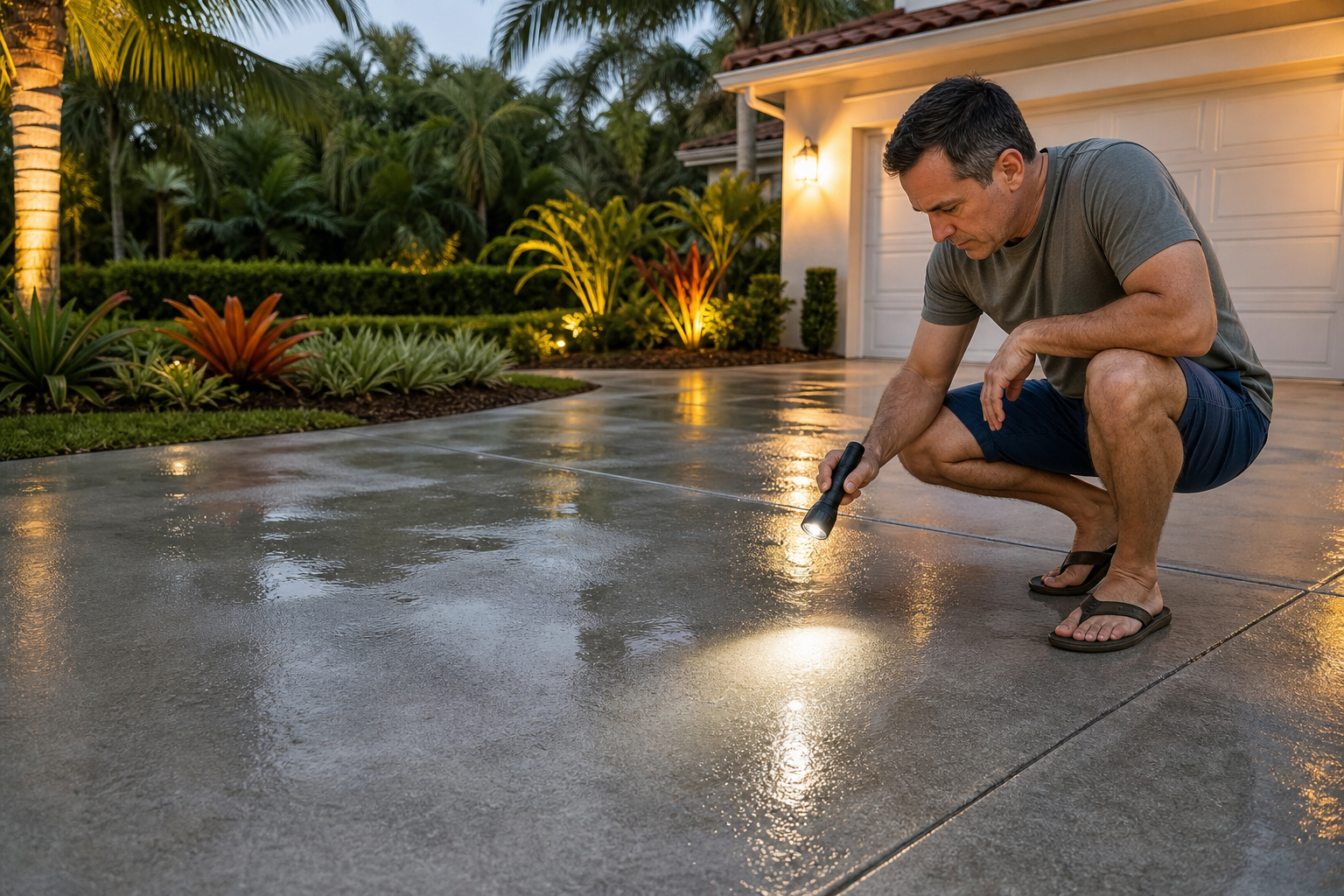
Once the driveway has been cleaned, inspect the surface for remaining stains, mineral deposits, cracks, damaged areas, or spots that may require additional treatment.
Keep in mind that some stains are not simply surface dirt. Rust, oil that has deeply penetrated the concrete, mineral deposits, and discoloration caused by previous cleaning can require specialized treatment and may not disappear completely with standard pressure washing.
How Often Should You Clean a Concrete Driveway?
There isn't one schedule that works for every property.
Many Central Florida homeowners benefit from cleaning their driveway about once a year, while shaded areas or properties exposed to heavy rain, humidity, algae, and organic debris may require more frequent cleaning.
Regular inspections can help you identify buildup before it becomes more difficult to remove.
When Should You Hire a Professional for Driveway Cleaning?
Cleaning a small driveway yourself may be possible if you have the appropriate equipment and understand how to use it safely. However, larger or heavily stained driveways can be more challenging.
A professional driveway cleaning service may be a better option when you are dealing with:
Heavy algae or mildew growth
Deep oil and grease stains
Large concrete areas
Significant organic buildup
Difficult-to-reach areas
Concrete that has been previously damaged or improperly cleaned
Stubborn stains requiring specialized treatment
Concerns about landscaping or wastewater management
Professional equipment can provide higher water flow, specialized surface-cleaning equipment, hot-water capability, and better control over the cleaning process.
At Performance Pressure Wash, we evaluate the condition of the concrete before determining the appropriate cleaning method. Our goal is to improve the appearance of the driveway while using cleaning methods appropriate for the surface.
FAQ: Cleaning a Concrete Driveway
What pressure should I use on a residential concrete driveway?
There isn't one pressure setting that is appropriate for every driveway. The correct pressure depends on the condition and type of concrete, the equipment being used, the nozzle, water flow, and cleaning technique.
Using excessive pressure or holding a nozzle too close to the surface can cause etching or other damage.
Can I use bleach to remove algae or mildew from my driveway?
Sodium-hypochlorite-based cleaning solutions can be effective against organic growth such as algae and mildew when used properly.
Always follow the manufacturer's instructions, use appropriate protective equipment, protect surrounding vegetation, and never mix bleach or sodium hypochlorite with other cleaning chemicals unless specifically directed by the manufacturer.
How often should I pressure wash my driveway?
Many Central Florida homeowners benefit from driveway cleaning approximately once a year. However, properties with heavy shade, frequent organic growth, or significant exposure to rain and humidity may require cleaning more often.
Do I need to seal my concrete driveway after cleaning?
Sealing is not always necessary, but it can provide additional protection depending on the type and condition of the concrete.
A professional can evaluate the surface and determine whether sealing is appropriate for your driveway.
What is the best way to handle a fresh oil spill?
Start by absorbing as much of the fresh oil as possible with an appropriate absorbent material. After removing the absorbent material, apply a concrete-safe degreaser according to the manufacturer's instructions.
Older oil stains may require multiple treatments or specialized cleaning methods.
Why does my driveway look streaky after pressure washing?
Visible streaks or striping can occur when the pressure washer is used with inconsistent passes, incorrect nozzle distance, or without properly sized surface-cleaning equipment.
A professional surface cleaner can help create a more uniform finish across large concrete areas.
Can pressure washing damage concrete?
Yes. Excessive pressure, improper nozzle selection, holding the spray too close to the surface, or staying in one area too long can cause etching or other surface damage.
Proper technique and equipment selection are important when pressure washing concrete.
Is professional driveway cleaning worth the cost?
Professional driveway cleaning can save time and provide access to commercial-grade equipment, surface cleaners, hot-water systems, and specialized cleaning solutions.
Experienced professionals can also identify different types of stains and select an appropriate cleaning method while taking precautions around landscaping and surrounding property.
Professional Concrete Driveway Cleaning in Central Florida
A clean driveway can make a noticeable difference in the appearance of your property. Whether you're dealing with algae, mildew, dirt, oil stains, or years of buildup, the right cleaning method can help restore the appearance of your concrete.
Performance Pressure Wash provides professional driveway cleaning services for homeowners throughout Central Florida. We use commercial-grade equipment and cleaning methods selected according to the condition of the surface.
Ready to bring your driveway back to life? Contact Performance Pressure Wash for a free estimate and let us take care of the hard work.


Comments