


Driveway Cleaning Windermere FL: How to Remove Black Stains, Algae & Mildew
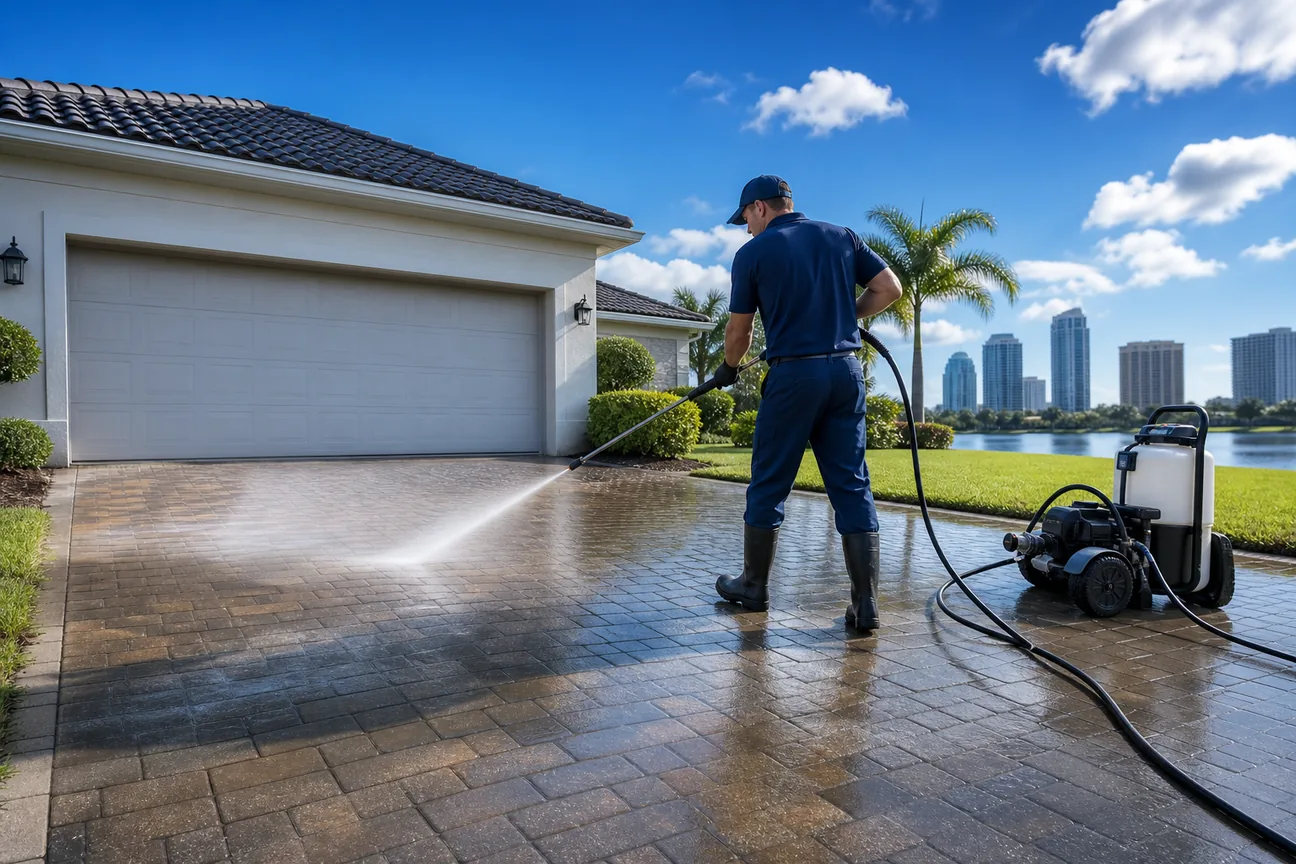
How to Remove Black Stains, Algae & Mildew From a Driveway in Windermere, FL
Black spots, green stains, oil marks, and everyday dirt can make a driveway look neglected. If you’re looking for driveway cleaning in Windermere, FL, the first step is figuring out what may be causing the stains: algae and mildew, tire residue, oil, rust, or something else. Each can call for a different approach, and some stains may not come out completely.
Windermere’s rain, humidity, shade, and outdoor debris can contribute to stains on driveways. Concrete that stays damp or collects leaves and pollen may develop green algae or mildew, while vehicle use can leave tire marks, oil, or grease. Conditions vary from property to property, so the right approach depends on the driveway’s material, age, and condition.
Table of Contents
Why Is My Driveway Turning Black or Green?
Driveways collect more than dust. Rain can leave damp spots, shade can slow drying, and nearby trees can drop leaves and pollen. When moisture and debris linger, algae or mildew may grow on parts of the concrete. These conditions are common in Central Florida, though the amount and type of staining vary from one home to another.
Green stains often point to algae or other growth. Black marks can also come from algae or mildew, but they may be tire residue, oil, grease, dirt, or a mix of materials. Drainage, nearby plants, vehicle use, and the driveway’s age all play a part.
The location of a stain can offer clues. Green growth may be more noticeable in shaded or damp spots, while tire marks often follow vehicle paths and oil may collect beneath a parked car. These clues aren’t a sure diagnosis, and more than one cause may be present.
What Are the Black Stains on My Concrete Driveway?
Black stains on concrete can have several causes. Algae and mildew may grow where moisture remains. Tire residue can leave dark streaks where cars turn or stop, while oil and grease may create spots under a vehicle. Dirt and decomposing leaves can also leave broader areas of discoloration.
Concrete is porous, so some stains soak in instead of staying on the surface. That can make older or deeply absorbed marks harder to remove. Rust is usually orange, reddish-brown, or brown rather than black, and may need a treatment made for that stain and the concrete.
It helps to consider the likely cause before treating the whole driveway. A product that works on algae may not remove oil, and a strong cleaner or aggressive scrubbing can affect the concrete or nearby surfaces if used carelessly.
How Do You Remove Algae and Mildew From Concrete?
Green algae and mildew can grow where concrete stays damp or shaded. They can also make concrete slippery when wet, though that doesn’t mean every stained driveway is dangerous. Simply blasting the area with high pressure is not always the answer: pressure may remove loosened dirt and growth, but it may not adequately treat algae or mildew.
Where suitable for the driveway and surrounding area, Performance Pressure Wash can pretreat algae and mildew with sodium hypochlorite, a cleaning solution used to address that growth. The concrete is then cleaned with professional surface-cleaning equipment, with pressure adjusted to the driveway. A surface cleaner covers a broad area more evenly than moving a concentrated pressure-washer wand over the concrete.
If you’re cleaning a small area yourself, follow the product label and take care to protect nearby plants and materials. Don’t mix cleaning products, and don’t direct a concentrated stream at cracks, weak concrete, people, or pets. If you’re unsure what caused the stain or how the concrete will respond, ask a qualified cleaning provider about the proposed approach.
Can Pressure Washing Remove Black Stains?
Pressure washing can remove loose dirt, surface residue, and growth that has been treated and loosened. It may improve black stains, but pressure alone may not address algae or mildew fully, and it won’t reliably remove every stain that has soaked into the concrete.
Different stains can need different steps. Algae and mildew may need a suitable pretreatment, while oil and grease can call for a degreaser and a more targeted process. A surface cleaner helps clean larger areas with a more even pass, but the equipment and pressure should still suit the driveway.
Results depend on what caused the stain, how long it has been there, how deeply it has soaked in, and the concrete’s condition. Cleaning can reduce visible discoloration, but it may not make the driveway look completely uniform or new again.
What About Oil, Grease and Rust Stains?
Oil and grease are different from algae and mildew. They can soak into concrete, so a regular wash may leave a shadow or spot behind. They may need separate degreasing. For stubborn, baked-in oil or grease, Performance Pressure Wash uses high-heat water with suitable degreaser agents; low-pressure methods alone aren’t intended to remove that type of buildup.
Rust may need a specialized treatment rather than the products used for algae or grease. The right approach depends on the stain and the concrete, and older or deeply absorbed stains may remain after cleaning. Complete removal can’t be promised.
If you’re not sure what caused a spot, avoid trying several cleaners on it at once. A product that isn’t suited to the driveway could affect the concrete or surrounding materials. Identifying the stain and testing a small area can help guide the next step.
Can Pressure Washing Damage a Concrete Driveway?
Pressure washing can clean a driveway effectively when the pressure and equipment suit the surface. Excessive pressure or a concentrated stream held in one place can etch concrete, leave lines or stripes, expose aggregate, or damage weak concrete. Water directed into existing cracks may also worsen them.
The driveway’s age and condition matter. Older, worn, or weakened concrete may need a gentler approach than sound concrete. Previously coated or sealed concrete can respond differently from bare concrete, so the coating and its condition should be considered before cleaning.
Not every driveway is concrete. Pavers, decorative finishes, stone, and other surfaces have their own cleaning needs. Excessive pressure can disturb paver joints or affect the surface. If you’re not sure what your driveway is made of, ask how the provider will assess it and choose suitable equipment and pressure.
How We Clean a Dirty Driveway
Every driveway is a little different, so we adjust the work to the surface, its condition, and the stains. Depending on what we find, cleaning may include:
Checking the driveway:We look at its material, age, cracks, worn or weak areas, previous coatings, paver joints, and the type and location of the stains.
Preparing the area:We clear or protect items in the work area as needed and take care around nearby plants and surfaces.
Pretreating algae and mildew:When suitable, we use a sodium hypochlorite pretreatment to address algae or mildew.
Cleaning the driveway:We use professional surface-cleaning equipment and pressure suited to the driveway. For stubborn oil or grease, high-heat water and suitable degreasers may be needed.
Rinsing thoroughly:We rinse the driveway and nearby areas to clear away loosened dirt and cleaning solution.
Post-treating when suitable:A post-treatment may be used when it makes sense for the surface and cleaning conditions. It doesn’t replace choosing the right pretreatment and cleaning approach.
Not every job follows the same sequence, and some old or deeply absorbed stains may remain. We take the driveway’s condition and the likely cause of the stains into account when planning the work.
Learn more about our driveway cleaning service .
How Often Should You Clean a Driveway in Windermere?
There’s no single schedule that fits every home. Shade, moisture and drainage, nearby trees, rain, vehicle traffic, and how quickly algae, mildew, dirt, and stains return all affect timing.
Keep an eye out for returning green growth, dirt, vehicle stains, or areas that feel slippery when wet. Cleaning when you notice those changes can help you decide when the driveway needs attention. A routine periodic maintenance program can also help homeowners keep up with recurring exterior cleaning needs.
Other Exterior Surfaces You May Want to Clean
Driveway cleaning can be part of a broader exterior-maintenance plan. Depending on your property, you may also consider house washing, roof soft washing, pool deck cleaning, pool enclosure cleaning, paver cleaning and sealing, or sidewalk cleaning. Each surface needs care suited to its material, condition, and use.
For example, a roof needs an approach suited to its roofing material, while a pool deck should be cleaned with its surface and regular wet use in mind. Pavers and their joints should be checked before cleaning or sealing, and any existing sealer should be considered. Ask what preparation is needed and whether the proposed approach suits the surface.
Frequently Asked Questions
What causes black stains on my driveway?
Black stains may come from algae or mildew, dirt, tire residue, oil, grease, leaves, or other debris. The stain’s location can offer clues, but its appearance alone may not reveal the cause for certain.
What are the green stains on my driveway?
Green stains often indicate algae or other growth, especially where concrete stays damp or shaded. The right approach depends on the driveway and the material causing the discoloration.
How do I remove algae from concrete?
Where suitable, algae can be pretreated with a product such as sodium hypochlorite, then cleaned with equipment and pressure suited to the concrete. Follow product directions and take care around nearby plants and materials.
Will pressure washing alone remove algae?
Not always. Pressure washing can remove loosened growth and dirt, but a suitable pretreatment may be needed to address algae or mildew before cleaning.
Can you remove oil stains from a driveway?
Oil can soak into concrete, so a regular wash may leave a spot behind. Stubborn oil and grease may need high-heat water and suitable degreasers. The result depends on how old and deeply absorbed the stain is.
Can every driveway stain be removed?
No. Some stains are old or deeply absorbed, and some marks may have changed the appearance of the concrete itself. Rust may need specialized treatment, and complete removal can’t be promised.
Can pressure washing damage concrete?
It can if excessive pressure or a concentrated stream is used. Pressure and equipment should suit the concrete, especially if it is old, cracked, worn, or weak.
How often should I clean my driveway?
Timing depends on shade, moisture and drainage, trees, rain, traffic, and how quickly algae, mildew, and dirt return. Watch for visible stains, returning growth, and slippery areas rather than following a fixed schedule.
Can pavers be cleaned the same way as concrete?
Not necessarily. Pavers and their joints may respond differently to pressure and cleaning products. The approach should suit the paver material, joint condition, and any existing sealer.
Professional Driveway Cleaning in Windermere, FL
Black spots, green stains, oil, and rust don’t all respond to the same treatment. A good place to start is assessing the stain and the driveway before choosing how to clean it. The right pressure and equipment matter, especially on older concrete, cracked areas, or pavers.
Performance Pressure Wash is a licensed, insured, family-owned business serving homeowners and businesses throughout Central Florida. If your driveway is stained or dirty, contact Performance Pressure Wash to request a driveway assessment or a free estimate.


Comments