


Best Food Truck Cleaning Service in Central Florida | Commercial Kitchen Cleaning Guide
- Perfomance Pressure
- 3 days ago
- 9 min read

Food trucks and commercial kitchens face one of the toughest cleaning environments of any business. Grease, carbon buildup, smoke residue, and food spills can quickly affect equipment performance, cleanliness, and appearance. Choosing the right cleaning method protects valuable equipment while helping maintain a cleaner, safer workspace.
Baked-on grease needs heat and the right degreaser. A low-pressure rinse may protect a wrap, but it won't break down carbonized residue on a grill or fryer. We use a surface-by-surface plan for food truck and commercial kitchen equipment cleaning, with high-heat water where grease is stubborn and gentler methods where finishes or electronics need protection.
At Performance Pressure Wash, we've cleaned food trucks, commercial kitchens, restaurant equipment, and fleet vehicles throughout Central Florida. Every truck is different, so we inspect each surface before choosing the safest cleaning method.
Table of Contents
Step 1: Assess the Food Truck or Commercial Kitchen Before Cleaning
Step 2: Clean Food Truck Cooking Equipment and Interior Surfaces
Step 3: Choose the Right Cleaning Method for Each Equipment Surface
Step 4: Clean Exteriors, Wraps, Ventilation Areas, and Supporting Equipment
Step 5: Rinse, Sanitize, Inspect, and Build a Maintenance Schedule
Step 1: Assess the Food Truck or Commercial Kitchen Before Cleaning
Good food truck and commercial kitchen equipment cleaning starts with an inspection, not a hose. We first shut down cooking activity, remove exposed food, and let hot equipment cool enough for safe handling.
Then we map the work area. We look for grease on cooking surfaces, carbon around burners, residue under equipment, and soil near floor drains. We also check wraps, painted panels, stainless steel, soft metals, gaskets, vents, and exposed controls. Each surface needs a method that removes soil without causing damage.
We also protect the site before cleaning. Sensitive electrical parts get covered or isolated. Loose items are removed. Drain paths are checked so wastewater can be managed instead of sent across a customer area or into a storm drain.
Many food truck operators also benefit from using a written inspection checklist before cleaning. It helps ensure grease-prone areas aren't overlooked and creates a consistent routine for every service.
Our crew records the condition before work begins. That makes it easier to spot baked-on grease, old residue, damaged seals, or areas that need repair instead of cleaning alone.
For operators who want a planned service rather than a rushed cleanup, our food truck cleaning service covers the mobile kitchen as a worksite. Performance Pressure Wash is licensed and insured, and we adjust the process to the truck, the surface, and the level of buildup.
Key Takeaway: Inspect first, isolate sensitive parts, and sort every surface by soil type and material before choosing pressure, heat, steam, or hand cleaning.
Step 2: Clean Food Truck Cooking Equipment and Interior Surfaces
Interior food truck and commercial kitchen equipment cleaning must remove grease without spreading it to clean areas. We work from high surfaces down, and from less-soiled zones toward the heaviest buildup.
Loose crumbs and dry debris come out first. Next, we apply the cleaner that fits the soil. Alkaline degreasers are suited to heavy grease on ovens, grills, and fryers, but the label, surface, ventilation, and required protective gear still control the job.
Low pressure alone does not remove stubborn baked grease. Our high-heat water system helps soften and break down that residue, while the right degreasing agent helps lift it from the surface. Heat does the work that a gentle rinse cannot.
We use brushes or pads where residue has hardened in seams, hinges, fryer basket joints, and floor-to-wall edges. A dedicated basket brush is useful around wire joints because food carbon can hide in narrow gaps.
Steam can help on many non-porous areas, such as stainless steel, vinyl, epoxy, tile, equipment casings, and drains. It must not be directed at exposed electrical parts, electronic controls, or materials that cannot take high heat. We also slow the pass when a surface needs more contact time. Moving too fast can leave a clean-looking surface with grease still in the seams.
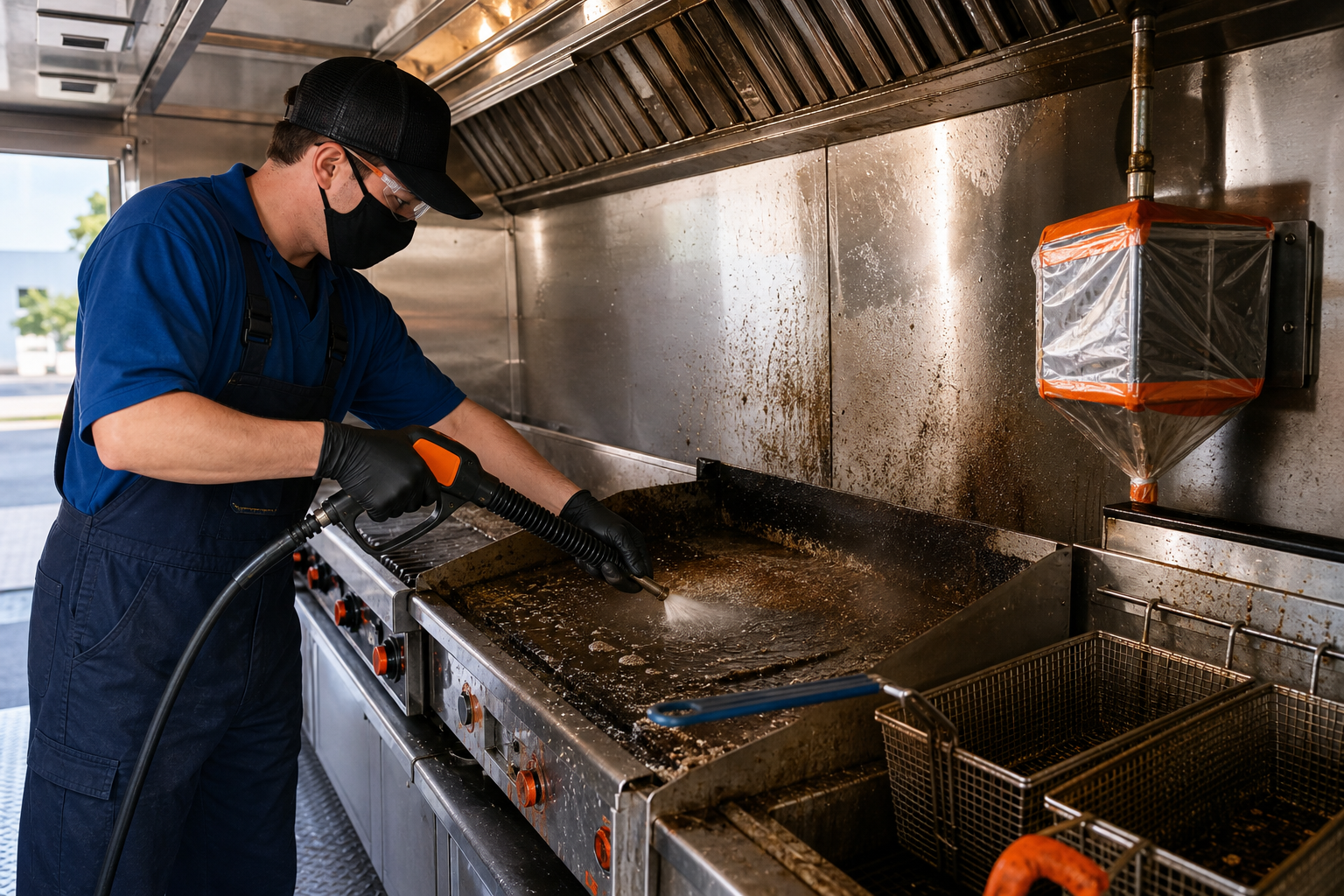
Food-contact areas need special care after degreasing. We remove cleaner residue with a full rinse, then follow the operation's approved sanitation process. Cleaning and sanitizing are separate tasks, so one chemical should not be treated as a cure for every problem.
Our commercial kitchen cleaning service information explains how equipment exteriors, floors, walls, and other accessible areas can fit into one maintenance plan. We still inspect each component before applying water or heat.
For a small truck, this may mean working in sections so the clean side stays clean. For a larger kitchen, it may mean scheduling around production and assigning one person to inspect the finished zone. The workflow matters as much as the cleaner.
Step 3: Choose the Right Cleaning Method for Each Equipment Surface
The right method for commercial kitchen equipment cleaning depends on the surface, the soil, and the risk of water or heat reaching a sensitive part. Pressure alone is not a cleaning plan.
Surface or soil | Preferred approach | What to watch |
Baked grease on grills, ovens, fryers, or griddles | High-heat water with a suitable alkaline degreaser | Cool equipment first, use protective gear, then rinse until no residue remains. |
Carbon in fryer basket joints | Degreaser with a dedicated basket brush | Brush the wire joints instead of relying on a broad spray. |
Stainless steel work surfaces | Controlled steam, hand cleaning, or low-impact rinse | Follow the grain where relevant and prevent streaks or chemical film. |
Vinyl, epoxy, or other non-porous floors | Steam or compatible floor cleaning method | Remove greasy film fully so the floor does not stay slick. |
Wrapped or graphic exterior panels | Low-pressure wash or foam cleaning | Test the method first and keep water away from lifted edges. |
Refrigeration condenser coils | Controlled air cleaning where suitable | Disconnect or protect the unit as required by its service instructions. |
Electrical controls and exposed electronics | Dry or carefully controlled hand cleaning | Do not spray or direct high heat at the component. |
For heavy carbon, the product instructions matter. The commercial oven and grill degreaser instructions require a cool surface, protective equipment, ventilation, and a thorough clean-water rinse before equipment returns to service. We use that same basic discipline with any strong chemistry, even when a different product is selected.
We also avoid choosing a method by pressure rating alone. A pressure range may tell us what a system can deliver, but it does not tell us if the spray is safe for a wrap, seal, control box, or painted panel.
Steam has a place, too. A steam cleaner listed at 212°F can suit non-porous floors and stainless steel, while hotter systems may help loosen residue on selected surfaces. Temperature is useful only when the material can handle it and the operator can control the contact time.
Performance Pressure Wash uses high-heat water for the grease problems that low-pressure methods cannot solve. We use lower-impact methods on delicate exteriors and keep the equipment choice tied to the actual surface.
Pro Tip: Test a small hidden area first. If the finish changes, stop and switch methods before the damage spreads across a panel or wrap.
Step 4: Clean Exteriors, Wraps, Ventilation Areas, and Supporting Equipment
Exterior food truck cleaning has a different goal than fryer degreasing. We want to remove road film, food splatter, dust, and grease while keeping paint, decals, graphics, windows, and seals intact.
We begin by rinsing loose soil with controlled water. Then we apply a compatible cleaner and allow enough dwell time for the soil to loosen. On a wrapped truck, we keep pressure low and avoid forcing water beneath an edge. A foam system can give coverage without the aggressive spray pattern used for heavy bare-metal grime.
Windows and mirrors need a separate pass. Streaks or oily haze can make a clean truck still look neglected at the service window. Chrome and stainless trim also need a controlled rinse so cleaner does not dry into marks.
Ventilation areas need more care. Hood exteriors, filters, grease trays, and nearby panels can hold thick residue. We remove parts where the equipment design allows it, then clean them away from protected food areas. Filters must dry fully before we put them back.
We also check wheels, steps, storage doors, hitch areas, and the ground beside the truck. These spots collect grease and road soil, yet they are easy to miss when the focus stays on the serving side.
Central Florida adds its own challenge. Humidity, rain, pollen, and frequent outdoor stops can leave a film on the exterior soon after service. A regular cleaning schedule usually works better than waiting until buildup becomes hard to remove.
Use soft washing when the goal is surface protection and light-to-moderate exterior soil. Use high-heat water and degreaser when grease has baked onto metal or cooking equipment. Those jobs should not be treated as the same task.
Step 5: Rinse, Sanitize, Inspect, and Build a Maintenance Schedule
The final stage of food truck and commercial kitchen equipment cleaning is proof that the work is done. We rinse treated surfaces until cleaner residue is gone, then inspect by sight and touch where appropriate.
Food-contact surfaces need the sanitation step required by the operation's procedures. Sanitizer works best after visible soil and degreaser residue have been removed. We follow the product label and the kitchen's approved process rather than guessing at concentration or contact time.
Before equipment returns to service, we check for grease in seams, under edges, around wheels, inside trays, and near drains. We look at hood filters and fryer areas again after rinsing because water can reveal residue that was hidden beneath cleaner foam.
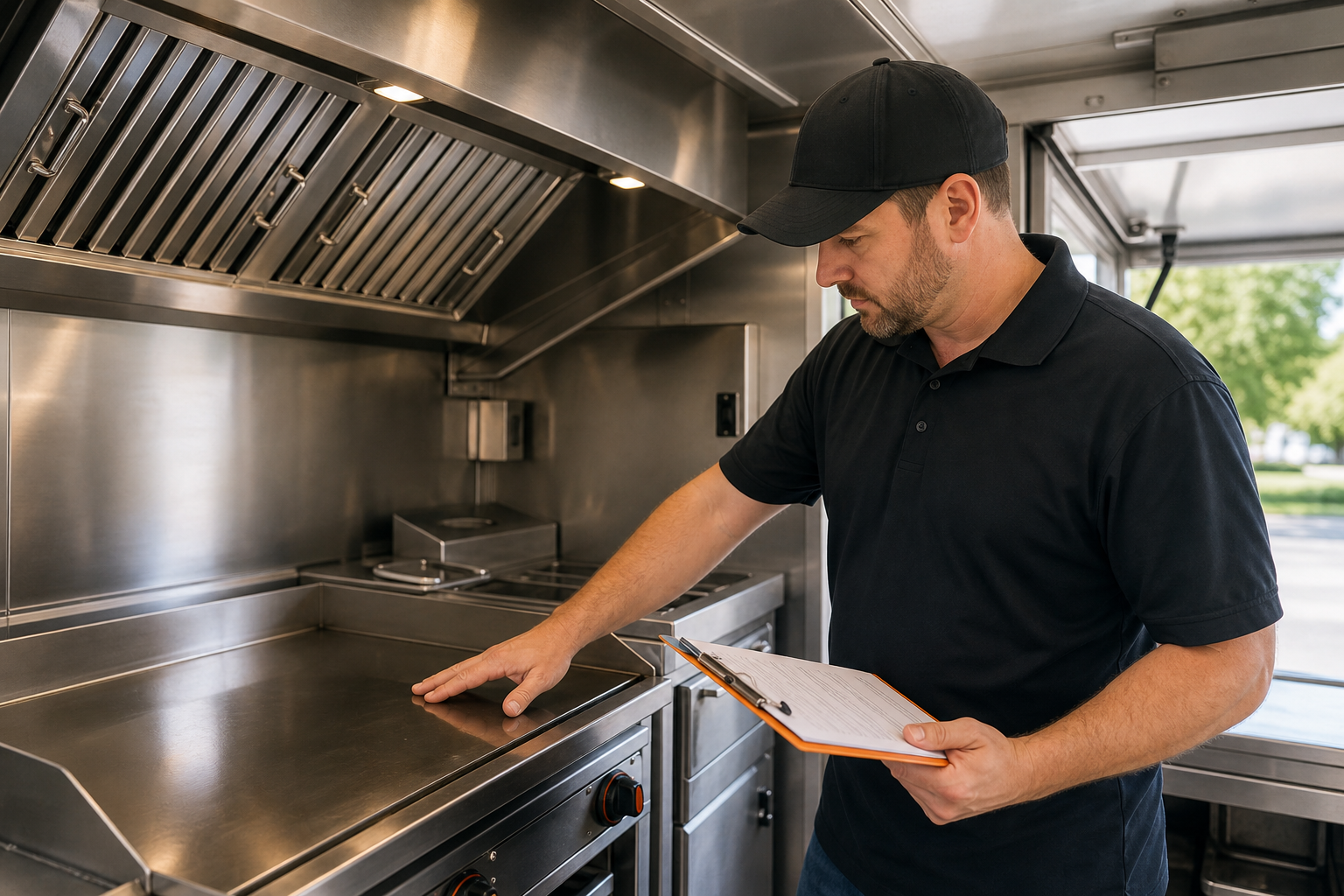
We record the date, areas cleaned, problems found, and any corrective work. A log helps a manager see if grease returns in one zone, if a filter needs more frequent service, or if staff need a clearer daily task.
We suggest a schedule built around workload:
Each shift: Remove food residue and wipe high-use food-contact areas.
Daily: Check floors, splash zones, handles, drains, and visible grease.
Weekly: Deep-clean cooking equipment, nearby walls, floor edges, and removable trays as needed.
On a set cycle: Inspect hood filters, ventilation areas, condenser coils, and hard-to-reach supports.
Before an inspection or event: Complete a full condition, check and correct missed buildup.
One of the most common situations we see is a food truck that looks clean from the outside but has heavy grease buildup around hinges, fryer areas, and floor edges. These hidden areas collect residue over time and require a different approach than simply rinsing the surface with water. That's why every service starts with an inspection before any equipment is used.
Heavy frying can shorten the gap between deep cleans. A low-volume truck may need a different rhythm. We base the plan on production, soil load, equipment design, and the condition we find on site.
Performance Pressure Wash can build a service plan for food truck owners, restaurant operators, and facility managers throughout Orlando, Kissimmee, Winter Garden, Lake Nona, and surrounding Central Florida communities. Our fleet cleaning services can support operators who manage multiple mobile units, while we bring commercial-grade equipment, match the method to the surface, and work directly with customers as owners of a family-run business. Request a free quote when you want a clear scope before scheduling.
Key Takeaway: A cleaning job is complete only after the surface is rinsed, the sanitation step is finished, the equipment is inspected, and the result is recorded.
Why Professional Food Truck Cleaning Is Different
Cleaning a food truck isn't just about appearance. Grease buildup can shorten equipment life, create unpleasant odors, and increase the risk of fire around cooking equipment and ventilation systems. A clean truck also makes a stronger first impression on customers and helps operators prepare for routine health inspections.
Professional cleaning goes beyond spraying water. Different surfaces require different methods. Stainless steel, wraps, painted panels, electronics, cooking equipment, and ventilation components all need the correct combination of heat, degreasers, steam, or low-pressure washing. Using the wrong method can damage finishes, lift graphics, or force water into sensitive electrical components.
At Performance Pressure Wash, every service begins with an inspection so we can match the cleaning process to the equipment, not the other way around.
Whether you operate a single food truck or manage multiple commercial kitchens, Performance Pressure Wash provides professional cleaning solutions tailored to your equipment, grease buildup, and operating schedule. Contact us today for a free estimate and let us build a maintenance plan that keeps your operation looking its best.
FAQ
What is the best way to remove baked-on grease from a food truck grill?
High-heat water paired with a suitable alkaline degreaser is the best fit for baked-on grease on a food truck grill. Low-pressure water alone cannot break down carbonized residue. We cool the grill first, protect nearby controls, apply compatible chemistry, agitate where needed, and rinse until no cleaner remains.
Can low-pressure cleaning remove commercial kitchen grease?
Low-pressure cleaning can remove light exterior dirt, dust, and some surface film, but it usually cannot remove stubborn baked grease. Food truck and commercial kitchen equipment cleaning needs heat and degreasing chemistry for grills, fryers, ovens, and similar equipment. We reserve gentle washing for wraps, graphics, and surfaces that need extra protection.
How often should a food truck be deep cleaned?
A food truck should be deep cleaned based on cooking volume and grease buildup, not one fixed calendar date. Daily cleaning handles fresh residue, while weekly or scheduled deep cleaning addresses equipment, floors, filters, and hidden edges. High-volume frying may require more frequent service, especially around hood filters and cooking surfaces.
Can pressure or hot water damage food truck equipment?
Yes, water or heat can damage equipment when it reaches electronics, seals, graphics, or heat-sensitive materials. That is why professional cleaning starts with an inspection. We protect sensitive components, control spray distance, avoid exposed electrical parts, and choose hand cleaning, steam, low pressure, or high-heat water based on the surface.
Does cleaning equipment make a commercial kitchen sanitary?
Cleaning removes visible soil and prepares a surface for sanitation, but it does not replace the sanitation step. The full process includes removing grease, rinsing away cleaner, applying an approved sanitizer when required, and allowing the correct conditions before use. Managers should keep records that match their food safety procedures.
Conclusion
Choose the cleaning method by the soil and the surface. For baked grease, Performance Pressure Wash uses high-heat water with suitable degreasing treatment, while delicate wraps and exterior finishes get a gentler process. Request a free quote with your truck or kitchen's main problem areas listed, so we can set a safe scope and maintenance plan.


Comments